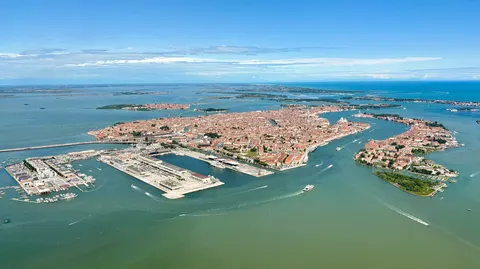

Istanbul is the largest city in Turkey and its economic, cultural and historical centre. It spans two continents, with about two-thirds of its population on the European side of the Bosphorus, the busy waterway that divides it. Istanbul has been the capital of four empires, and its skyline is still lined with the mosques and palaces of the Ottoman period. Its historic centre is a UNESCO World Heritage Site.
Istanbul, in Turkey, is home to about 15.7 million people and works as a rail hub.
Why go to Istanbul?
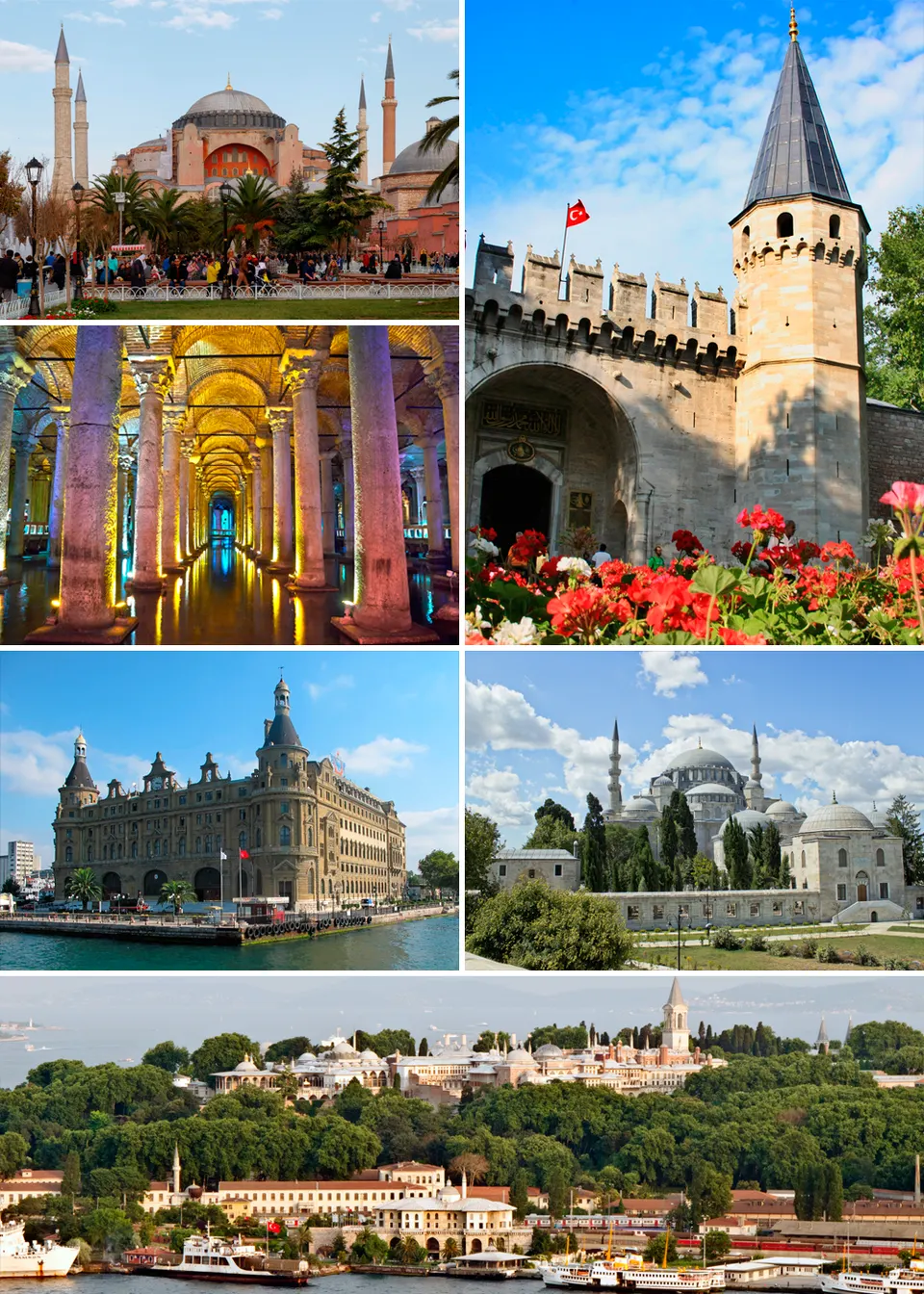
Istanbul's skyline is the draw. Hagia Sophia, once the largest cathedral in the world, was later a mosque and is now a museum. Topkapı Palace, the city's largest palace, mixes styles from Baroque inside the Harem to the Neoclassical Enderûn Library. The Sultan Ahmed Mosque, known as the Blue Mosque, and the Süleymaniye Mosque were built at the height of the Ottoman Empire. Beyoğlu, around İstiklal Avenue, has become the artistic centre of the city, with its grand buildings and theatres. Byzantine and Ottoman layers sit side by side, from the Column of Constantine to the Valens Aqueduct in the Fatih district.
When is the best time to visit Istanbul?
In August the average high reaches 27 °C; in January and February it is closer to 8 °C. Beach holidays work best in June, July and August. Any month suits city breaks.
How do I get to Istanbul without flying?
Istanbul has direct bus, ferry, ferry/bus or train links to 13 destinations. Within 14 hours, travellers from 158 destinations can get here without flying. The train from Bucharest with CFR/TCDD takes 18h 00m; that is about 22 kg of CO₂ per person, 61% less than the 57 kg of a flight. Ankara is 4h 30m away by train with TCDD, with about 6 kg of CO₂ per person against 80 kg for the flight, 93% less. Travelling from Sofia, allow 10h 00m by train with BDZ/TCDD; that is about 12 kg of CO₂ per person, 82% less than the 65 kg of a flight.
What to do in Istanbul
Hagia Sophia
A dome 31 metres across, once the largest cathedral in the world for more than a thousand years, and now a museum.
Topkapı Palace
The largest palace in the city, the seat of the Ottoman court, with the Harem and the Enderûn Library.
Sultan Ahmed Mosque
Known as the Blue Mosque, one of the imperial mosques built at the peak of the Ottoman Empire.
Chora Church
A Byzantine church that was enlarged after the Byzantines recaptured Constantinople in 1261.