
By train
91% less CO₂Kassel
By train from Rostock
Route
Germany
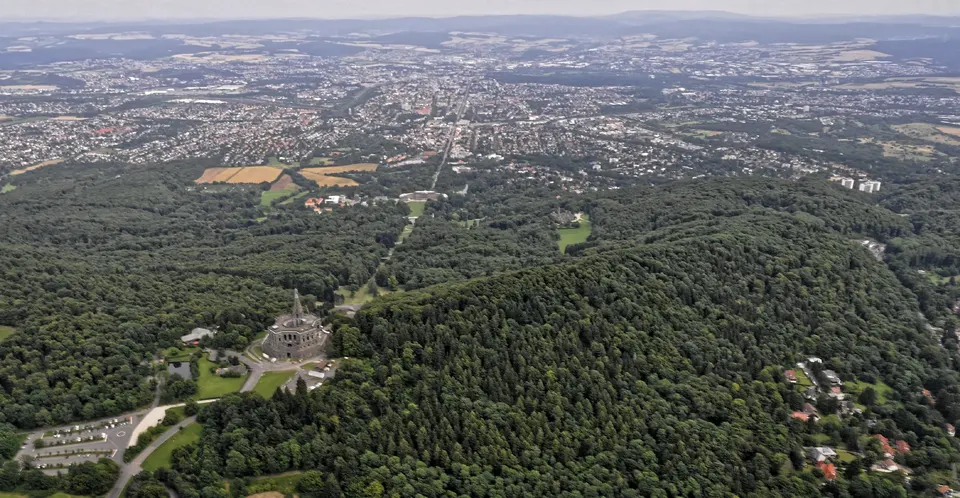
Plan this tripPhoto: © Ra Boe / Wikipedia, CC BY-SA 3.0 de, Wikimedia Commons
By train in 5h 54m with 2 changes, 7.5 kg CO₂ per person — 91% less than the flight’s 81 kg CO₂e (door to door 4h 59m).
By train from Rostock
By plane from Rostock
81kg CO₂e
Per person, one way
4h59m
One way, door to door
It would take about 4 trees a full year to absorb the flight’s 81 kg CO₂e.
Only 59m of the 4h 59m is spent in the air.
Travel to the airport
Door to terminal
Check-in, security, boarding
Arrive early, queue, wait
Flight to Kassel
81 kg CO₂e per trip
Travel into the city
Terminal to city centre
Arrive in Kassel
4h59mFlight figures are CO₂e: they include the warming effect of emissions at altitude (radiative forcing). Train, bus and ferry figures are CO₂. How we calculate
The best way from Rostock to Kassel without flying takes 5h 54m by train, with 2 changes, in Hamburg and Göttingen. You travel with DB Fernverkehr AG and cantus Verkehrsgesellschaft. That emits about 7.5 kg of CO₂ per person, 91% less than the flight's 81 kg CO₂e. Against the flight's door-to-door time, you spend 55 min more on the way.
Kassel was once the capital of Hesse-Kassel, and its palaces and parks still carry that princely past. The Bergpark Wilhelmshöhe is a UNESCO site, and the Fridericianum and the Hessian State Museum sit in the centre. The documenta shows, which bring contemporary art to its galleries, are a draw in their own right. Coming from Rostock, the Hanseatic university city with the Kunsthalle Rostock and the Rostock Zoo, you travel south-west to a German city on the Fulda River, where the trip is about a park and a gallery season rather than a harbour.
Kassel is at its best for city breaks in May, June and September; September averages 18 °C.
Going the other way? The figures here are for Rostock to Kassel; the trip planner searches Kassel to Rostock just as well, for your own dates.