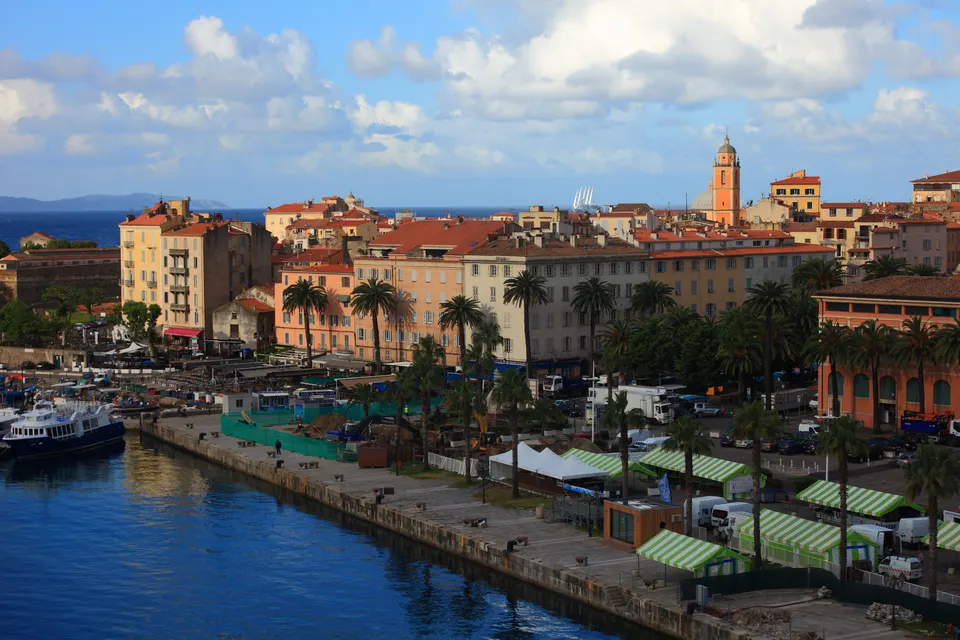

Ajaccio is the capital and largest city of Corsica, on the island's west coast. It is the main town of the island and the seat of its regional government, with a cultural centre alongside a natural setting of coves and beaches on the Mediterranean Sea. The city grew after the Genoese built a citadel in 1492, and it is the birthplace of Napoleon Bonaparte, who was born there in 1769.
Ajaccio, in Corsica, France, is home to about 54,000 people and works as a rail hub.
Why go to Ajaccio?
People come to Ajaccio for its link with Napoleon. His ancestral home, the Maison Bonaparte, is now a museum, and the city honours him in many other ways, including in the name of its airport. The Genoese citadel, built to the south of the earlier settlement, recalls the centuries when Genoa held several fortresses on the island. Beyond the town, the Îles Sanguinaires, a Natura 2000 reserve, offer coves and beaches along the Mediterranean shore. The city's cultural centre sits beside that wilder coast. Ajaccio also has a wartime story: in 1943 its people rose against the occupiers and became the first French town liberated from German rule.
When is the best time to visit Ajaccio?
In August the average high reaches 26 °C; in January and February it is closer to 12 °C. Beach holidays work best in July, August and September. Any month suits city breaks.
How do I get to Ajaccio without flying?
Ajaccio has direct ferry links to 3 destinations. Within 14 hours, travellers from 331 destinations can get here without flying. The ferry from Nice with Corsica Ferries takes 6h 00m; that is about 10 kg of CO₂ per person, 81% less than the 53 kg of a flight. Toulon is 8h 30m away by ferry with Sardinia Ferries, with about 5.1 kg of CO₂ per person against 61 kg for the flight, 92% less. Travelling from Biot, allow 6h 15m by ferry with Sardinia Ferries; that is about 4.4 kg of CO₂ per person, 92% less than the 53 kg of a flight.
What to do in Ajaccio
Maison Bonaparte
The Bonaparte family's ancestral home, now a museum dedicated to the city's most famous son.
Genoese citadel
Built in 1492 to the south of the old settlement, it marks the point when the city began to prosper again.
Îles Sanguinaires
A Natura 2000 reserve of islands off the coast, with coves and beaches on the Mediterranean.