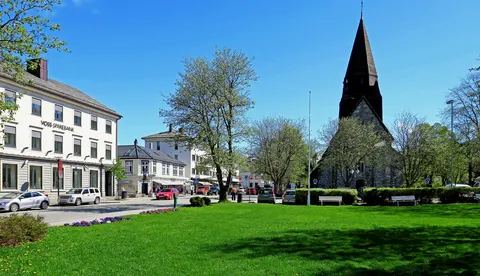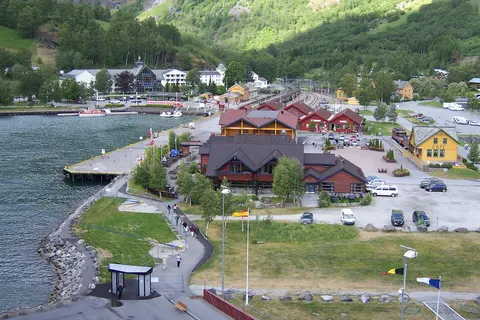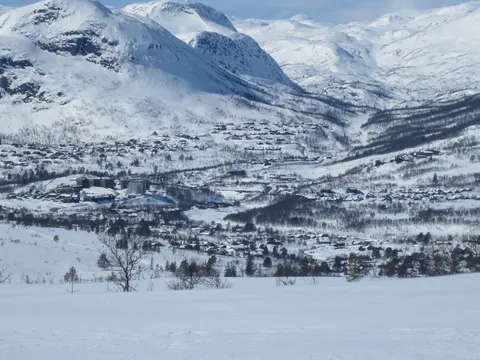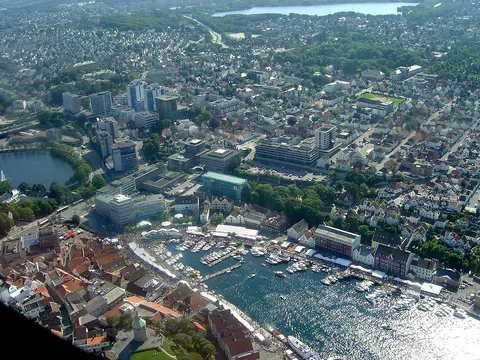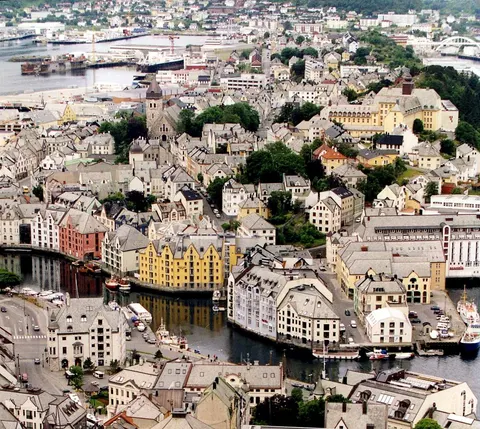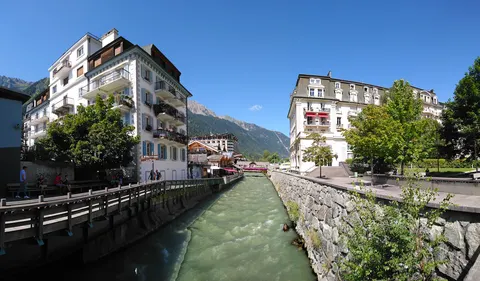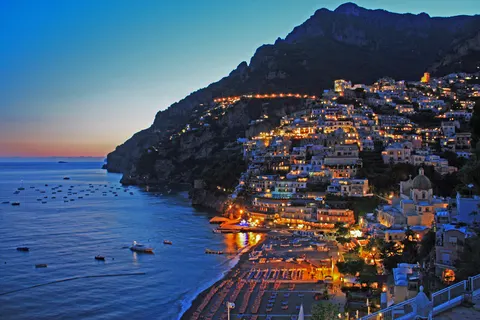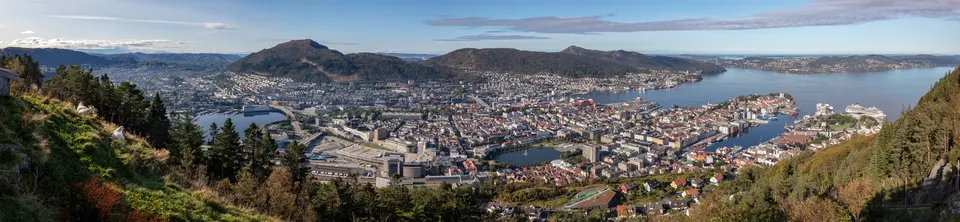

Bergen is a city and municipality in Vestland county on the west coast of Norway, and the second-largest city in the country after Oslo. It lies on the Bergenshalvøyen peninsula, with the city centre on Byfjorden, the city fjord, and mountains rising around it. The city was traditionally founded in 1070 as Bjørgvin, 'the green meadow among the mountains'. It served as Norway's capital in the 13th century.
About 294,000 people live in Bergen, in Vestland, Norway, and its station is a rail hub.
Why go to Bergen?
Bergen grew rich on trade. From the late 13th century it was a bureau city of the Hanseatic League, and the dried cod shipped from the north coast made it one of northern Europe's largest trading centres. The old quayside, Bryggen, where the Hanseatic merchants had their own quarter, is a World Heritage Site today. Bergen Port is Norway's busiest for freight and passengers, and the buekorps, traditional marching youth organisations, are a tradition unique to the city. Mountains such as Ulriken and Fløyen rise above the centre, and four large bridges link Bergen to its suburban municipalities.
When is the best time to visit Bergen?
Expect daytime highs of about 17 °C in July and August, falling to 2 °C in January and December. If you are after nature and hiking trips, aim for June, July and August. If you are after city breaks, aim for June, July and August.
How do I get to Bergen without flying?
You can get to Bergen without changing from 7 destinations, by bus, bus/ferry, ferry or train. With changes, Bergen is within 14 hours of 128 destinations without flying. From Oslo, it takes 6h 30m by train with Vy, with about 8 kg of CO₂ per person against 70 kg for the flight, 89% less. Travelling from Stavanger, allow 4h 20m by bus with NOR-WAY Bussekspress; that is about 4.3 kg of CO₂ per person, 88% less than the 37 kg of a flight. Ålesund is 9h 26m away by bus with Vy Buss, with about 6.4 kg of CO₂ per person against 54 kg for the flight, 88% less.
What to do in Bergen
Bryggen
The old quayside, once the centre of Hanseatic trade in the city, and now a UNESCO World Heritage Site.
Bergenhus fortress
Dating from the 1240s, it guards the entrance to the harbour.