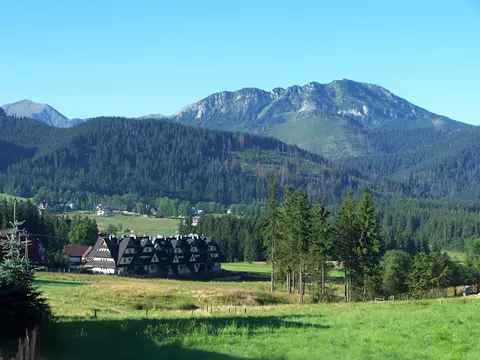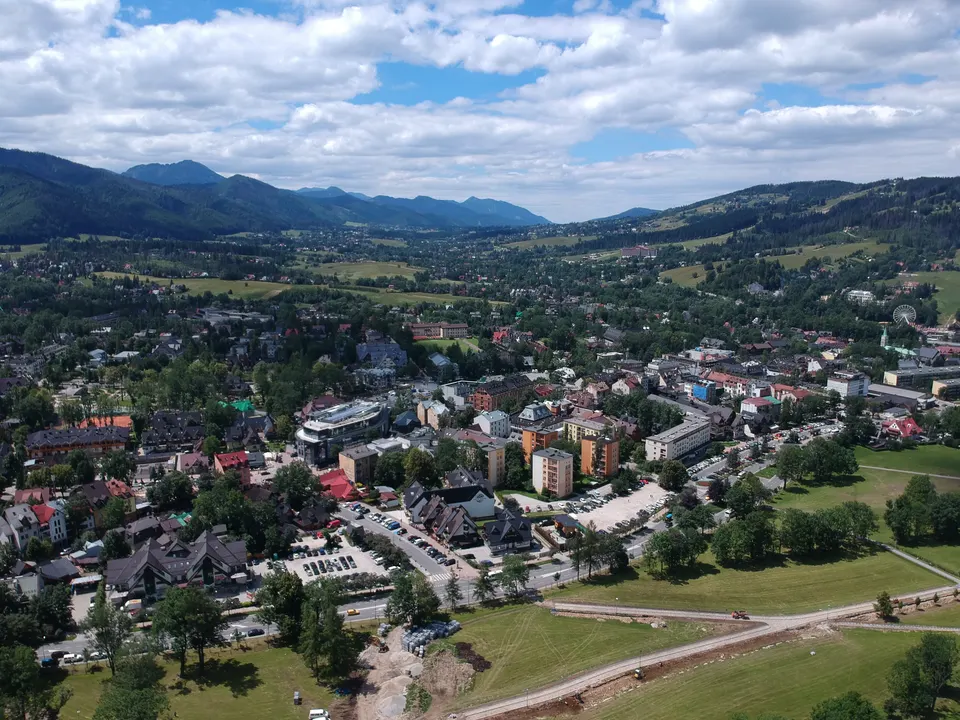

Zakopane is a town in southern Poland, at the foot of the Tatra Mountains in the Podhale region, close to the Slovak border. It is a centre of Goral culture, the highland tradition known for its own architecture, speech, music and costume, and it is often called the winter capital of Poland. The town sits in a valley between the Tatras and the Gubałówka hill.
About 27,000 people live in Zakopane, in Lesser Poland, Poland, and its station is a rail hub.
Why go to Zakopane?
Zakopane draws people for the mountains and for the Zakopane Style of architecture, a highland style that Stanisław Witkiewicz pioneered and that is now seen as a core tradition of the Goral people. Villa Koliba and the Tatra Museum are among its best-known examples, and the Holy Family Church is a Romanesque Revival building. In winter the slopes bring skiing and ski jumping, and in summer hiking and climbing in the Tatras. Krupówki Street, the main street, is lined with shops, restaurants and bars, and a summer market along it sells oscypek smoked sheep cheese. The Kasprowy Wierch cable railway and the Gubałówka funicular, both modernist stations from the 1930s, carry visitors into the hills.
When is the best time to visit Zakopane?
Expect daytime highs of about 19 °C in July and August, falling to -2 °C in January. For skiing, go in January, February and December. If you are after nature and hiking trips, aim for June, July and August. If you are after city breaks, aim for June, July and August.
How do I get to Zakopane without flying?
You can get to Zakopane without changing from 6 destinations, by bus or train. With changes, Zakopane is within 14 hours of 953 destinations without flying. From Krakow, it takes 1h 47m by bus with FlixBus-eu, with about 2.3 kg of CO₂ per person. Travelling from Nowy Targ, allow 14 min by train with PKP Intercity; that is about 0.7 kg of CO₂ per person. Rabka-Zdrój is 55 min away by bus with FlixBus-eu, with about 0.9 kg of CO₂ per person.
What to do in Zakopane
Tatra Museum
Built in the Zakopane Style by Stanisław Witkiewicz, it is one of the town's best-known buildings in that tradition.
Villa Koliba
A villa by Witkiewicz in the Zakopane Style, now home to the Museum of Zakopane Style.
Old Cemetery in Pęksowy Brzyzek
A burial ground for many artists, architects, writers and mountaineers, including Witkiewicz and Kazimierz Przerwa-Tetmajer, with a cenotaph of Witkacy.
Krupówki Street
The town's main street, lined with shops, restaurants and performers, and busy in both seasons.