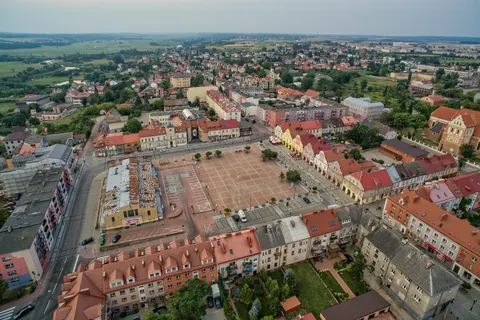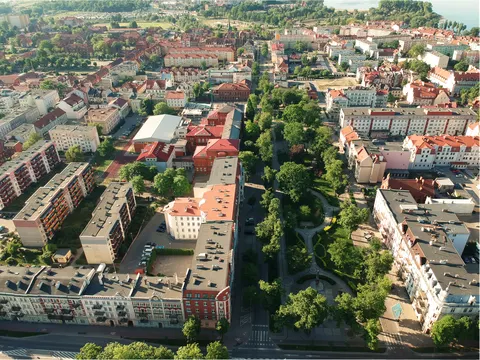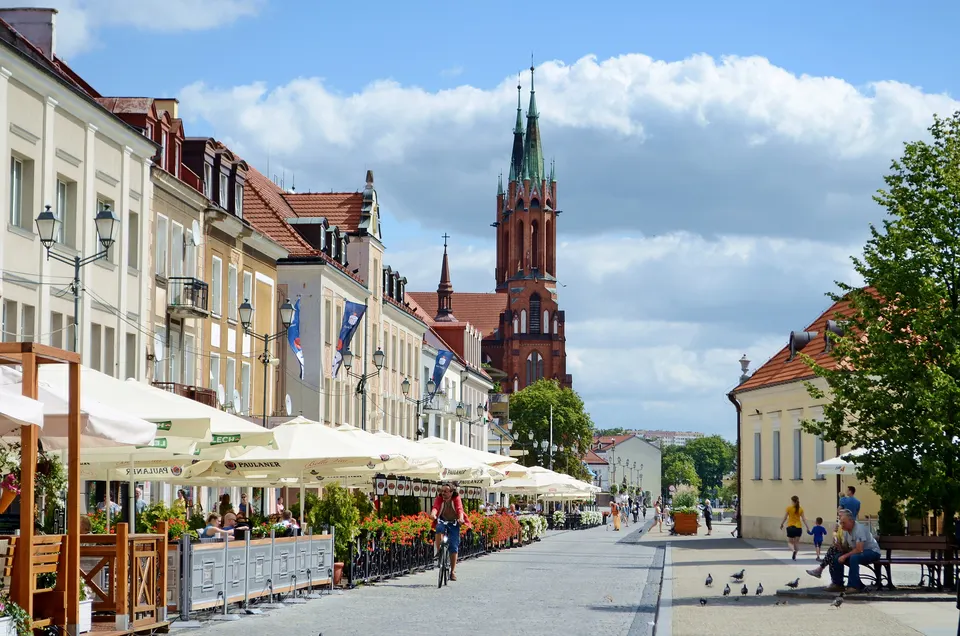

Białystok is the largest city in northeastern Poland and the capital of the Podlaskie Voivodeship. It sits on the Biała River in the Białystok Uplands, about 200 kilometres northeast of Warsaw and close to the Belarusian border. The city is one of Poland's most forested, with woods covering almost a fifth of its administrative area. For generations it has been a centre of academic, cultural and artistic life in Podlachia, and it is the most important economic centre in the northeast.
Bialystok is in Podlasie, Poland, and has a population of about 296,000; it is also a rail hub.
Why go to Bialystok?
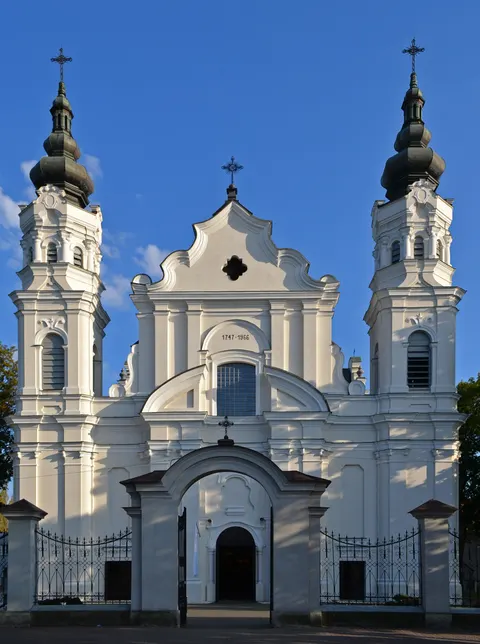
The Branicki Palace is the city's best-known Baroque building, and the Town Hall is also in that style. The Orthodox Cathedral of St Nicholas is a neoclassical landmark, and the Opera and Philharmonic building is a postmodern addition to the city. The Ludwik Zamenhof Centre has a permanent exhibition on the young Zamenhof in Białystok, and a branch of the Podlaska Library dedicated to the Esperanto language. The Sybir Memorial Museum honours the victims of forced deportations to Siberia, and the Alfons Karny Sculpture Museum holds the work of a native sculptor.
When is the best time to visit Bialystok?
July is the warmest, with highs of about 23 °C, and January is the coolest, at about -1 °C. City breaks work best in May, June and September.
How do I get to Bialystok without flying?
From 15 destinations you can travel to Bialystok directly by bus or train. Counting connections, 915 destinations can reach it within 14 hours without flying. Travelling from Warsaw, allow 1h 30m by train with PKP Intercity; that is about 5.7 kg of CO₂ per person, 86% less than the 41 kg of a flight. From Wroclaw, it takes 7h 20m by bus with FlixBus-eu, with about 13 kg of CO₂ per person against 109 kg for the flight, 88% less. The bus from Lodz with FlixBus-eu takes 4h 52m; that is about 8 kg of CO₂ per person, 88% less than the 67 kg of a flight.
What to do in Bialystok
Branicki Palace
A Baroque palace from the 18th century, one of the city's most notable historic buildings.
Orthodox Cathedral of St Nicholas
A neoclassical cathedral whose building dates to the mid-19th century.
Sybir Memorial Museum
A museum opened in 2021 on the victims of forced deportations to Siberia by the Russian Empire and the Soviet Union.
Alfons Karny Sculpture Museum
A collection of sculptures by Alfons Karny, a native of the city.