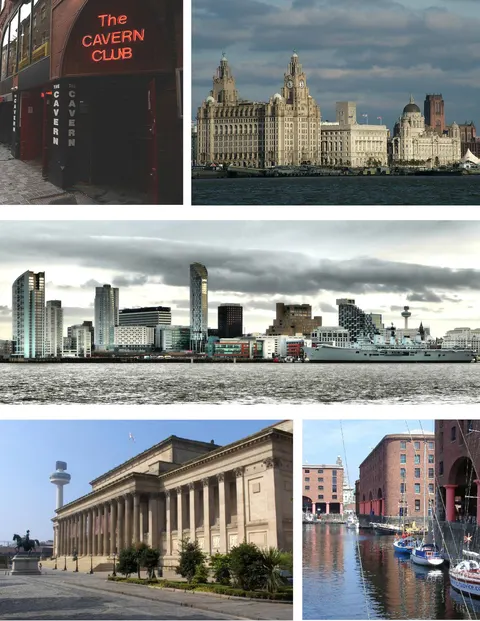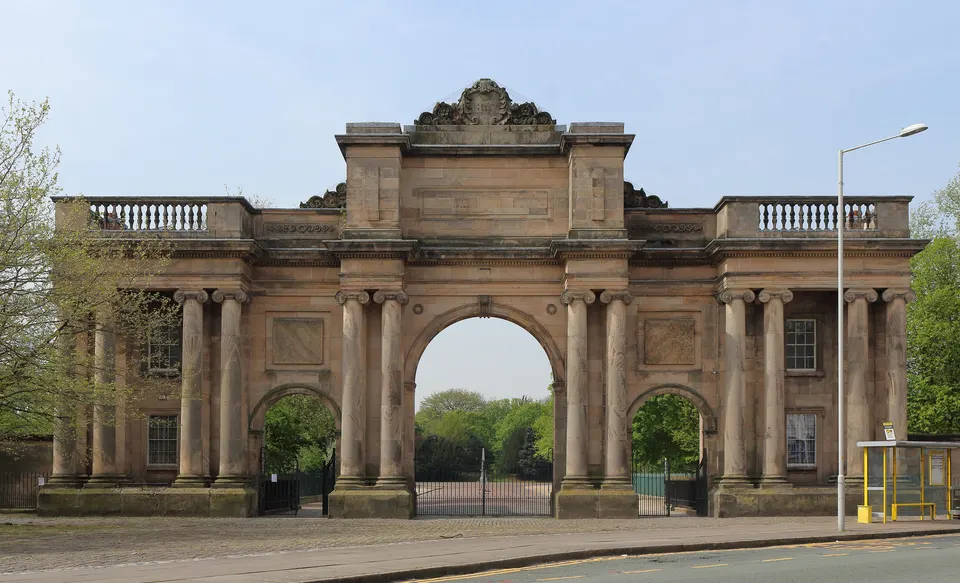

Birkenhead is an industrial port town in the Metropolitan Borough of Wirral, on the west bank of the River Mersey, opposite Liverpool in England. It was a centre of shipbuilding, and its port declined in the second half of the twentieth century as containerisation reduced its activity. New offices and housing now rise on much of the former dockland. The town lies within the historic county of Cheshire.
With about 325,000 inhabitants, Birkenhead lies in England, United Kingdom, and is a rail hub.
Why go to Birkenhead?
Birkenhead Park is the first publicly funded park in Britain, designed by Joseph Paxton, and its influence reached as far as Frederick Law Olmsted's plans for Central Park in New York. Its Grand Entrance is modelled on a temple in Athens, and the sandstone lodges at its three entrances show Gothic, Norman and Italianate styles. Hamilton Square, laid out on a grid, contains more Grade I listed buildings than anywhere in England apart from Trafalgar Square. The first street tramway in Britain was built here, and the Mersey Railway linked the town with Liverpool through the world's first railway tunnel beneath a tidal estuary.
When is the best time to visit Birkenhead?
Average highs range from 7 °C in January, February and December to 19 °C in July.
How do I get to Birkenhead without flying?
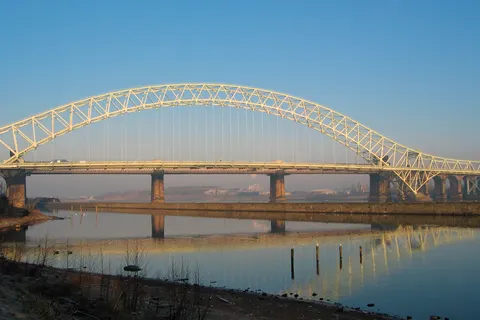
Direct bus or train services link Birkenhead with 8 destinations. Allowing for changes, 1,414 destinations are no more than 14 hours away without flying. Liverpool is 15 min away by train with Merseyrail, with about 0 kg of CO₂ per person. The train from St Helens with Merseyrail takes 54 min; that is about 0.2 kg of CO₂ per person. From Runcorn, it takes 45 min by bus, with about 0.5 kg of CO₂ per person.
What to do in Birkenhead
U-534
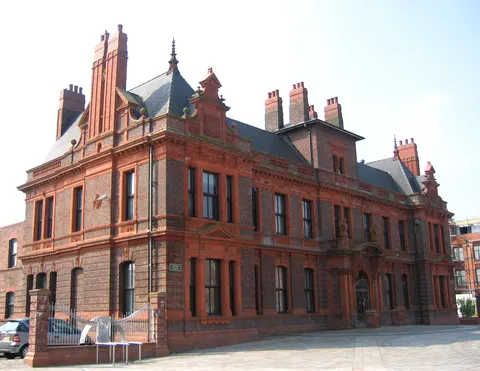
A museum in Birkenhead.
Travel on from Birkenhead
Direct links run to Liverpool, St Helens and Runcorn.
Compare the trip with flying
The trip planner compares train, bus and ferry options to Birkenhead with a flight, including CO₂.