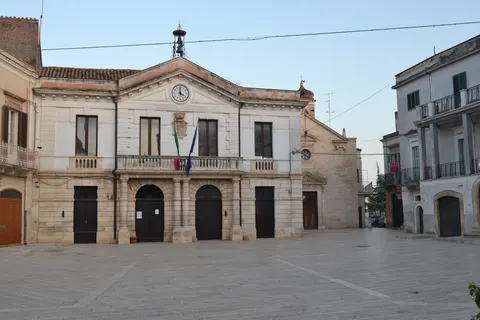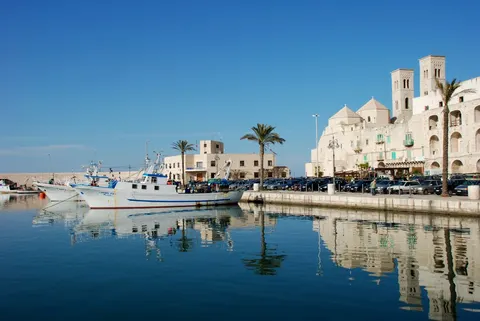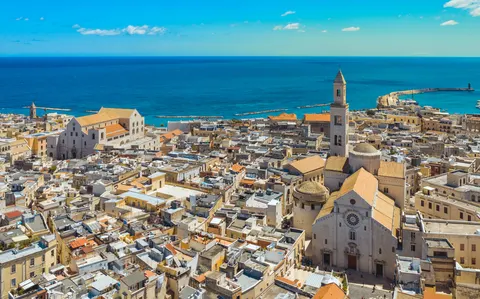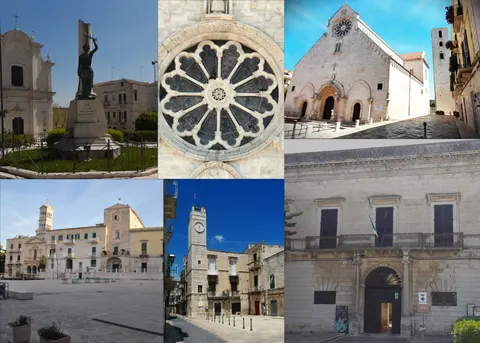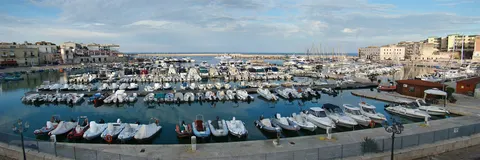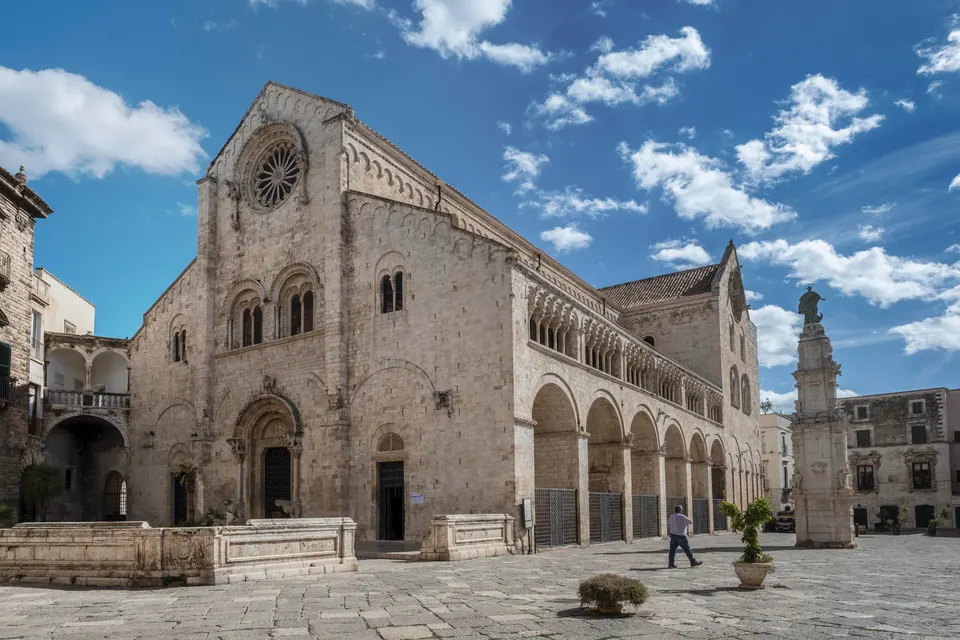

Bitonto is a town in Apulia, lying west of Bari, and a first walk through its centre passes one church after another. The Cathedral of Bitonto anchors the old quarter, with San Gaetano and Santi Medici close by in the same streets. Beyond the town, olive groves surround it on every side, which is where its nickname, the City of Olives, comes from.
About 52,000 people live in Bitonto, in Apulia, Italy, and its station is a rail hub.
Why go to Bitonto?
Bitonto suits a trip built around churches and paintings rather than beaches or peaks. Much of what it has to see is religious architecture, and the sights reward slow looking: the Cathedral of Bitonto, San Gaetano, Santi Medici and Santa Maria del Popolo are all within the town, each with its own interior to explore. Indoors, the Galleria nazionale della Puglia and the Palazzo Sylos-Calò hold the region's art and architecture. The olive groves that ring the town are part of what you see on the way in. Bitonto works well as a stop on a longer route through Apulia, where bigger cities pull the attention.
When is the best time to visit Bitonto?
Expect daytime highs of about 29 °C in July and August, falling to 11 °C in January. For city breaks, any month of the year works.
How do I get to Bitonto without flying?
Only one direct train link serves Bitonto. With changes, Bitonto is within 14 hours of 609 destinations without flying. From Bari, it takes 24 min by train with Ferrotramviaria, with about 0.2 kg of CO₂ per person.
What to do in Bitonto
Cathedral of Bitonto
The cathedral is the building to see first, and it anchors the old quarter. Step inside to look at the interior, then walk out into the streets to find the churches that cluster around it.
Santi Medici and San Gaetano
These churches both sit in the town centre, and they make a simple pair to visit in sequence. Go in with no set plan, let the doors guide you, and compare the interiors as you move from one to the other.
Galleria nazionale della Puglia
The gallery is the museum to visit when you want paintings rather than churches. Spend your time with the works themselves, and treat it as a change of pace from the sacred buildings outside.
Palazzo Sylos-Calò
The Palazzo Sylos-Calò is the town's main palace, and it is worth a look at the façade and the detail of the older houses around it. Walk the streets close to it before you head back toward the churches.