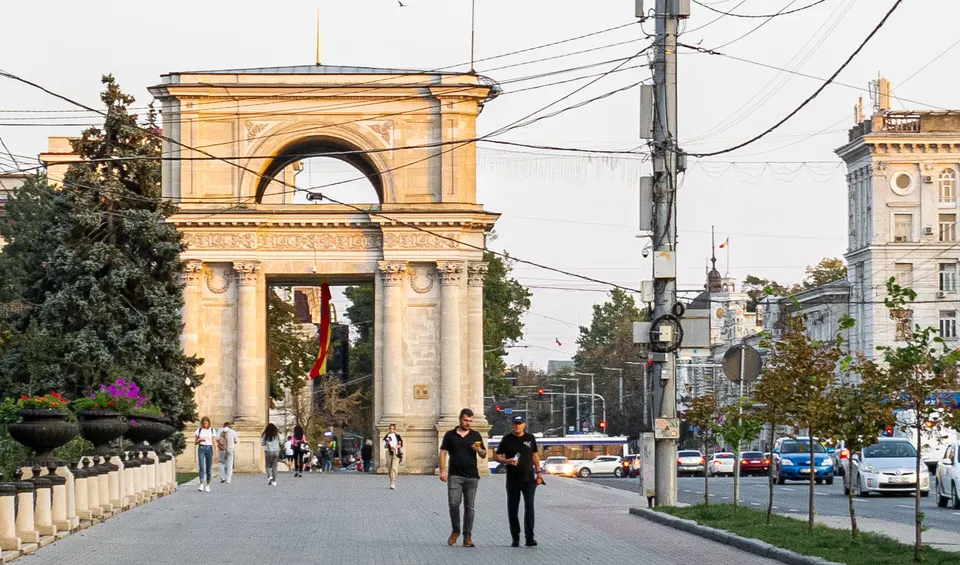

Chișinău is the capital and largest city of Moldova, its main industrial and commercial centre and the country's largest transport hub. It sits in the middle of the country on the river Bâc, a tributary of the Dniester, on a fertile and relatively level landscape. Nearly a third of Moldova's population lives in the metropolitan area.
Chisinau, in Chișinău Municipality, Moldova, is home to about 636,000 people.
Why go to Chisinau?
Moldova has a history of winemaking dating back to at least 3,000 BC, and the capital hosts the national wine festival every October. Much of the city is built of limestone quarried at Cricova, which left a famous wine cellar there. The central railway station has a Russian-Imperial style and direct links to Romania. In the north of the city, near the markets, the house where Alexander Pushkin lived in exile is now a museum. The National Museum of History holds more than 236,000 exhibits.
When is the best time to visit Chisinau?
In July and August the average high reaches 27 °C; in January it is closer to 1 °C. For city breaks, go in April, May and September.
How do I get to Chisinau without flying?
Chisinau has direct bus links to 11 destinations. Within 14 hours, travellers from 48 destinations can get here without flying. The bus from Bălţi takes 1h 48m; that is about 3 kg of CO₂ per person. Bender is 1h 30m away by bus, with about 1.4 kg of CO₂ per person. Travelling from Soroca, allow 2h 20m by bus with FlixBus-eu; that is about 3.6 kg of CO₂ per person.
What to do in Chisinau
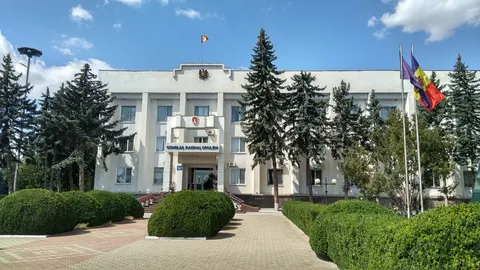
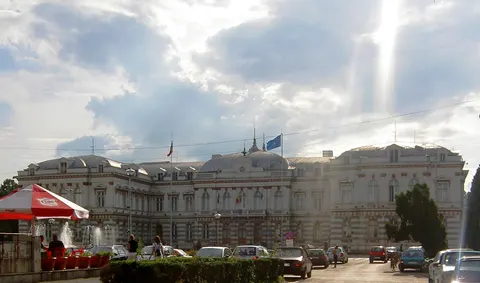
Chișinău City Hall
A building designed by the Swiss-Italian-Russian architect Alexander Bernardazzi, who also designed many of the city's other buildings.
Church of Saint Theodore
A church designed by Alexander Bernardazzi.
Ciuflea Monastery
One of the Orthodox monuments around the city, built in the nineteenth century.
National Museum of Fine Arts
The city's museum of fine art, one of several national museums based in Chișinău.