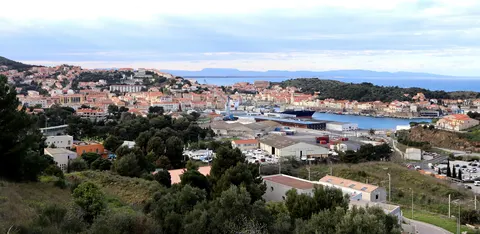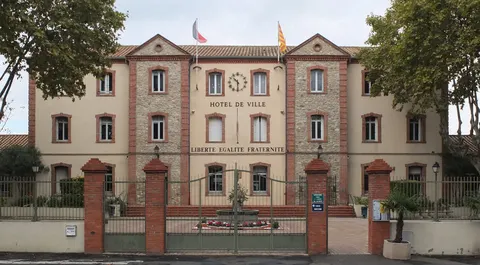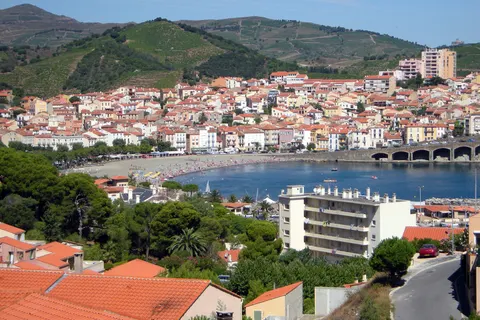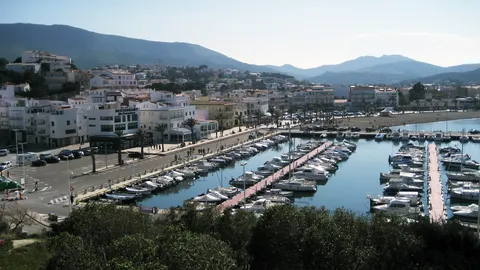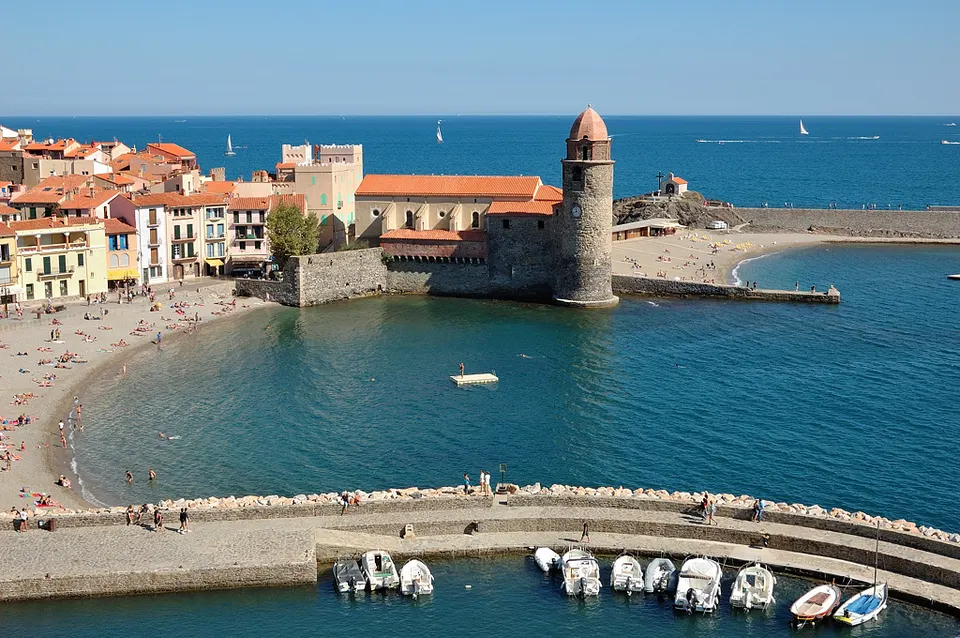

Collioure is a commune on the Côte Vermeille, the Vermilion Coast, in the French department of Pyrénées-Orientales. The town has a strong Catalan culture, and its royal castle and medieval streets sit around a Mediterranean bay. A castle is recorded here as early as 673, a sign of the strategic and commercial importance the settlement had long before the painters arrived.
Collioure, in Occitanie, France, is home to about 3,171 people.
Why go to Collioure?
In the early 20th century Collioure became a centre of artistic activity, and several Fauve painters made it their meeting place. Henri Matisse, André Derain, Georges Braque and Pablo Picasso were all inspired by the royal castle, the medieval streets and the bay. The former lighthouse was converted into the church of Notre-Dame-des-Anges, and the Spanish poet Antonio Machado is buried in the town cemetery after fleeing here in 1939. The town's fortifications were improved by Vauban for Louis XIV.
When is the best time to visit Collioure?
In July and August the average high reaches 27 °C; in January it is closer to 11 °C. Beach holidays work best in June, July and August.
How do I get to Collioure without flying?
Collioure has direct bus or train links to 2 destinations. Within 14 hours, travellers from 1,772 destinations can get here without flying. The train from Argeles with ZOU ! TER takes 4 min; that is about 0 kg of CO₂ per person. Portvendres is 3 min away by bus with .liO 66, with about 0.1 kg of CO₂ per person.
What to do in Collioure
Château Royal de Collioure
The royal castle sits above the bay and was improved by the military engineer Vauban. It was one of the main inspirations for the Fauve artists who worked in the town.
Fort Saint-Elme
A stronghold that forms part of the town's fortifications, improved by Vauban for Louis XIV.
Notre-Dame-des-Anges
The former lighthouse, converted into a church. It was one of the subjects that inspired the Fauve painters working in the town.
The town cemetery
The cemetery holds the tomb of the Spanish poet Antonio Machado, who fled here at the end of the Spanish Civil War. The British novelist Patrick O'Brian is buried there too.