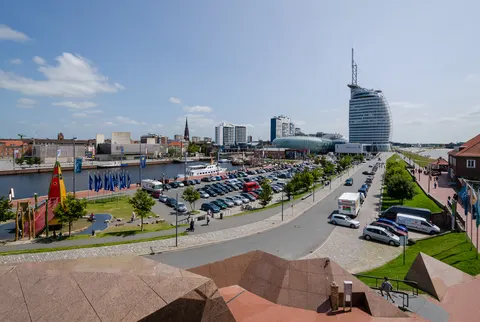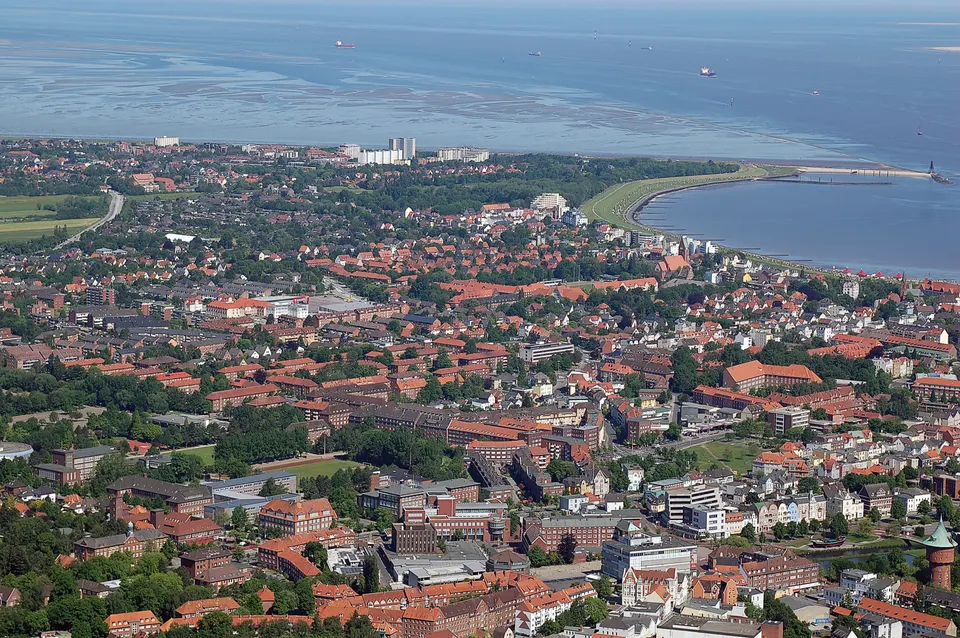

Cuxhaven is a port town and the seat of Cuxhaven district in Lower Saxony, Germany. It lies on the North Sea at the mouth of the Elbe and includes the northernmost point of Lower Saxony. The town serves as a gateway to Heligoland, a tax-free zone off the German coast. Its quarters Duhnen, Döse and Sahlenburg are popular seaside holiday spots, and the town has about 52,000 residents in total.
Cuxhaven is in Lower Saxony, Germany, and has a population of about 53,000; it is also a rail hub.
Why go to Cuxhaven?
Cuxhaven's character comes from the sea and its maritime history. Its fishermen's wharf and shipping registration point for Hamburg reflect a port life that is still active, and its beacon, the Kugelbake, marks the mouth of the Elbe and appears on the city's coat of arms. The former ocean liner terminal, built by the Hamburg America Line for emigrants, was restored as a museum and cruise ship terminal. Ritzebüttel Castle, from the older town that Cuxhaven grew out of, still stands. The seaside resort tradition goes back to the nineteenth century, and the baroque Jacobikirche in Lüdingworth is noted for its organ by Arp Schnitger.
When is the best time to visit Cuxhaven?
July and August are the warmest, with highs of about 19 °C, and January and February are the coolest, at about 4 °C.
How do I get to Cuxhaven without flying?
From 2 destinations you can travel to Cuxhaven directly by train. Counting connections, 1,942 destinations can reach it within 14 hours without flying. Travelling from Otterndorf, allow 12 min by train with RV Start Deutschland GmbH Unterelbe; that is about 0.3 kg of CO₂ per person. From Nordholz, it takes 12 min by train with EVB ELBE-WESER GmbH, with about 0.2 kg of CO₂ per person.
What to do in Cuxhaven
Kugelbake
The wooden beacon at the mouth of the Elbe, once used as a lighthouse and shown on the town's coat of arms.
Ritzebüttel Castle
The surviving castle of Ritzebüttel, the older town that Cuxhaven grew out of.
Jacobikirche
A baroque church in Lüdingworth, notable for its organ by Arp Schnitger and its lavish interior.
Former ocean liner terminal
The Hamburg America Line's emigrant terminal, now a museum and cruise ship terminal.