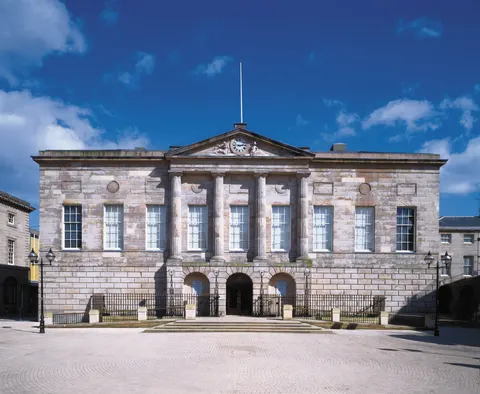
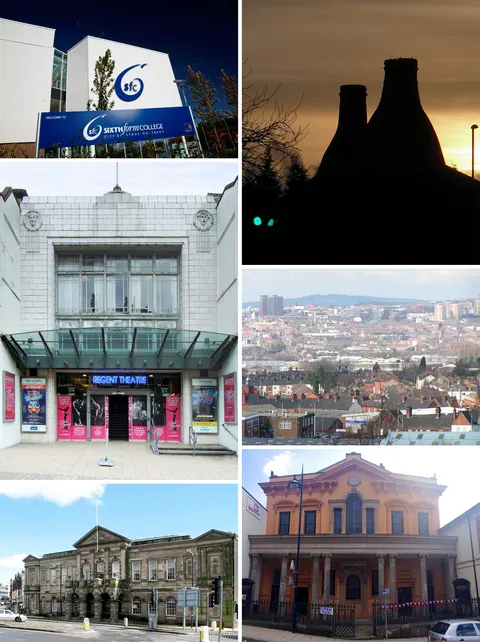
Derby is a city and unitary authority on the River Derwent in Derbyshire, England. It was the original county town before Matlock took that role, and it had a cathedral long before it became a city in 1977. Derby is a centre for advanced transport manufacturing, with the Rolls-Royce engine works and the Alstom rail plant at Litchurch Lane.
Derby is in England, United Kingdom, and has a population of about 270,000.
Why go to Derby?
Derby's story is industrial. Lombe's Mill, an early British factory, stood in the town, and the southern part of the Derwent Valley Mills World Heritage Site runs along the river. The Museum of Making in the Silk Mill covers the town's engineering, from aero engines to railways. Pickford's House, built in 1770 by the architect Joseph Pickford, is now a museum, and the Derby Museum and Art Gallery holds paintings by Joseph Wright. The cathedral's tower has been home to breeding peregrine falcons since 2006.
When is the best time to visit Derby?
July and August are the warmest, with highs of about 20 °C, and January and December are the coolest, at about 6 °C. Any month suits city breaks.
How do I get to Derby without flying?
From 6 destinations you can travel to Derby directly by bus. Counting connections, 1,632 destinations can reach it within 14 hours without flying. Travelling from London, allow 3h 05m by bus with FlixBus-gb; that is about 4.9 kg of CO₂ per person, 88% less than the 42 kg of a flight. From Leeds, it takes 1h 43m by bus with FlixBus-eu, with about 2.6 kg of CO₂ per person. The bus from Sheffield with FlixBus-gb takes 1h 01m; that is about 1.4 kg of CO₂ per person.
What to do in Derby
St Alkmund's Church
A church in Derby.
Strutt's Park Roman fort
A monument in Derby.
City breaks in Derby
June is the ideal month for city breaks, with average highs of 18 °C.