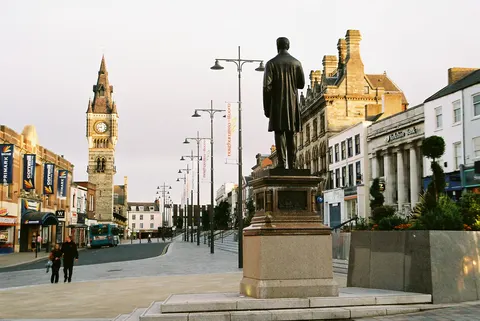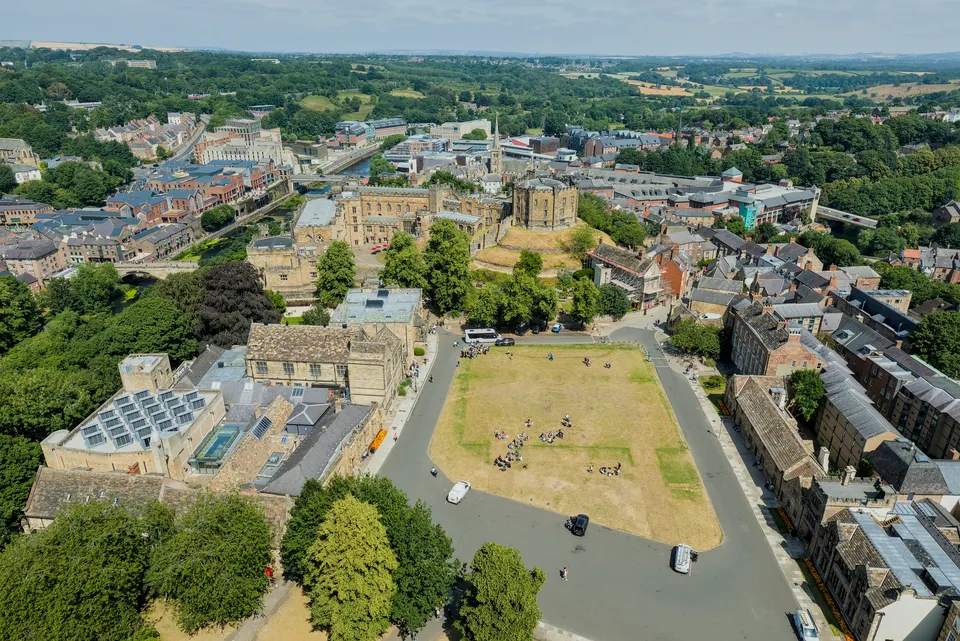

Durham is a cathedral city and the county town of County Durham in northeast England. The city stands on a meander of the River Wear, which surrounds the centre on three sides. It was founded in 995 by Anglo-Saxon monks who brought the relics of Saint Cuthbert to a high peninsula that was safe from Viking raids.
With about 48,000 inhabitants, Durham lies in England, United Kingdom, and is a rail hub.
Why go to Durham?
Durham is built around its cathedral and castle, which share a UNESCO World Heritage Site listing. The present cathedral was raised after the Norman Conquest, replacing a first church that lasted only a century, and it still dominates the high peninsula where the city began. The whole centre is a conservation area with more than 630 listed buildings, which gives the streets a dense historic character. Durham University, founded in 1832, adds a student population to the old streets. The annual Durham Miners' Gala keeps alive the history of the coalfield, whose pits have now closed.
When is the best time to visit Durham?
Average highs range from 6 °C in January and December to 19 °C in July and August. For city breaks, any month of the year works.
How do I get to Durham without flying?
Only one direct train link serves Durham. Allowing for changes, 1,463 destinations are no more than 14 hours away without flying. Newcastle is 12 min away by train with LNER, with about 1 kg of CO₂ per person.
What to do in Durham
Durham Cathedral
The present cathedral replaced the first church built here, which lasted only a century, and it forms a UNESCO World Heritage Site with the castle.
Durham Castle
A castle that shares its UNESCO World Heritage Site listing with the cathedral.
Durham Miners' Gala
An annual event that continues after the coal pits closed, and a major occasion for the city and the region.