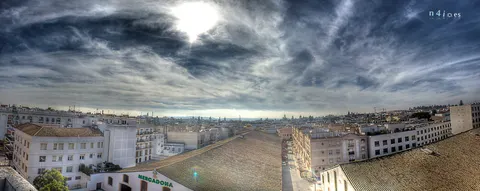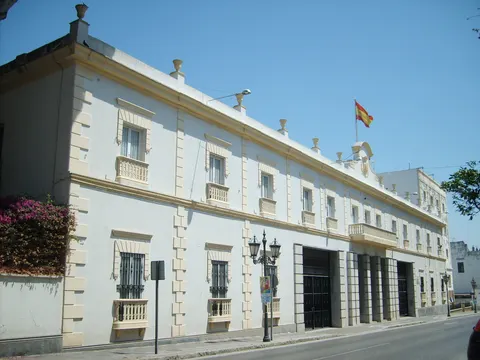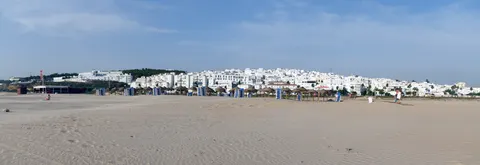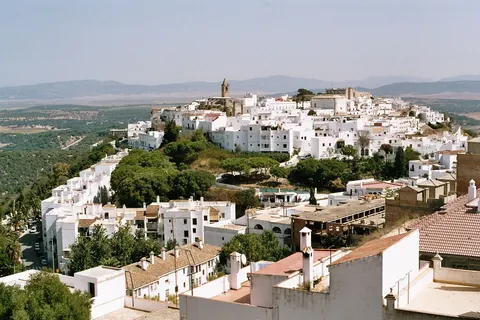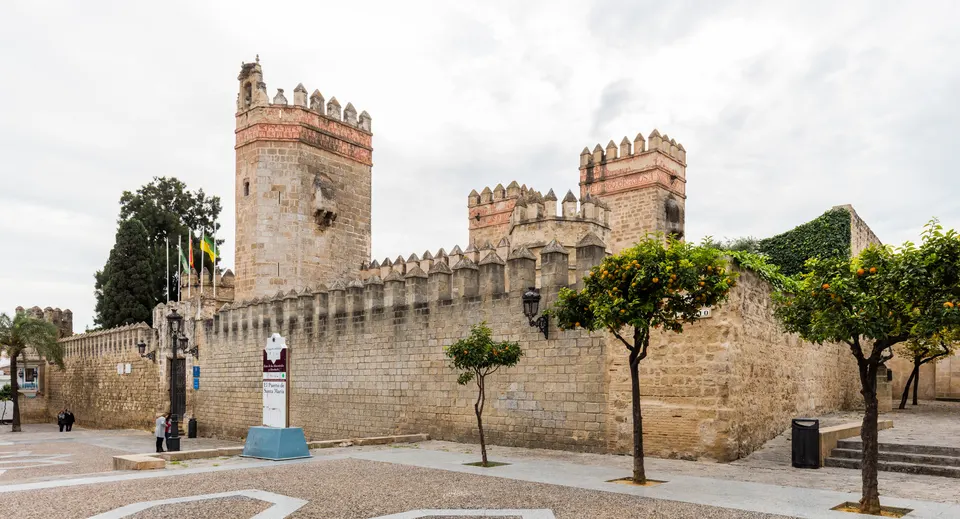

El Puerto de Santa María sits on the right bank of the Guadalete River, where it meets the Bay of Cádiz in the province of Cádiz. The place was probably a Roman port, and after Castile took it, it became a shipping centre for Spain's trade with the Americas. Columbus visited the town in 1480, and his first expedition set sail from here in 1492. Many palaces, convents and churches from the centuries since still line the historic centre.
El Puerto de Santa María is in Andalusia, Spain, and has a population of about 88,000; it is also a rail hub.
Why go to El Puerto de Santa María?
The old town is dense with palaces, churches and convents, most of them built over several centuries. The Castle of San Marcos is the best-known monument: a fortified church built over the remains of an Islamic-era mosque, with stones from an ancient Roman building nearby. The Monastery of the Victory was built by the Dukes of Medinaceli, and the Palace of Aranibar and the Casa de los Diezmos are among the many named buildings in the historic centre. In spring the town holds the Feria del Vino Fino, with sevillana dancing and fino sherry. Semana Santa fills the streets with daily processions from Palm Sunday to Easter Sunday.
When is the best time to visit El Puerto de Santa María?
July and August are the warmest, with highs of about 30 °C, and January is the coolest, at about 15 °C. For beach holidays, go in May, June and September. Any month suits city breaks.
How do I get to El Puerto de Santa María without flying?
From 3 destinations you can travel to El Puerto de Santa María directly by train. Counting connections, 331 destinations can reach it within 14 hours without flying. Travelling from Jerez de la Frontera, allow 8 min by train with RENFE OPERADORA; that is about 0.1 kg of CO₂ per person. From San Fernando, it takes 12 min by train with RENFE OPERADORA, with about 0.1 kg of CO₂ per person. The train from Puerto Real with RENFE OPERADORA takes 6 min; that is about 0.1 kg of CO₂ per person.
What to do in El Puerto de Santa María
Castle of San Marcos
A fortified church built over the remains of an Islamic-era mosque, with parts of an ancient Roman building nearby.
Monastery of the Victory
An early 16th-century monastery built by the Dukes of Medinaceli.
Iglesia Mayor Prioral
The main church of the town, known from the late Middle Ages.
Convent of Santo Domingo
A convent in the old town, one of several religious houses in the centre.