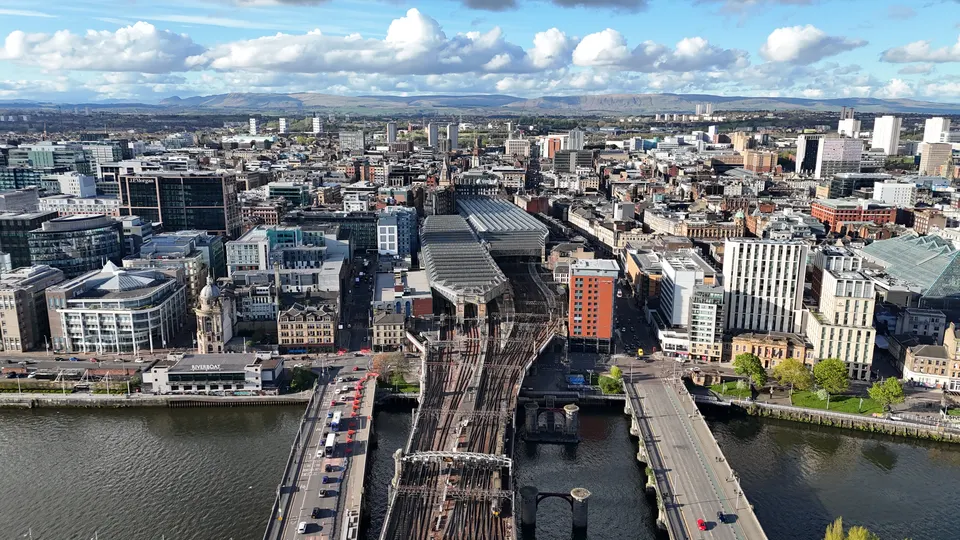

Glasgow is the most populous city in Scotland, on the banks of the River Clyde in the west of the country. It grew from a small settlement near the cathedral into Scotland's largest seaport, and in the Victorian and Edwardian eras it was often called the second city of the British Empire. Today it is known for its universities, finance, shopping, music and fashion, and for its major cultural institutions. The city is also famous in sport, particularly football and the Old Firm rivalry.
Glasgow is in Scotland, United Kingdom, and has a population of about 626,000; it is also a rail hub.
Why go to Glasgow?
Glasgow's major museums and art galleries carry international reputations. The Kelvingrove Art Gallery and Museum, the Burrell Collection and the Hunterian all hold large collections, and the Hunterian keeps Roman altars from the Balmuildy fort on the Antonine Wall. The cathedral stands on the spot where a church founded by Saint Mungo is said to have started the city, and the University of Glasgow, founded in the 15th century, adjoins it. The city became European Capital of Culture in 1990, and its orchestras, theatres and opera and ballet companies give it a lively cultural life. Football is also central, not least the Old Firm rivalry.
When is the best time to visit Glasgow?
July is the warmest, with highs of about 18 °C, and January, February and December are the coolest, at about 6 °C. Any month suits city breaks.
How do I get to Glasgow without flying?
From 10 destinations you can travel to Glasgow directly by bus or train. Counting connections, 1,327 destinations can reach it within 14 hours without flying. Travelling from London, allow 4h 30m by train with Avanti; that is about 6 kg of CO₂ per person, 95% less than the 127 kg of a flight. From Glencoe, it takes 2h 30m by bus, with about 2.7 kg of CO₂ per person. The train from Edinburgh with ScotRail takes 1h 00m; that is about 1 kg of CO₂ per person.
What to do in Glasgow
Kelvingrove Art Gallery and Museum
A museum and art gallery with an international reputation, among the city's major cultural institutions.
Burrell Collection
One of the internationally renowned collections in a city noted for its museums and galleries.
Hunterian Museum
Holds Roman altars from the Balmuildy fort on the Antonine Wall, alongside the rest of its collections.
Glasgow Cathedral
Built on the spot where a church founded by Saint Mungo is said to have stood, beside the University of Glasgow.