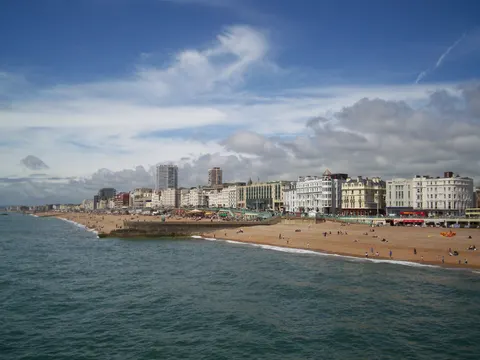
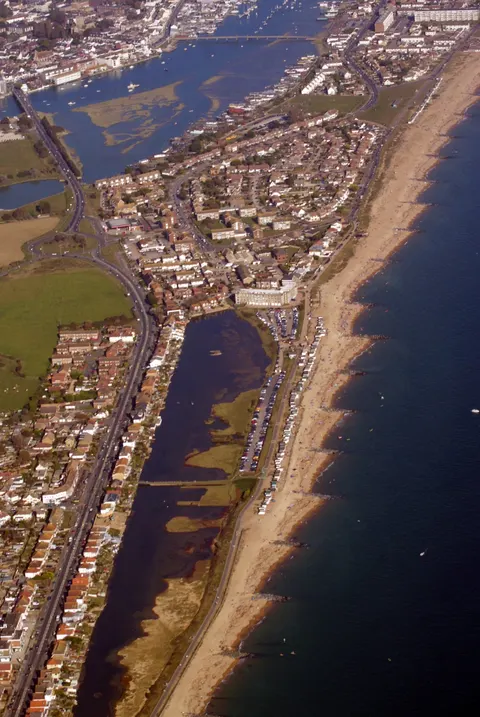
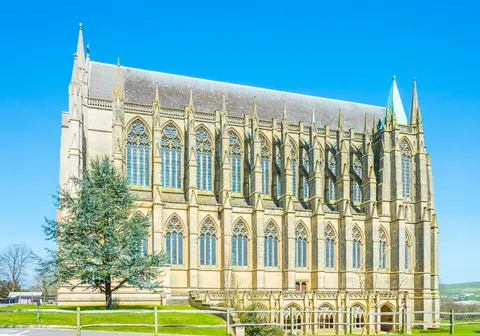
Hove is a seaside location in East Sussex, England, and together with Brighton it forms the city of Brighton and Hove. It began as a fishing village surrounded by open farmland and grew rapidly in the 19th century alongside its eastern neighbour Brighton. Its beaches are shingle at high tide, and at low tide sand appears between the sea-defence groynes.
Hove is in England, United Kingdom, and has a population of about 75,000.
Why go to Hove?
Hove became a fully developed Victorian town with borough status, and neighbouring parishes such as Aldrington and Hangleton were absorbed in the late 19th and early 20th centuries. At low tide the water is shallow and suitable for paddling, and a greater expanse of sand appears on spring tides. The northern parts stand on chalk, and a large deposit of brickearth lies in the Aldrington area. After the borough grew, its highest point rose to about 180 metres above sea level. The seafront is the part of the town that most visitors come to see.
When is the best time to visit Hove?
August is the warmest, with highs of about 19 °C, and February is the coolest, at about 7 °C.
How do I get to Hove without flying?
From 3 destinations you can travel to Hove directly by bus. Counting connections, 1,741 destinations can reach it within 14 hours without flying. Travelling from Brighton, allow 5 min by bus with FlixBus-gb; that is about 0.1 kg of CO₂ per person. From Cambridge, it takes 3h 30m by bus with FlixBus-gb, with about 4.2 kg of CO₂ per person against 35 kg for the flight, 88% less. The bus from Luton with FlixBus-eu takes 2h 50m; that is about 3.2 kg of CO₂ per person.
What to do in Hove
Westbourne Gardens
Named after the West Bourne, a stream that now runs underground, and set at the western edge of the old parish.