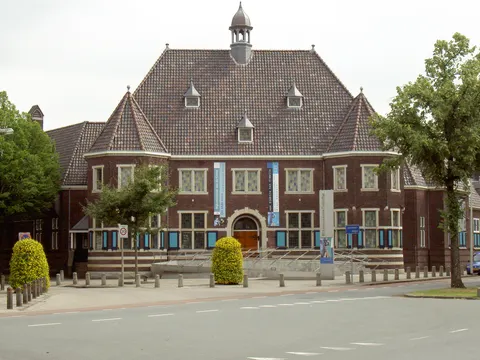
Ibbenbüren is a town in the Steinfurt district of North Rhine-Westphalia, on the Ibbenbürener Aa river. It lies at the northwest end of the Teutoburg Forest, between Rheine and Osnabrück. Coal mining began here in the early modern period, and iron ore was dug in and around the town in the 1600s, while the local nobles built a castle whose traces remain.
With about 51,000 inhabitants, Ibbenbueren lies in North Rhine-Westphalia, Germany, and is a rail hub.
Why go to Ibbenbueren?
The castle is the oldest visible layer of the town. The noble family of Ibbenbüren began building it around 1150, and only the remnants of its heath tower survive near the Aasee. Ibbenbüren was ruled in turn by the counts of Tecklenburg, then passed to Charles V, who gave it to his sister, and later came under the Netherlands and Spain during the Dutch Revolt. Prussia took it over in the early eighteenth century, and it gained municipal rights in 1724. Napoleon's French Empire held it for a time before Prussian and Russian troops freed it, and the mines that opened in the sixteenth century shaped the town's work for centuries.
When is the best time to visit Ibbenbueren?
Average highs range from 4 °C in January to 22 °C in July and August.
How do I get to Ibbenbueren without flying?
Direct train services link Ibbenbueren with 2 destinations. Allowing for changes, 2,240 destinations are no more than 14 hours away without flying. Osnabrück is 13 min away by train with eurobahn, with about 0.4 kg of CO₂ per person. The train from Rheine with DB Regio AG Nord takes 11 min; that is about 0.3 kg of CO₂ per person.
What to do in Ibbenbueren
Heath tower of the Ibbenbüren castle
The surviving remnants of the castle the local nobles began building around 1150, close to the Aasee.
Find tours and tickets: Heath tower of the Ibbenbüren castle