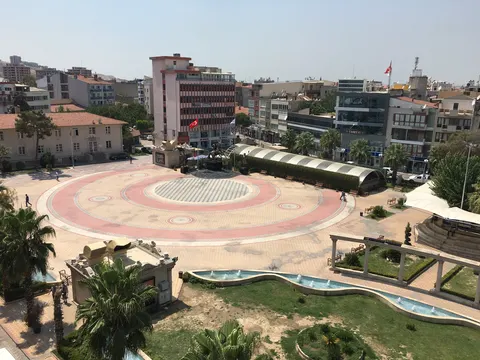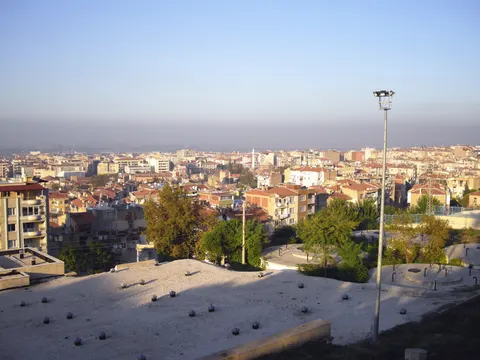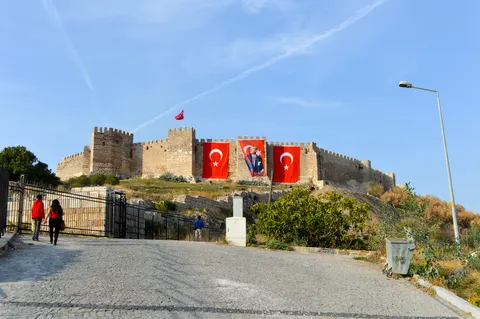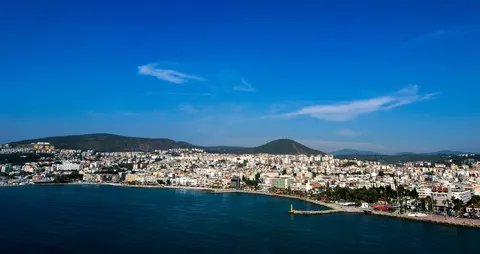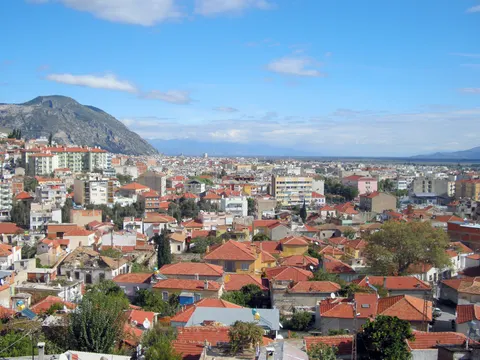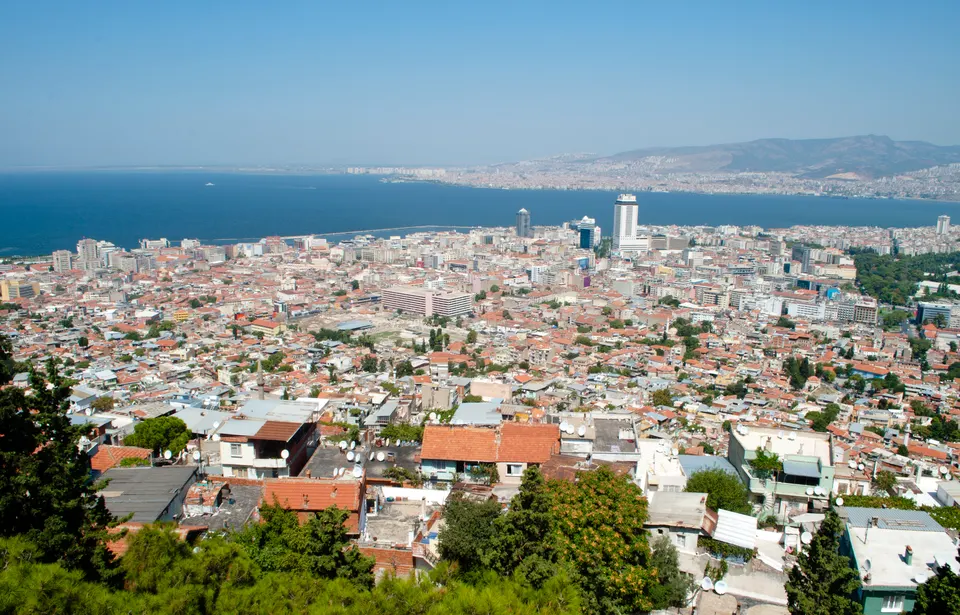

İzmir is the third most populous city in Turkey and the largest metropolitan area on the Aegean Sea. It lies on the Aegean coast of Anatolia, at the head of a deep gulf, and is the capital of İzmir Province. In classical antiquity it was known as Smyrna, a name that stayed in use in English until around 1930. For much of its history it has been one of the principal trading cities of the Mediterranean.
With about 2.9 million inhabitants, Izmir lies in İzmir Province, Turkey, and is a rail hub.
Why go to Izmir?
İzmir's past runs deeper than most cities in the region. Human settlement here reaches back up to 8,500 years, and the Agora of Smyrna, one of the largest agoras in the world within an urban area, is a tentative World Heritage Site. The Kemeraltı bazaar, set up by the Ottomans, lies near the slopes of Kadifekale, the hill with an ancient castle on top. In Konak, the Clock Tower rises from the middle of the district, and the Arkas Art Centre occupies a building that the French Consulate-General commissioned. Across the gulf in Karşıyaka, the Bostanlı Open-air Archaeological Museum displays pillars and sculptures from many centuries of antiquity.
When is the best time to visit Izmir?
Average highs range from 11 °C in January to 34 °C in July and August. March, April and November are the time for city breaks.
How do I get to Izmir without flying?
Direct bus or train services link Izmir with 9 destinations. Allowing for changes, 61 destinations are no more than 14 hours away without flying. Istanbul is 6h 00m away by bus, with about 10 kg of CO₂ per person against 75 kg for the flight, 87% less. The bus from Manisa takes 1h 12m; that is about 0.9 kg of CO₂ per person. From Urla, it takes 1h 00m by bus, with about 0.9 kg of CO₂ per person.
What to do in Izmir
St. John's Cathedral
A cathedral in Izmir.
İzmir Archaeological Museum
A museum in Izmir.
City breaks in Izmir
April is the ideal month for city breaks, with average highs of 20 °C.