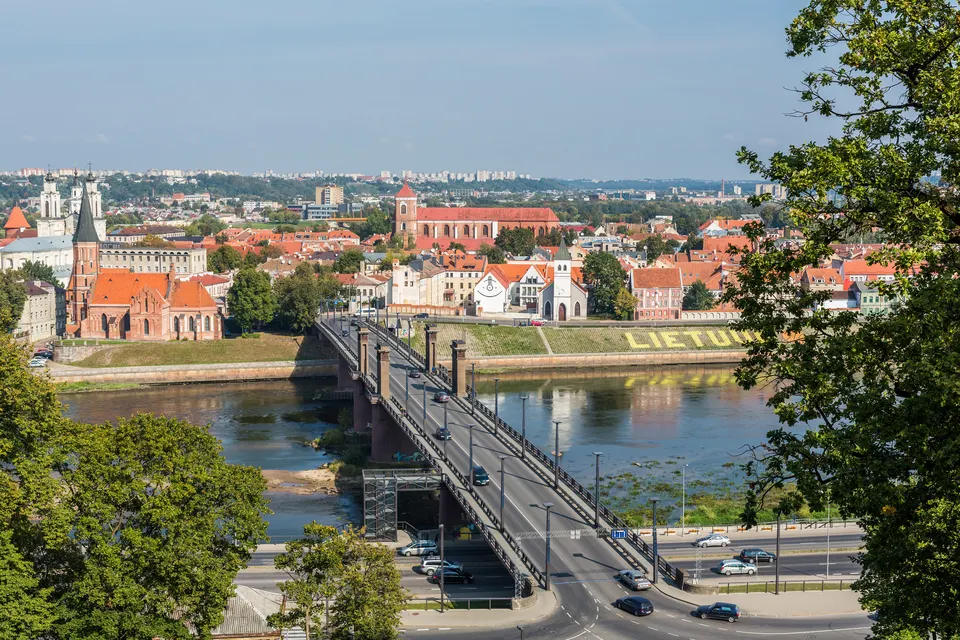

Kaunas is the second-largest city in Lithuania after Vilnius, and the fourth-largest in the Baltic states. It sits at the confluence of the Nemunas and Neris rivers, near the Kaunas Reservoir. Between 1920 and 1939 it served as the temporary capital of Lithuania, and it is known for its interwar Art Deco architecture.
With about 289,000 inhabitants, Kaunas lies in Lithuania and is a rail hub.
Why go to Kaunas?
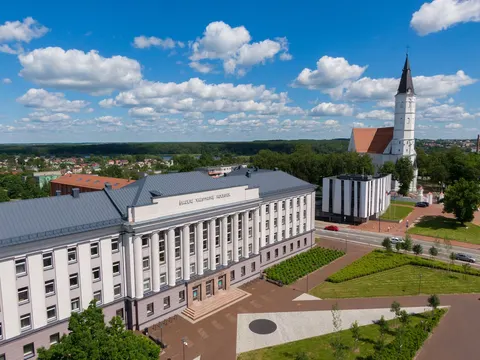
Kaunas is a city of interwar architecture, museums and café life. Its Art Deco and Lithuanian National Revival buildings from the interwar period are regarded as among the finest examples of European Art Deco, and the city's modernist architecture was made a World Heritage Site. The Old Town is a pedestrian area where walking is the best way to tour, with the Kaunas Castle, the Town Hall and the historic Presidential Palace among its features. Kaunas is often called a city of museums, and its Devils' Museum holds a collection of devil sculptures and carvings from all over the world.
When is the best time to visit Kaunas?
Average highs range from -1 °C in January to 22 °C in July and August. May, June and September are the time for city breaks.
How do I get to Kaunas without flying?
Direct bus or train services link Kaunas with 8 destinations. Allowing for changes, 490 destinations are no more than 14 hours away without flying. Warsaw is 6h 30m away by bus with Lux Express, with about 10 kg of CO₂ per person against 45 kg for the flight, 78% less. The train from Vilnius with LTG Link takes 59 min; that is about 0.7 kg of CO₂ per person. From Riga, it takes 3h 40m by bus with FlixBus-eu, with about 6.2 kg of CO₂ per person against 29 kg for the flight, 79% less.
What to do in Kaunas
Kaunas Castle
A castle in the Old Town, one of the historic buildings at the confluence of the two rivers.
Kaunas Town Hall
A town hall rebuilt in stone after several fires, now home to the Museum of Ceramics.
Žmuidzinavičius Museum
The Devils' Museum, with more than two thousand sculptures and carvings of devils from around the world.
Kaunas Fortress
A 19th–20th century military fortress, one of the largest defensive structures in Europe.
Laisvės alėja
Liberty Avenue, a pedestrian street lined with linden trees and flower beds.