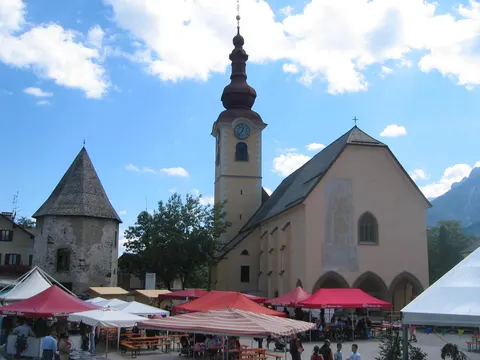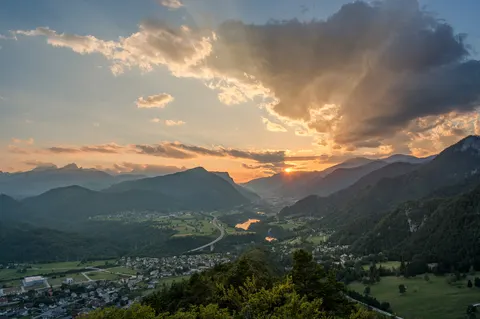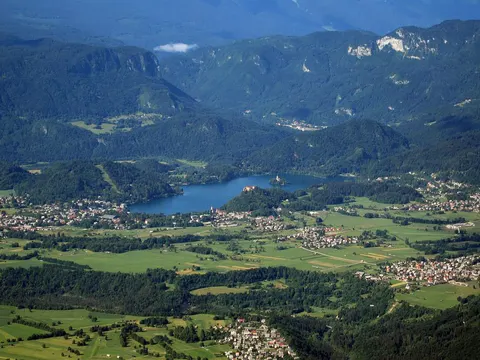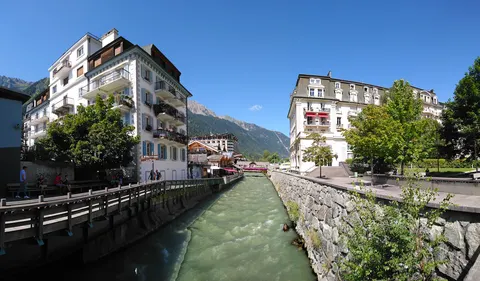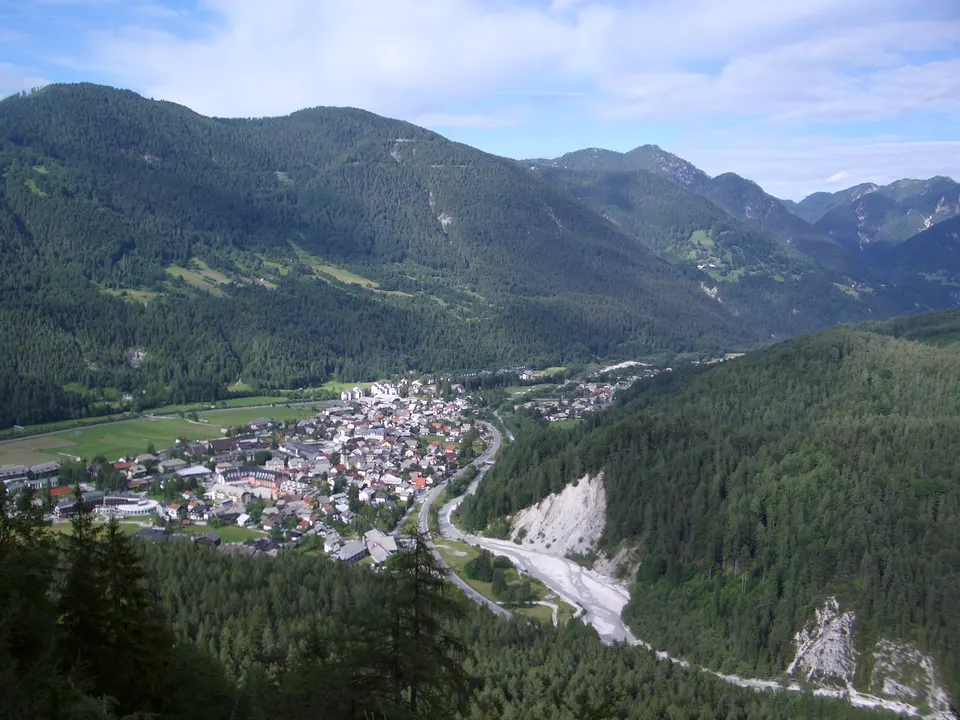

Kranjska Gora is a town in northwestern Slovenia, in the Upper Carniola region, on the Sava Dolinka river close to the Austrian and Italian borders. It is the seat of its municipality. The tripoint of Austria, Italy and Slovenia lies on the mountain of Dreiländereck, known in Slovenia as Peč.
About 1,439 people live in Kranjska Gora, in Municipality of Kranjska Gora, Slovenia, and its station is a rail hub.
Why go to Kranjska Gora?
Kranjska Gora sits on a trade route that already ran through the town in the 14th century, on the way to Tarvisio. The town was a fief of the Counts of Ortenburg in the 12th century. Above the settlement stands a wooden chapel built by Russian prisoners of war in the First World War to commemorate comrades killed in an avalanche while building a road over the Vršič Pass.
When is the best time to visit Kranjska Gora?
Expect daytime highs of about 21 °C in July, falling to 0 °C in January and December. For skiing, go in January, February and December. If you are after nature and hiking trips, aim for June, July and August.
How do I get to Kranjska Gora without flying?
You can get to Kranjska Gora without changing from 5 destinations, by bus or train. With changes, Kranjska Gora is within 14 hours of 2,061 destinations without flying. From Bled, it takes 48 min by bus, with about 0.8 kg of CO₂ per person. Travelling from Jesenice, allow 18 min by bus; that is about 0.6 kg of CO₂ per person. Bovec is 1h 12m away by bus, with about 0.6 kg of CO₂ per person.
What to do in Kranjska Gora
Russian chapel above Kranjska Gora
A wooden chapel built by Russian prisoners of war, with a small cemetery nearby where commemorations are held every year.
Dreiländereck tripoint
The mountain where Austria, Italy and Slovenia meet, known in Slovenia as Peč.