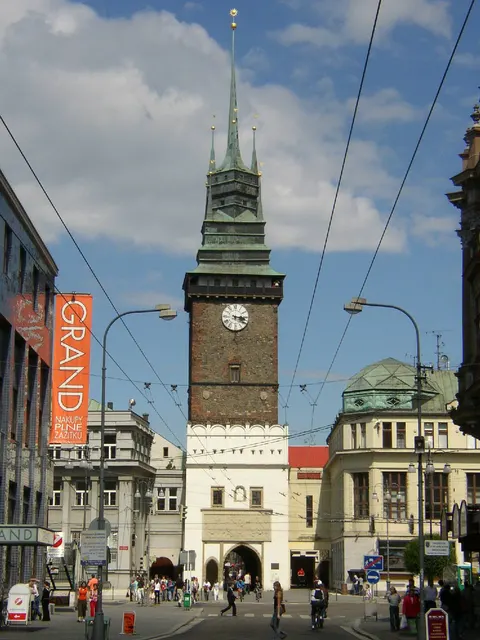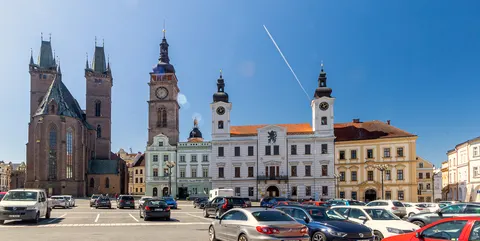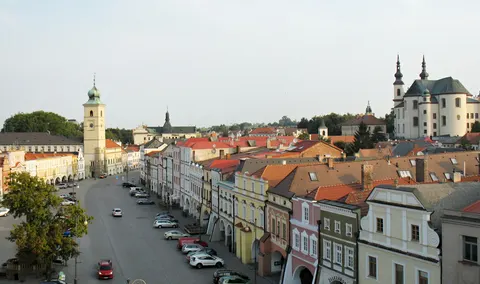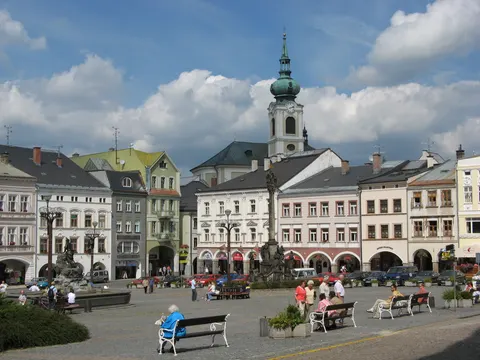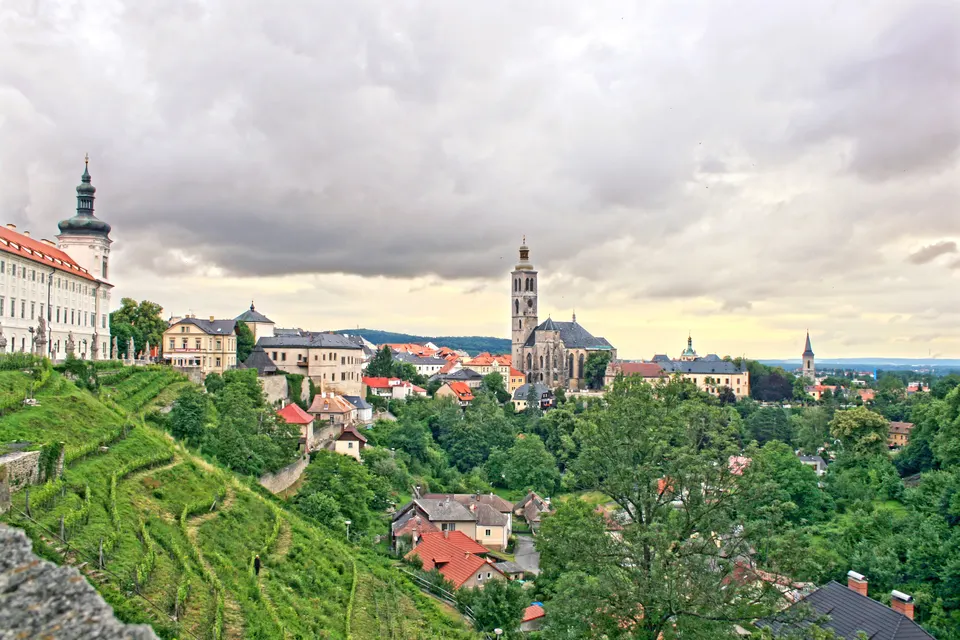

Kutná Hora is a town in the Central Bohemian Region of the Czech Republic, about 52 kilometres east of Prague, with around 22,000 inhabitants. Its history is tied to silver mining, which made it a rich and rapidly developing town. The centre, together with Sedlec Abbey and the Sedlec Ossuary, is a UNESCO World Heritage Site, and the eastern part of the municipal area lies in flat farmland.
Kutná Hora is in Central Bohemia, Czech Republic, and has a population of about 22,000.
Why go to Kutná Hora?
The reason to visit Kutná Hora is its monuments, packed into a compact historic centre. The Church of Saint Barbara is among the main examples of European Gothic architecture, built to rival the cathedral at nearby Sedlec and St Vitus in Prague. The Italian Court, the town's oldest monument, was built in the Gothic style and later became the seat of a royal mint. Next to the church stands the Jesuit College, an early Baroque building that was never finished to its planned extent. The Stone House, a late Gothic burgher house, holds the Museum of Silver, which focuses on the metal that made the town rich.
When is the best time to visit Kutná Hora?
July is the warmest, with highs of about 24 °C, and January is the coolest, at about 2 °C.
How do I get to Kutná Hora without flying?
Kutná Hora has one direct link, by train. Counting connections, 2,030 destinations can reach it within 14 hours without flying. Travelling from Prague, allow 1h 06m by train with České dráhy; that is about 0.6 kg of CO₂ per person.
What to do in Kutná Hora
Church of Saint Barbara
A Gothic church built on a site that was once outside the town walls, with a free-standing Chapel of Corpus Christi in its complex.
Italian Court
A Gothic complex that once formed part of the town's fortifications, with the Chapel of Saints Wenceslaus and Ladislaus, of international distinction.
Sedlec Ossuary
Part of the Sedlec area and one of the most visited sacral monuments in the Czech Republic.
Rejsek's Fountain
A dodecagon-shaped stone fountain on Rejskovo náměstí, built as a drinking water reservoir when mining had disrupted other water sources.