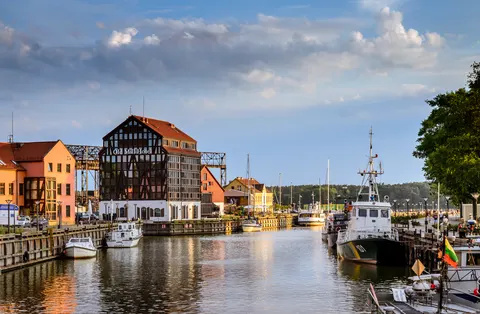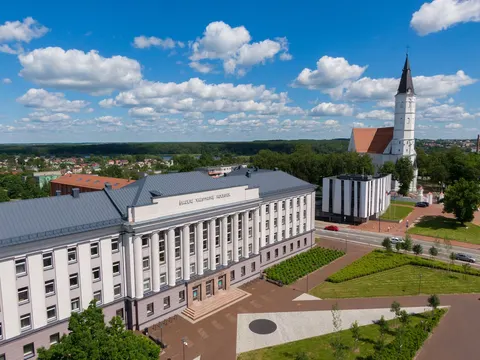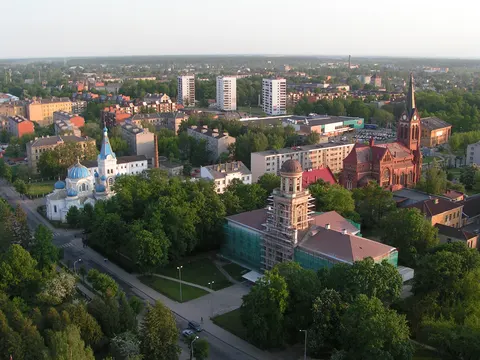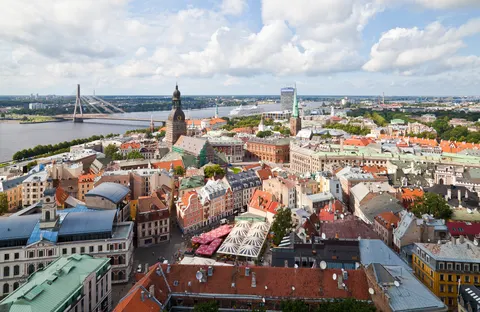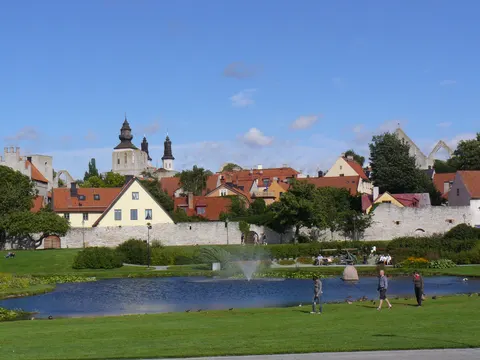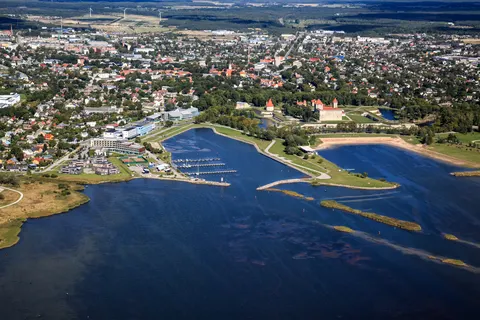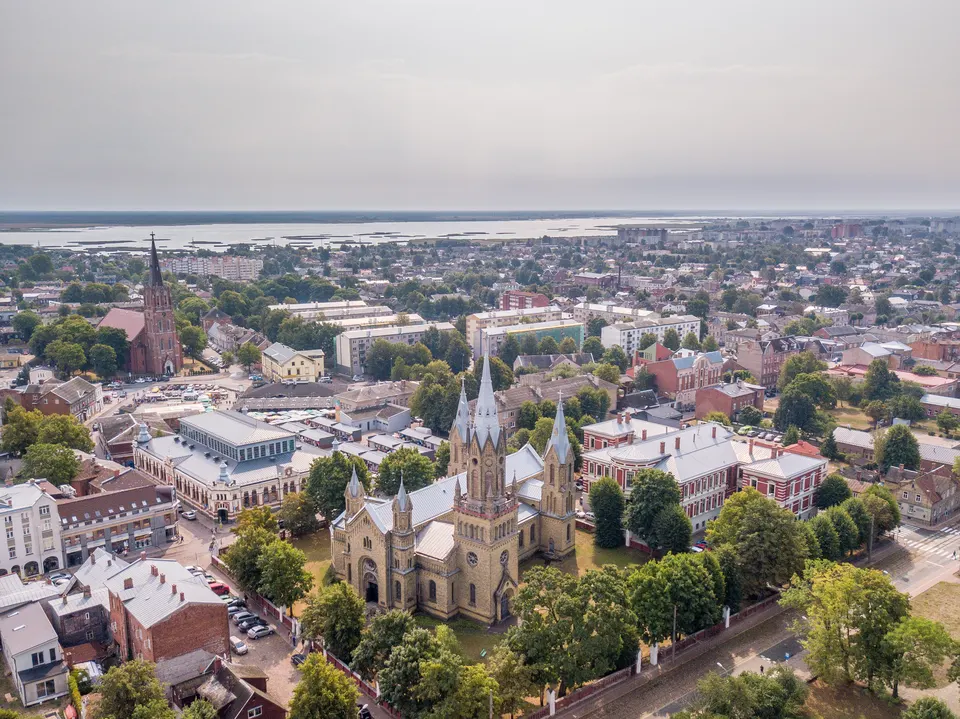

Liepāja is a state city on the Baltic Sea in western Latvia, formerly known as Libau. It is the largest city of the Courland region and the third-largest in the country after Riga and Daugavpils. It is an important ice-free port. Liepāja is known throughout Latvia as the City where the wind is born, a name taken from a song that has become the city's anthem, and the constant sea breeze and a large wind farm nearby reinforce that reputation.
Liepāja, in Liepaja, Latvia, is home to about 67,000 people and works as a rail hub.
Why go to Liepāja?
Liepāja is known in Latvia as the city where the wind is born, a reputation kept alive by a constant sea breeze and a large wind farm nearby. Its coast is an unbroken sandy beach backed by dunes, and in the nineteenth century the town was already a favourite spot for sea bathers. The old town keeps wooden houses on Kungu Street, some of them among the oldest buildings in the city. The Holy Trinity Cathedral was the most ornate building of the early town, and the Great Amber Concert Hall is the most remarkable building of recent years. The Open-Air Museum holds a port warehouse that was moved there in the 1930s.
When is the best time to visit Liepāja?
In July and August the average high reaches 20 °C; in February it is closer to 0 °C. For city breaks, go in June, July and August.
How do I get to Liepāja without flying?
Liepāja has direct bus or train links to 8 destinations. Within 14 hours, travellers from 179 destinations can get here without flying. The bus from Klaipeda takes 2h 48m; that is about 2.4 kg of CO₂ per person. Šiauliai is 4h 00m away by bus, with about 4.2 kg of CO₂ per person against 20 kg for the flight, 79% less. Travelling from Jelgava, allow 2h 30m by bus; that is about 4.5 kg of CO₂ per person, 88% less than the 38 kg of a flight.
What to do in Liepāja
Holy Trinity Cathedral
The most ornate building in the town during its early period of prosperity.
Great Amber Concert Hall
The most remarkable building of recent decades, a contemporary concert hall in the city.
Open-Air Museum
A museum where one of the old wooden port warehouses from Jūras Street was moved in the 1930s.