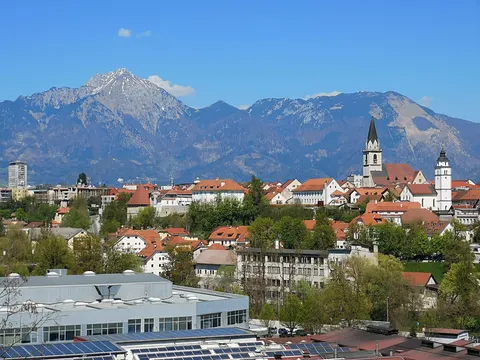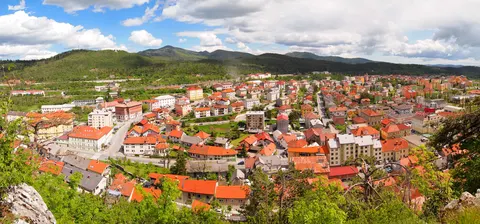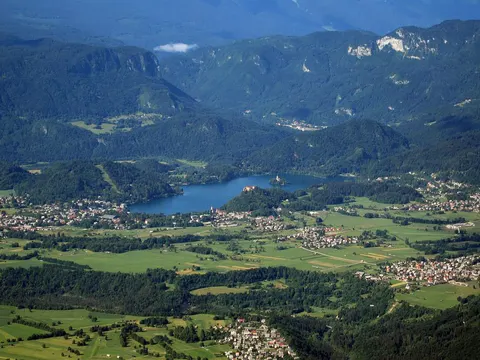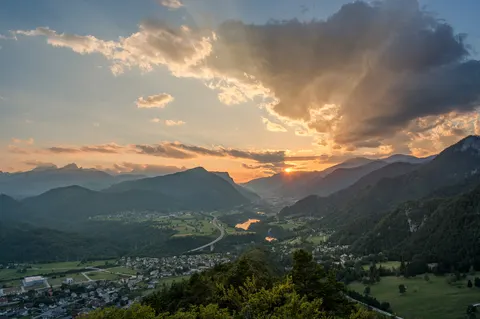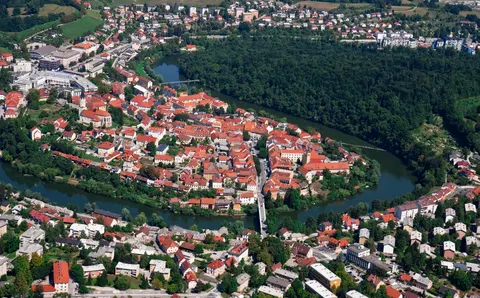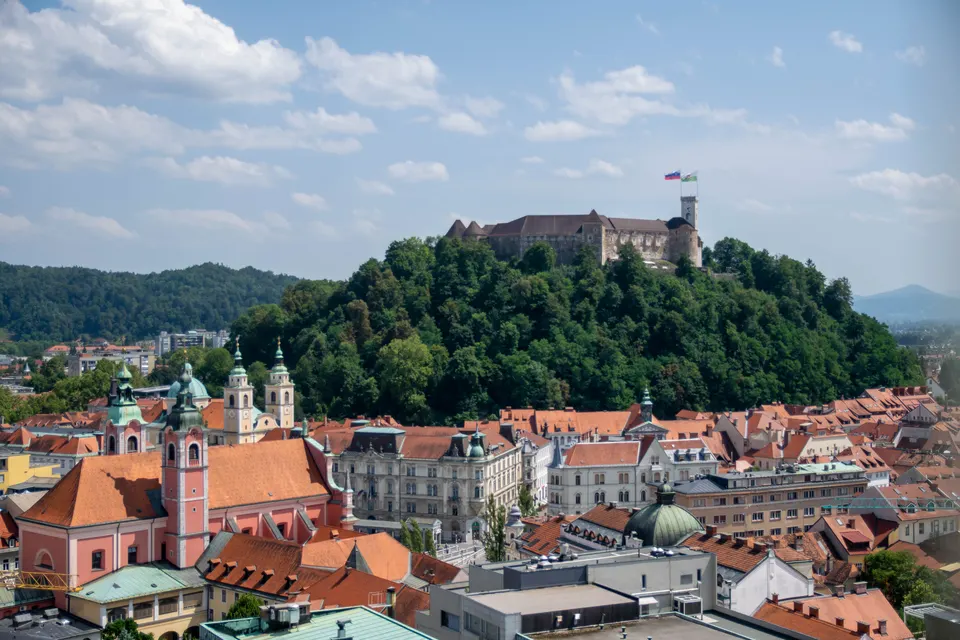

Ljubljana is the capital and largest city of Slovenia, set in a basin between the Alps and the Karst. People have lived by its marshes since prehistoric times, and the Romans built the city of Emona here. The historic centre keeps much of its Baroque outline, rebuilt after the 1511 earthquake, and Vienna Secession buildings stand beside it. Much of the interwar character came from the architect Jože Plečnik, whose personal touch still shapes the streets.
About 272,000 people live in Ljubljana, in Slovenia, and its station is a rail hub.
Why go to Ljubljana?
Ljubljana is a city where old and new sit side by side. The Museum of Modern Art and the National Gallery show the country's most influential artists, and the Metelkova Museum of Contemporary Art hosts exhibitions, a research library and a bookshop. Metelkova itself is a former Austro-Hungarian barracks turned into galleries, artist studios and nightclubs. Center Rog, a former factory, has since been renovated into studios, a library branch and a café. Kino Šiška and the Museum of Transitory Art add concerts, exhibitions and experimental work to the Šiška Cultural Quarter.
When is the best time to visit Ljubljana?
Expect daytime highs of about 26 °C in July, falling to 3 °C in January. If you are after city breaks, aim for April, May and September.
How do I get to Ljubljana without flying?
You can get to Ljubljana without changing from 25 destinations, by bus or train. With changes, Ljubljana is within 14 hours of 2,250 destinations without flying. From Vienna, it takes 4h 59m by bus with FlixBus-eu, with about 7.5 kg of CO₂ per person against 36 kg for the flight, 79% less. Travelling from Prague, allow 9h 25m by bus with FlixBus-eu; that is about 12 kg of CO₂ per person, 79% less than the 57 kg of a flight. Munich is 5h 17m away by bus with FlixBus-eu, with about 8.6 kg of CO₂ per person against 41 kg for the flight, 79% less.
What to do in Ljubljana
National Gallery
Founded in 1918, it exhibits the most influential Slovenian artists.
Metelkova
A former Austro-Hungarian barracks that declared itself an autonomous neighbourhood and now houses galleries, studios and nightclubs.
Center Rog
A former factory renovated into project studios, a library branch and a café, with a large exhibition and event hall.
Kino Šiška
A centre for urban culture in the Šiška quarter, known for concerts of indie, punk and rock bands and for its exhibitions.