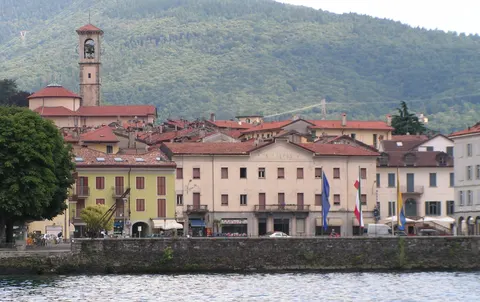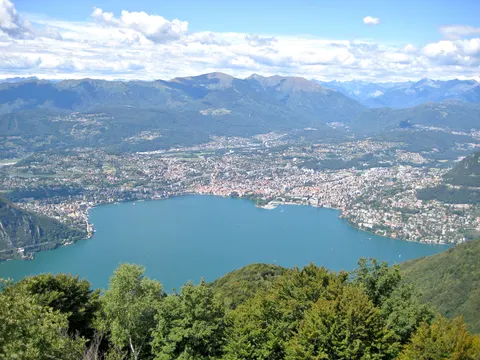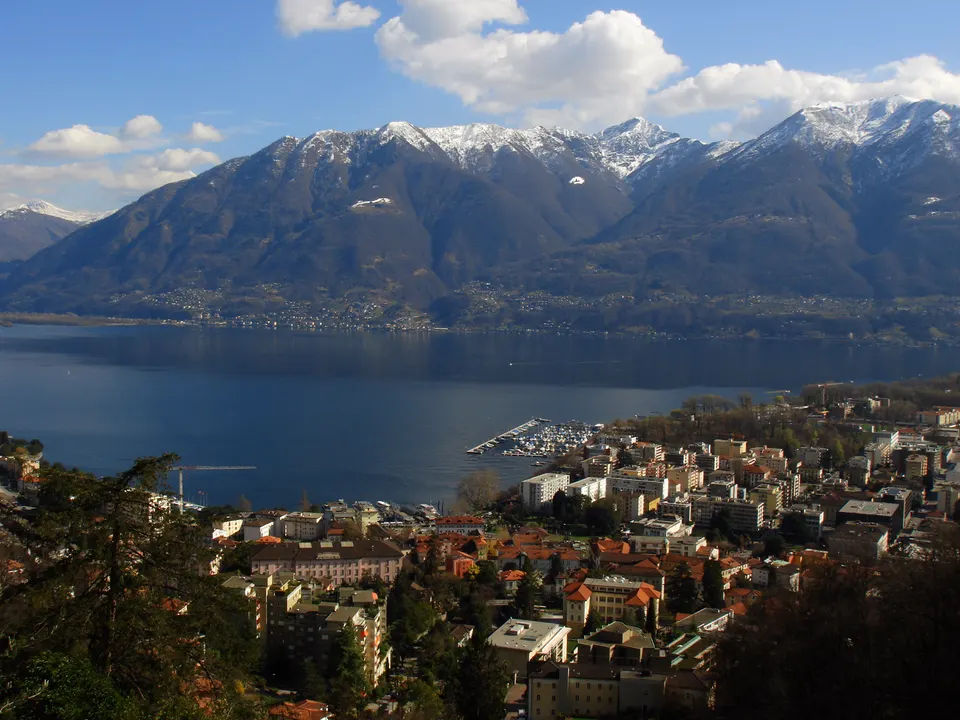

Locarno is a town and municipality on the northern shore of Lake Maggiore, in the canton of Ticino in southern Switzerland. It is the capital of the Locarno district and sits at the southern foot of the Swiss Alps, on the northeastern part of the Maggia delta. The official language is Italian, and across the river lies Ascona.
Locarno is in Ticino, Switzerland, and has a population of about 16,000.
Why go to Locarno?
The Piazza Grande, the town's main square, hosts open-air screenings during the Locarno International Film Festival, which takes place every August. The town also gave its name to the Locarno Treaties, a series of European territorial agreements negotiated here in October 1925. Locarno is the third-largest city in the Ticino canton, after Lugano and Bellinzona. The Maggia delta, shared with Ascona, gives the town its setting between the lake and the mountains.
When is the best time to visit Locarno?
July is the warmest, with highs of about 27 °C, and January is the coolest, at about 6 °C.
How do I get to Locarno without flying?
From 5 destinations you can travel to Locarno directly by bus, ferry or train. Counting connections, 2,170 destinations can reach it within 14 hours without flying. Travelling from Lugano, allow 29 min by train with Schweizerische Bundesbahnen SBB; that is about 0 kg of CO₂ per person. From Domodossola, it takes 1h 37m by train with Ferrovie Autolinee Regionali Ticinesi, with about 0.3 kg of CO₂ per person. The bus from Ascona with Autolinee FART takes 3 min; that is about 0.1 kg of CO₂ per person.
What to do in Locarno
Piazza Grande
The main square, where open-air screenings take place during the film festival.
Locarno International Film Festival
An annual film festival held every August, with open-air screenings on the Piazza Grande.