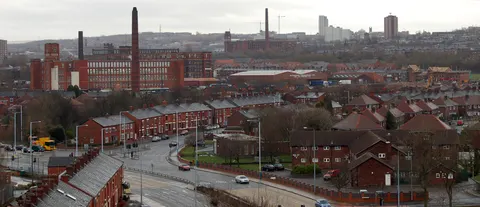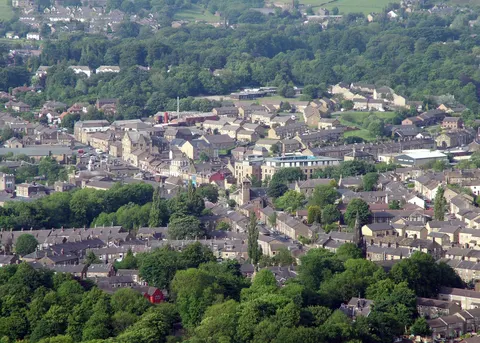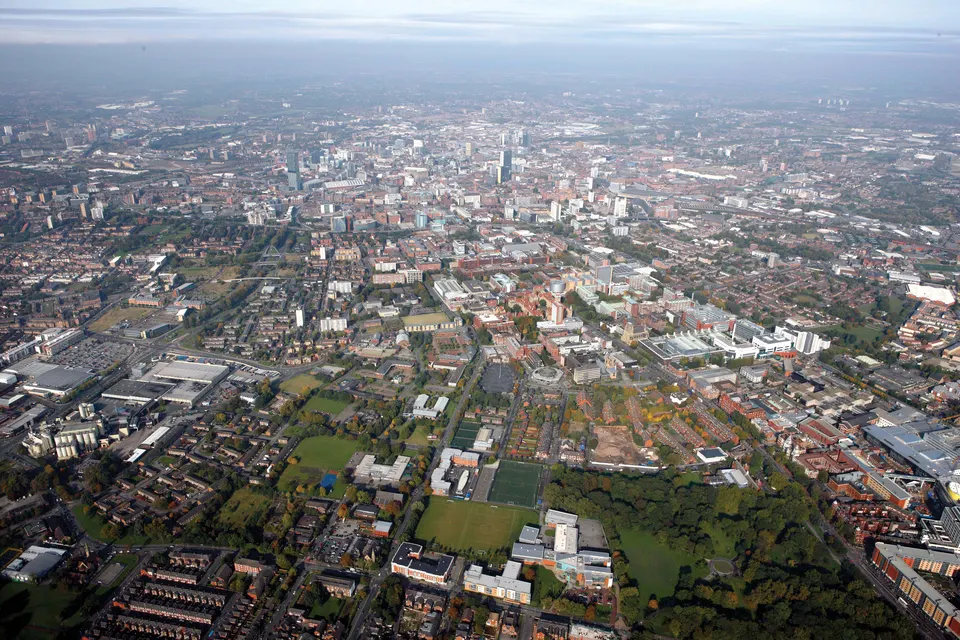

Manchester is a city in North West England at the centre of Greater Manchester, bordered by the Pennines to the north and east and the Cheshire Plain to the south. It grew from a Roman fort and became the world's first industrialised city during the textile boom of the Industrial Revolution. Its architecture, its music, its links to science and engineering, and its sporting clubs all reflect that history, which is still visible in the red-brick streets around the centre.
Manchester, in England, United Kingdom, is home to about 569,000 people and works as a rail hub.
Why go to Manchester?
Manchester's red-brick architecture reflects its years as a global centre of the cotton trade, and many former cotton mills have been converted into apartments and offices. The city's public monuments stand in Albert Square and St Peter's Square, among them the statues of Prince Albert and William Gladstone and the war memorial. The Manchester Art Gallery holds one of Britain's main collections of Pre-Raphaelite paintings, and the Whitworth Art Gallery shows modern art, sculpture and textiles. The Science and Industry Museum, housed in a former railway station, displays steam locomotives and a replica of Manchester Baby, the world's first stored computer. Heaton Park, one of the largest municipal parks in Europe, adds open green space to the city.
When is the best time to visit Manchester?
In July and August the average high reaches 19 °C; in January and December it is closer to 6 °C. Any month suits city breaks.
How do I get to Manchester without flying?
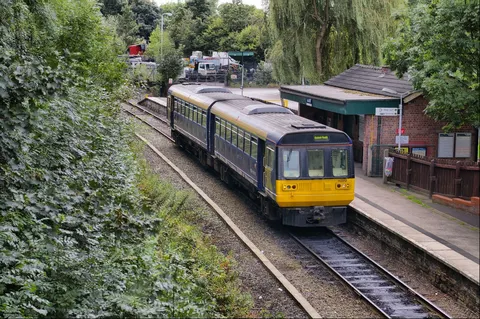
Manchester has direct bus or train links to 14 destinations. Within 14 hours, travellers from 1,637 destinations can get here without flying. The train from London with Avanti takes 2h 12m; that is about 3 kg of CO₂ per person, 95% less than the 60 kg of a flight. Edinburgh is 3h 12m away by train with TransPennine, with about 4 kg of CO₂ per person against 65 kg for the flight, 94% less. Travelling from Birmingham, allow 1h 30m by train with CrossCountry; that is about 2 kg of CO₂ per person.
What to do in Manchester
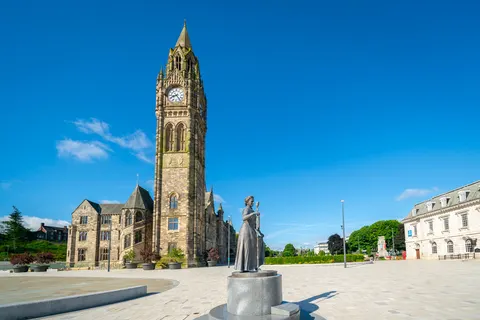
Manchester Town Hall
A Gothic Revival building on Albert Square, one of the city's most recognisable buildings.
Science and Industry Museum
Housed in a former railway station, with steam locomotives, industrial machinery and a replica of Manchester Baby.
Manchester Art Gallery
Houses a permanent collection of European painting and one of Britain's main Pre-Raphaelite collections.
Heaton Park
One of the largest municipal parks in Europe, covering 610 acres of parkland in the north of the city.