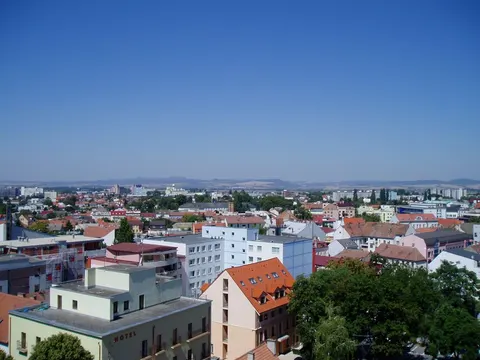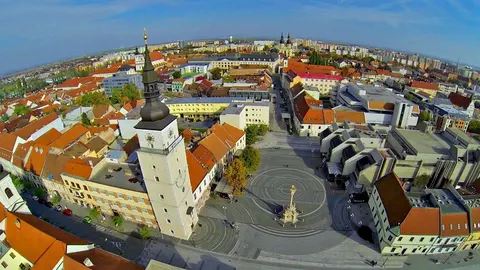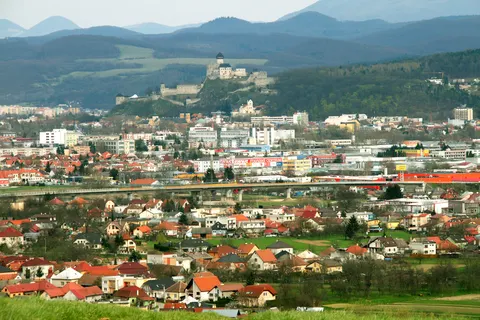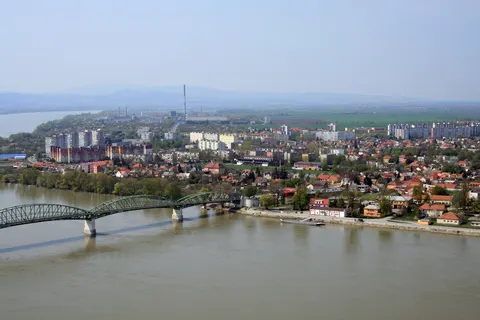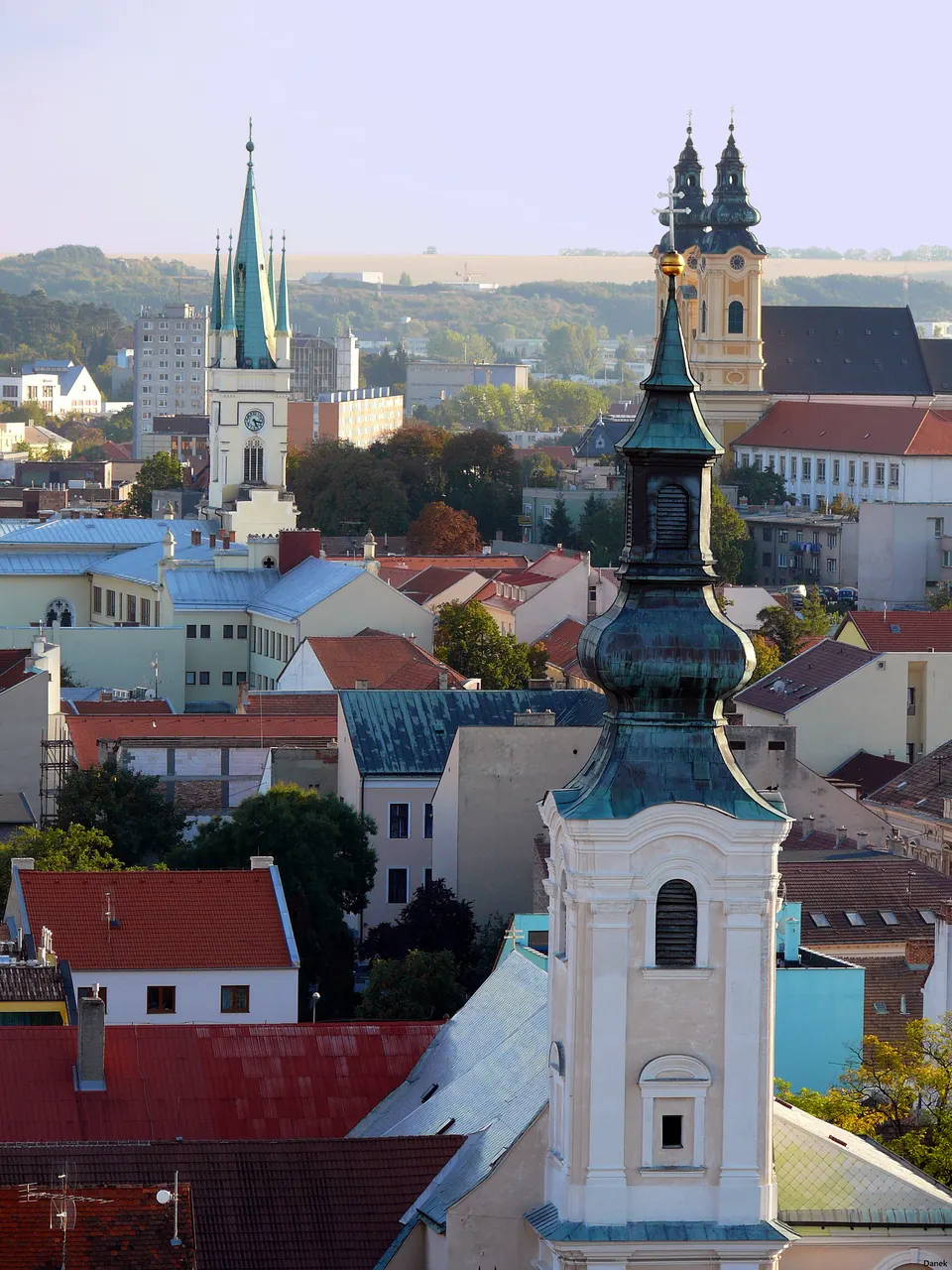

Nitra is a city in southwestern Slovakia, at the foot of Zobor Mountain in the Nitra River Valley. It is one of the oldest cities in the country and was the centre of the Principality of Nitra, a duchy of great historic significance. Today it is the administrative centre of Nitra Region and the agricultural capital of Slovakia, with about 78,000 inhabitants.
Nitra is in Nitra Region, Slovakia, and has a population of about 86,000; it is also a rail hub.
Why go to Nitra?
Nitra's old town is dominated by its castle, one of the most interesting ancient structures in Slovakia. Archaeological findings suggest a fortified castle stood here in the seventh century, and the castle now seats one of the country's Roman Catholic bishoprics. St. Emmeram's Cathedral stands within it. The Nitra Synagogue, a domed hall with Moorish, Byzantine and Art Nouveau elements, now serves as a cultural centre and holds Slovakia's national Holocaust memorial exhibition. The city also has Osada Lupka, an open-air museum that reconstructs a Slavic village.
When is the best time to visit Nitra?
July and August are the warmest, with highs of about 26 °C, and January is the coolest, at about 2 °C. City breaks work best in April, May and September.
How do I get to Nitra without flying?
From 3 destinations you can travel to Nitra directly by bus or train. Counting connections, 1,873 destinations can reach it within 14 hours without flying. Travelling from Bratislava, allow 1h 01m by bus with FlixBus-eu; that is about 2 kg of CO₂ per person. From Trnava, it takes 59 min by train with Železničná spoločnosť Slovensko, a.s., with about 0.4 kg of CO₂ per person. The bus from Zvolen with FlixBus-eu takes 1h 16m; that is about 2.3 kg of CO₂ per person.
What to do in Nitra
Nitra Castle
The castle, seat of a Roman Catholic bishopric, with St. Emmeram's Cathedral inside.
Nitra Synagogue
A domed synagogue of Moorish, Byzantine and Art Nouveau elements, built in the early 20th century, now a cultural centre.
St. Stephen's church
The city's oldest church, a building with 11th-century origins.
Osada Lupka
An open-air museum that reconstructs a Slavic village from the early Middle Ages.