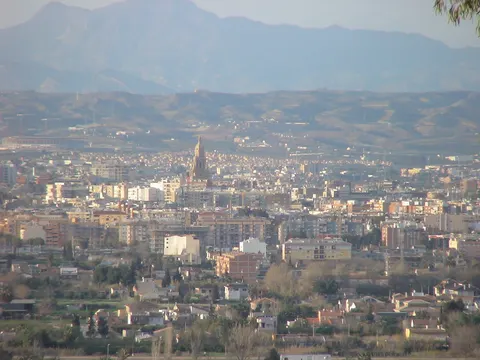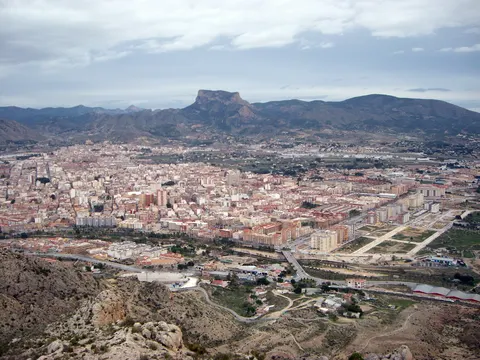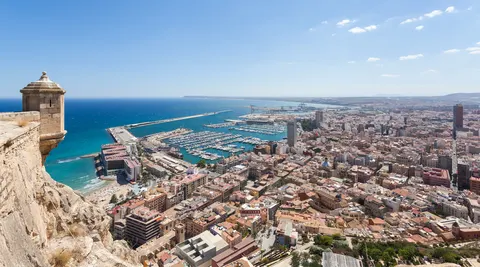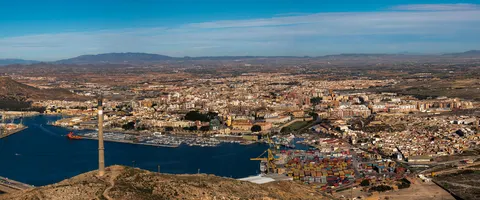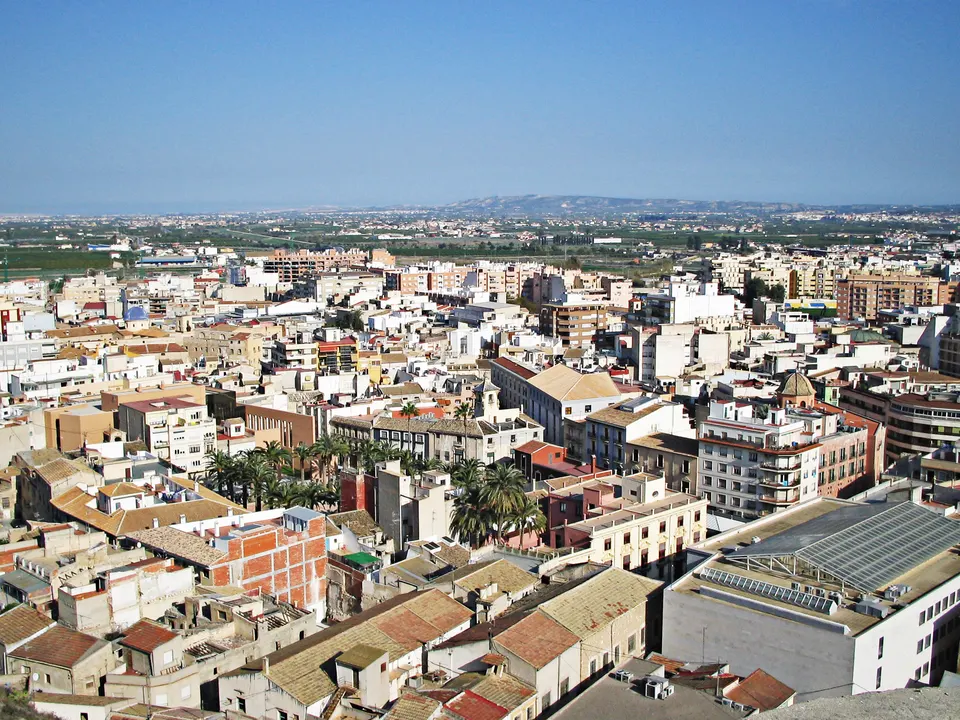

Orihuela is a city and municipality at the foot of the Sierra de Orihuela mountains, in the province of Alicante in the Valencian Community of Spain. The river Segura flows through it, and it sits on the Vega Baja del Segura floodplain near the river's mouth. The municipality reaches down to the Mediterranean coast, and the city was named the first in the province of Alicante in 1437.
About 101,000 people live in Orihuela, in Valencia, Spain, and its station is a rail hub.
Why go to Orihuela?
Orihuela's medieval centre holds five National Monuments and an urban layout shaped by its former rank as a university centre and episcopal see. The cathedral was built over several centuries, and the Baroque church of Santo Domingo stands nearby. The town's holiday celebrations are well known, above all the processions of Holy Week and the parades of Moors and Christians held in July. The Franciscan convent of Santa Ana is also in the town.
When is the best time to visit Orihuela?
Expect daytime highs of about 33 °C in July, falling to 16 °C in January and December. If you are after city breaks, aim for February, March and November.
How do I get to Orihuela without flying?
You can get to Orihuela without changing from 4 destinations, by train. With changes, Orihuela is within 14 hours of 447 destinations without flying. From Alicante, it takes 34 min by train with RENFE OPERADORA, with about 0.5 kg of CO₂ per person. Travelling from Elche, allow 27 min by train with RENFE OPERADORA; that is about 0.3 kg of CO₂ per person. Valladolid is 3h 47m away by train with RENFE OPERADORA, with about 4.9 kg of CO₂ per person against 117 kg for the flight, 96% less.
What to do in Orihuela
Orihuela Cathedral
A cathedral built over several centuries, starting in the 14th century. It reflects the town's former status as an episcopal see.
Orihuela Castle
The ruins of a mountaintop Arab castle above the town.
Santo Domingo
A Baroque church in the medieval centre of the town.
Moors and Christians parades
The parades held every July are among the town's best-known celebrations, alongside the Holy Week processions.