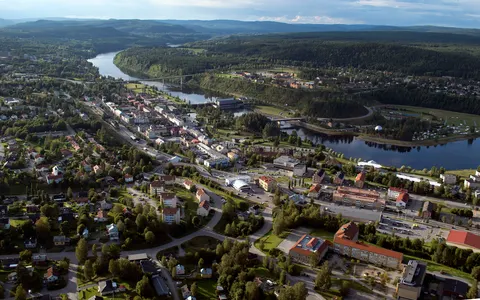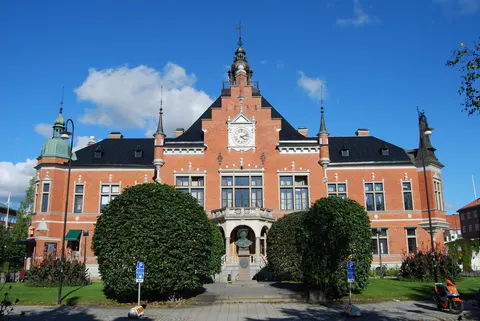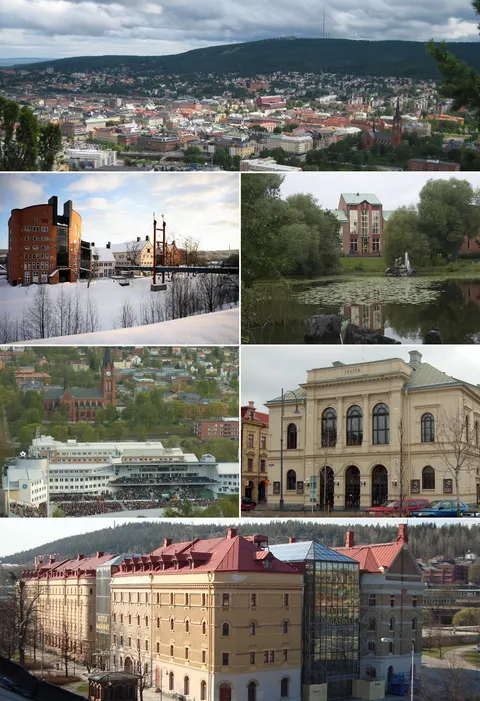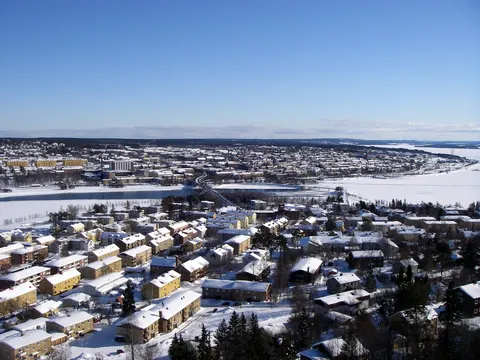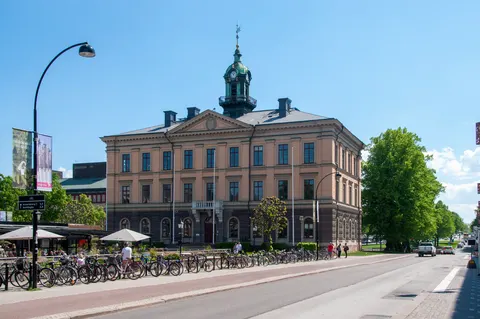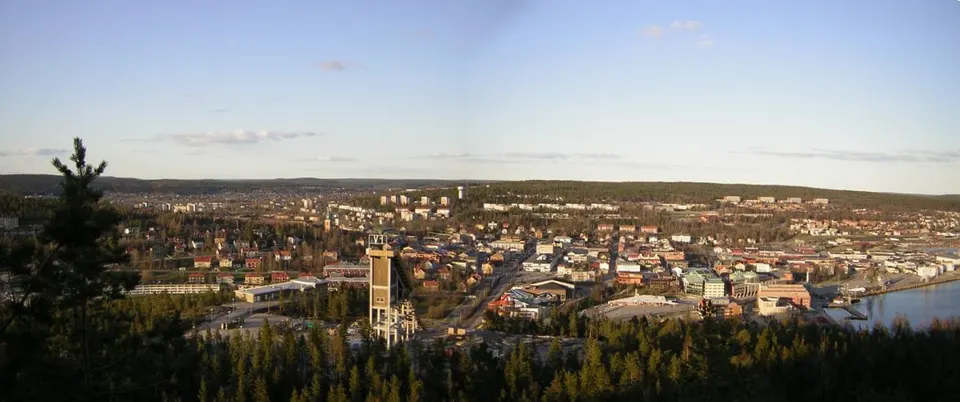

Örnsköldsvik sits on a natural harbour on the Gulf of Bothnia, where its archipelago meets the northern edge of the High Coast. It is the seat of Örnsköldsvik Municipality in Västernorrland County and is often called Ö-vik for short. The town began as a market town in 1842 and became a city in 1894, so it is young by Swedish standards, and its character still comes from the coast and the industry that grew up along it.
About 32,000 people live in Örnsköldsvik, in Västernorrland, Sweden, and its station is a rail hub.
Why go to Örnsköldsvik?
Örnsköldsvik is known across Sweden as an exporter of pulp, paper and heavy machinery, and it has a strong environmental record for an industrial town of its kind. It has also been the testbed for ethanol-powered cars. Just outside the centre, Gene fornby is a reconstructed Roman Iron Age village that draws visitors interested in how people lived here in that period. Traces of settlement in the area go back to the Nordic Bronze Age, so the past runs deep under the modern town. The town also hosted the first Winter Paralympics, in 1976, which is a point of pride in its recent history.
When is the best time to visit Örnsköldsvik?
Expect daytime highs of about 19 °C in July, falling to -3 °C in January and February.
How do I get to Örnsköldsvik without flying?
You can get to Örnsköldsvik without changing from 2 destinations, by train. With changes, Örnsköldsvik is within 14 hours of 188 destinations without flying. From Umeå, it takes 35 min by train with SJ, with about 0.2 kg of CO₂ per person. Travelling from Sundsvall, allow 1h 47m by train with Norrtåg; that is about 0.3 kg of CO₂ per person.
What to do in Örnsköldsvik
Gene fornby
A reconstructed Roman Iron Age village just outside the town, and one of its most popular attractions for visitors interested in the period.