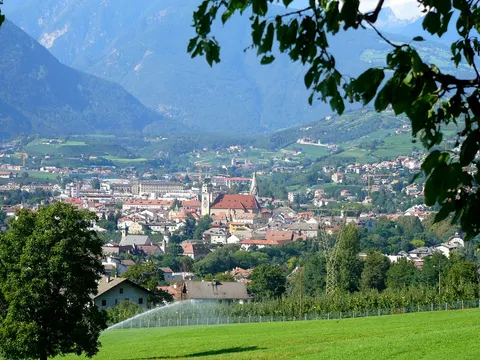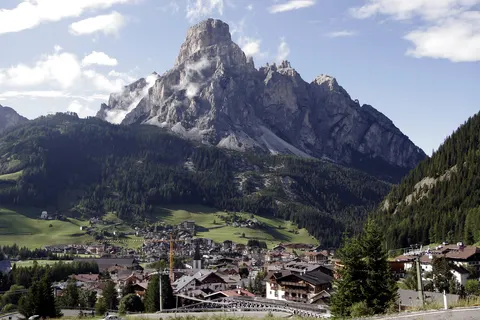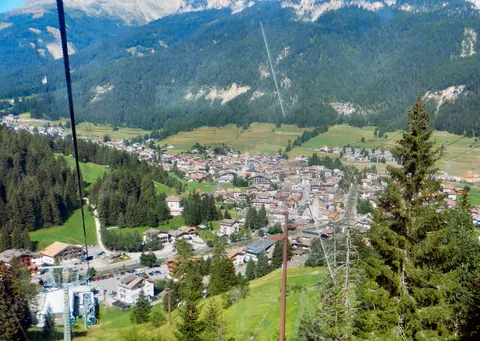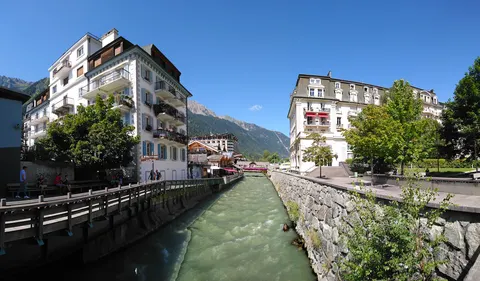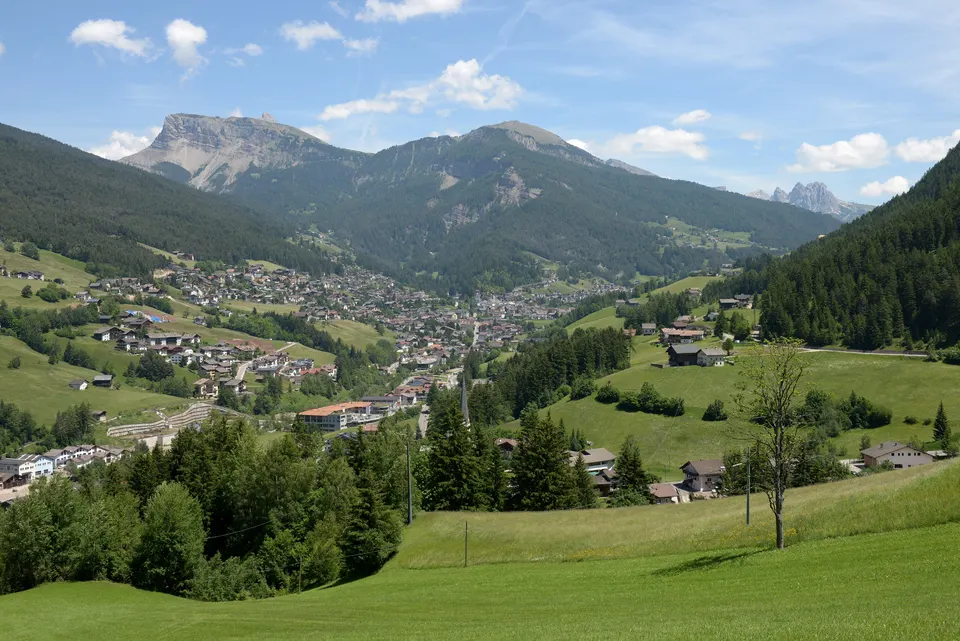

Ortisei is a town in South Tyrol in northern Italy, lying in the Val Gardena, a valley of the Dolomites. The town sits on the northern side of the valley, with slopes rising behind it. Woodcarving has shaped the place for centuries, and since the 17th century many residents have carved sacred figures, altars and toys. Winter skiing and summer hiking are now the main pillars of the local economy, alongside the carving trade.
With about 4,306 inhabitants, Ortisei lies in Trentino-Alto Adige, Italy.
Why go to Ortisei?
Ortisei's churches show several periods at once. The parish church was built in neoclassical style with baroque elements in the last part of the 18th century, while the Church of St. Jacob keeps frescoes from the 15th century. The Church of St. Anna is Late-Gothic and holds baroque furnishings inside. The Museum Gherdëina preserves geological, paleontological and archaeological finds, along with wooden sculptures and toys, and the Luis Trenker House of Culture keeps an ancient bell. Above the valley floor rises Seceda, the highest point of the municipality, with alpine meadows on the Raschötz ridge nearby.
When is the best time to visit Ortisei?
Average highs range from 0 °C in January and December to 21 °C in July. Skiing works best in January, February and December. June, July and August are the time for nature and hiking trips.
How do I get to Ortisei without flying?
Direct bus services link Ortisei with 2 destinations. Allowing for changes, 2,131 destinations are no more than 14 hours away without flying. Collalbo is 28 min away by bus with altoadigemobilità, with about 0.5 kg of CO₂ per person. The bus from Seiser Alm with altoadigemobilità takes 7 min; that is about 0.1 kg of CO₂ per person.
What to do in Ortisei
Parish Church of Ortisei
A neoclassical church with baroque elements, the town's parish church.
Church of St. Jacob
An old church whose frescoes survive from the Late-Gothic period, with copies of its original baroque furnishings.
Museum Gherdëina
The local heritage museum, with geological and archaeological finds and a collection of wooden sculptures and toys.
Villa Venezia
The home and workshop of sculptor Johann Baptist Moroder, built in the Venetian style, with a bronze Roman legionary in front.