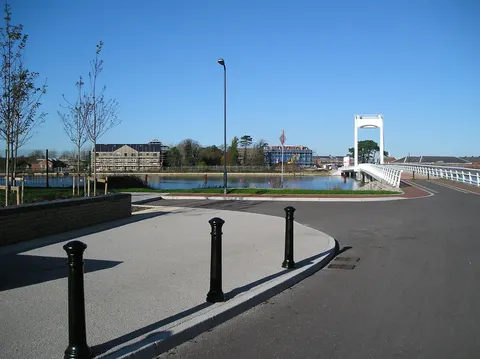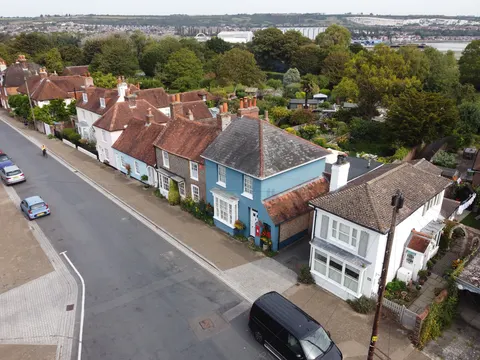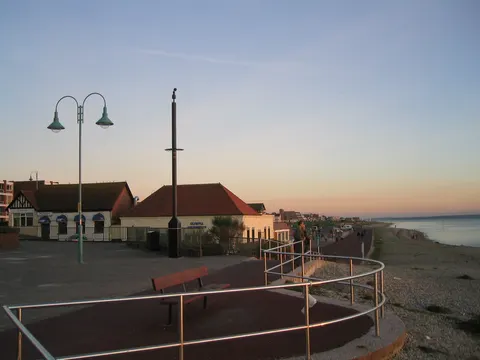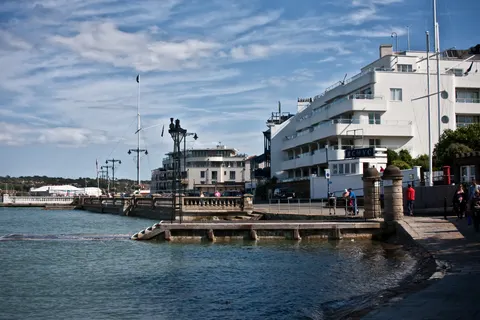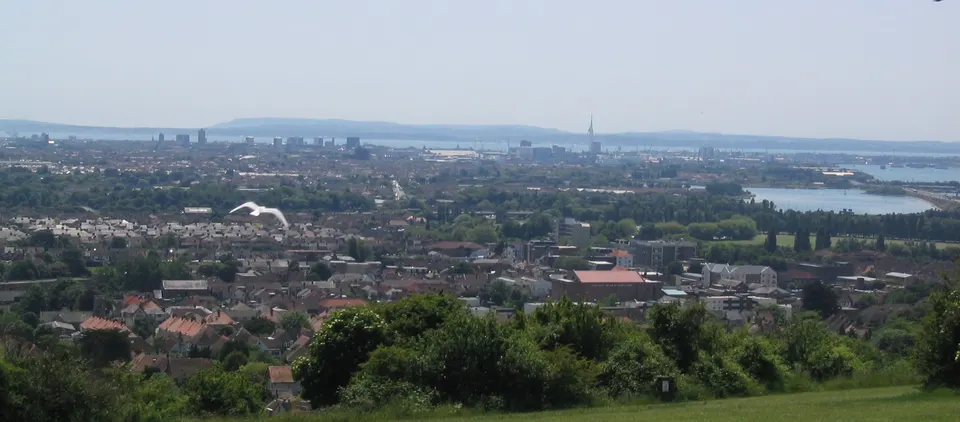

Portsmouth is a port city on Portsea Island, off the south coast of England in the Solent, and the only English city based primarily on an island. It is a unitary authority in Hampshire with a long naval past, home to a Royal Navy base and a major ferry and cruise port. Its seaside resort, Southsea, lies along the waterfront.
With about 208,000 inhabitants, Portsmouth lies in England, United Kingdom, and is a rail hub.
Why go to Portsmouth?
The Historic Dockyard is the main draw, where the Mary Rose, Lord Nelson's flagship HMS Victory and HMS Warrior, the Royal Navy's first ironclad, are on show. The city's maritime past runs deeper than that. The naval base's Block Mills made pulley blocks on what became the world's first mass production line. Southsea adds a seaside side, with Clarence Pier, South Parade Pier and Southsea Common, a large open-air space for events. The Spinnaker Tower rises over the harbour, one of the tallest structures in the UK, and the city keeps up its yearly remembrances of D-Day.
When is the best time to visit Portsmouth?
Average highs range from 8 °C in January, February and December to 20 °C in July and August. For city breaks, any month of the year works.
How do I get to Portsmouth without flying?
Direct bus, ferry or train services link Portsmouth with 11 destinations. Allowing for changes, 1,626 destinations are no more than 14 hours away without flying. Caen is 6h 30m away by ferry with Brittany Ferries, with about 3.6 kg of CO₂ per person against 24 kg for the flight, 85% less. The ferry from Calais with P&O Ferries takes 5h 30m; that is about 3.9 kg of CO₂ per person, 85% less than the 26 kg of a flight. From Southampton, it takes 48 min by train with SWR, with about 1 kg of CO₂ per person.
What to do in Portsmouth
HMS Victory
A museum in Portsmouth.
Mary Rose
A museum in Portsmouth.
City breaks in Portsmouth
June is the ideal month for city breaks, with average highs of 18 °C.