
Prešov is the seat of the Prešov Region in eastern Slovakia, a city of roughly 85,000 people that serves as the cultural and administrative centre of the region. It sits on the Torysa river at the northern edge of the Košice Basin, with the Slanské vrchy hills to the south-east and Čergov to the north. After the Mongol invasion, German colonists were invited in, and the old town grew from that German-speaking settlement.
With about 83,000 inhabitants, Prešov lies in Prešov Region, Slovakia, and is a rail hub.
Why go to Prešov?
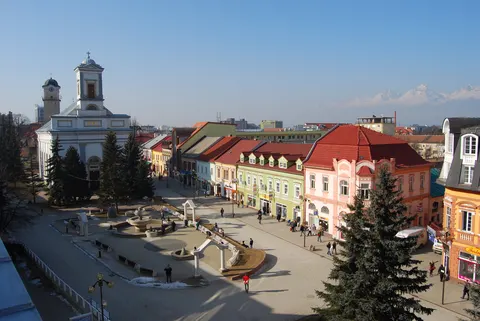
Most visitors come for the old town, where the Gothic Gate and Florian's Gate still stand among the remains of the medieval walls. The Co-Cathedral of St Nicholas and the Greek Catholic Cathedral of St John the Baptist are both worth a look, and the Rákóczi Palace houses the Regional Museum. The Calvary above the town is a set of baroque chapels built by the Jesuits in the 18th century, with a church on the highest point. Prešov also has a Museum of Wine, a nod to the vines its merchants brought in from the Tokaj region, and a Jewish Synagogue that now holds a Judaica collection.
When is the best time to visit Prešov?
Average highs range from 0 °C in January to 24 °C in July. May, June and September are the time for city breaks.
How do I get to Prešov without flying?
Direct bus or train services link Prešov with 6 destinations. Allowing for changes, 987 destinations are no more than 14 hours away without flying. Przemyśl is 3h 50m away by bus with FlixBus-eu, with about 3.8 kg of CO₂ per person. The bus from Kosice with FlixBus-eu takes 25 min; that is about 0.9 kg of CO₂ per person. From Bardejov, it takes 45 min by bus with FlixBus-eu, with about 0.9 kg of CO₂ per person.
What to do in Prešov
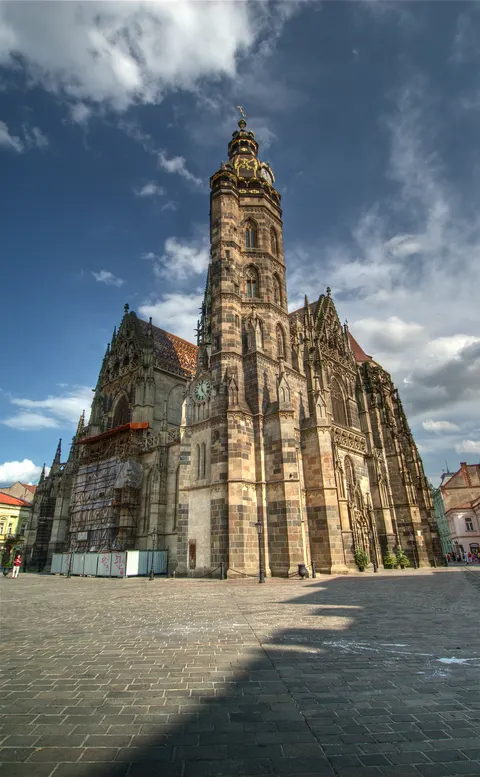
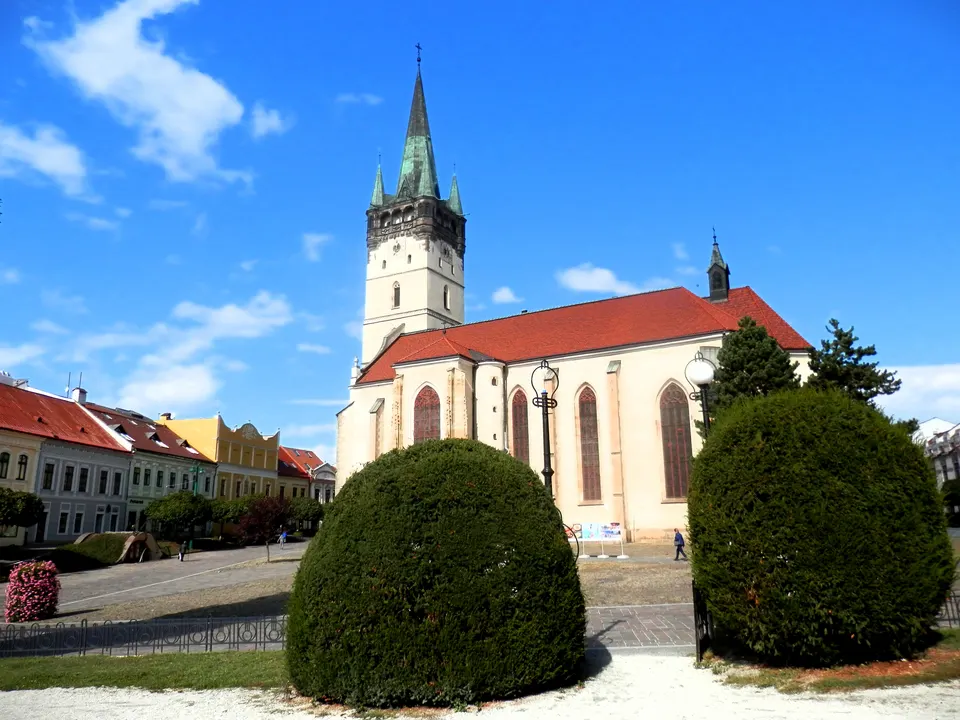
Co-Cathedral of St Nicholas
One of the old town's historical monuments, dedicated to St Nicholas and standing among the town's most important churches.
Florian's Gate
A surviving gate from the old town walls, one of the remains of the medieval fortifications that still mark the centre.
Prešov Calvary
A baroque ensemble of chapels built from 1721, with a church of the Holy Cross on the highest point.
Rákóczi Palace
A palace that now houses the Regional Museum and its collections on the history of the region.