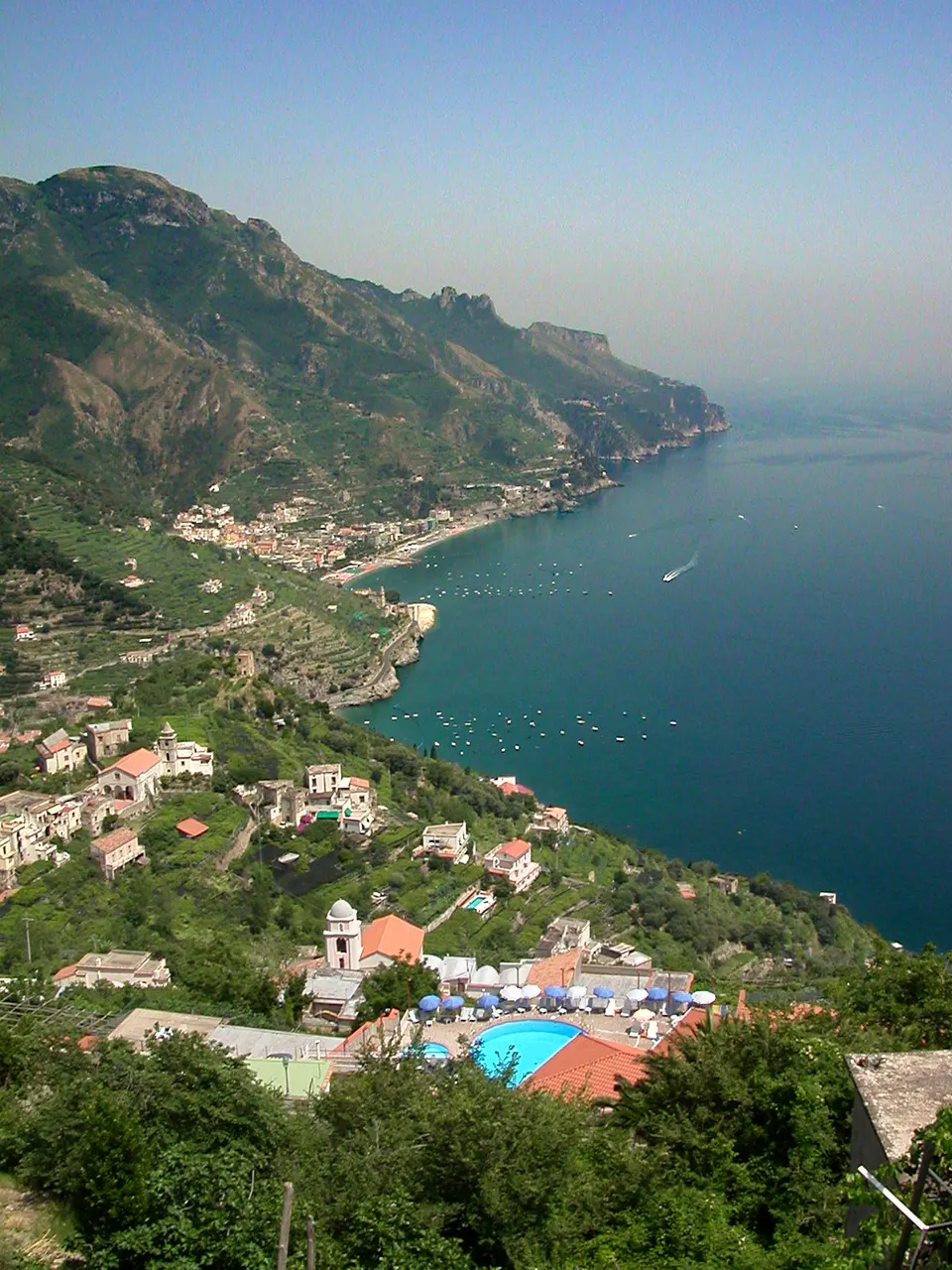

Ravello is a comune in the province of Salerno, in Campania, perched above the Amalfi Coast and reached by a long climb above the town of Atrani. The town has been a UNESCO World Heritage Site since 1997. In the Middle Ages it was an important trading power in the Mediterranean, and the mercantile palaces of its patrician families still stand along its streets.
With about 1,523 inhabitants, Ravello lies in Campania, Italy.
Why go to Ravello?
People come to Ravello for its setting high above the coast. Villa Rufolo, built by the wealthy patrician Nicola Rufolo, sits on a ledge and was mentioned by Boccaccio in the Decameron. Richard Wagner was inspired by the villa when designing the stage for his opera Parsifal. Villa Cimbrone is known for its Terrace of the Infinite. The cathedral's central nave holds a pulpit created by Nicolò di Bartolomeo of Foggia. Each summer the Ravello Festival, begun in 1953 in Wagner's honour, fills the town with concerts.
When is the best time to visit Ravello?
Average highs range from 11 °C in January and February to 25 °C in July and August. June, July and August are the time for beach holidays. For nature and hiking trips, any month of the year works.
How do I get to Ravello without flying?
Direct bus services link Ravello with 4 destinations. Allowing for changes, 874 destinations are no more than 14 hours away without flying. Amalfi is 24 min away by bus with SITA Sud, with about 0.1 kg of CO₂ per person. The bus from Salerno with SITA Sud takes 1h 48m; that is about 0.4 kg of CO₂ per person. From Minori, it takes 18 min by bus with SITA Sud, with about 0 kg of CO₂ per person.
What to do in Ravello
Duomo di Ravello
The cathedral's central nave contains the Pulpit of the Gospels, created by Nicolò di Bartolomeo of Foggia.
Villa Rufolo
A villa on a ledge above the coast, built by the patrician Nicola Rufolo and mentioned by Boccaccio in the Decameron.
Villa Cimbrone
Known for its Terrace of the Infinite, which is the villa's best-known feature.
San Giovanni del Toro
An early medieval church in the old aristocratic quarter known as Il Toro, with a Bove pulpit built into its mosaic fragments.
La Rondinaia
A villa built on a cliff face in the 1930s, once the Italian residence of Gore Vidal.