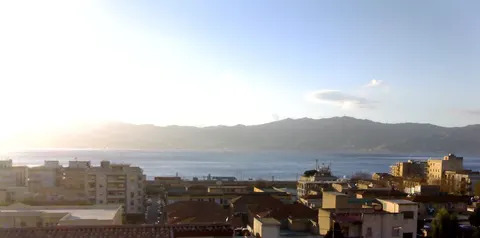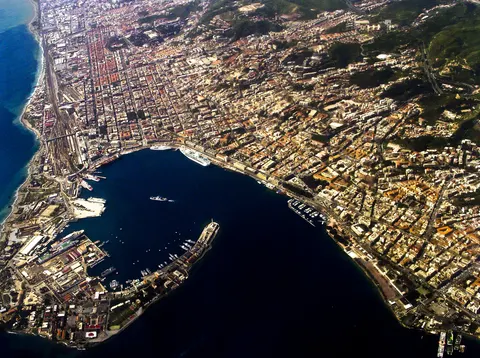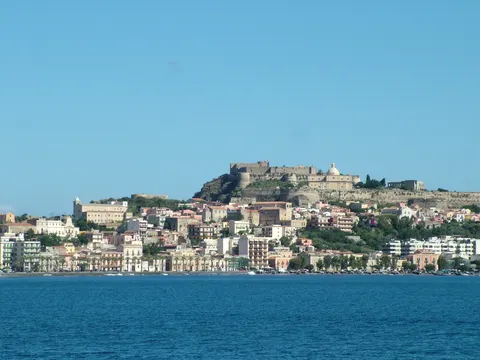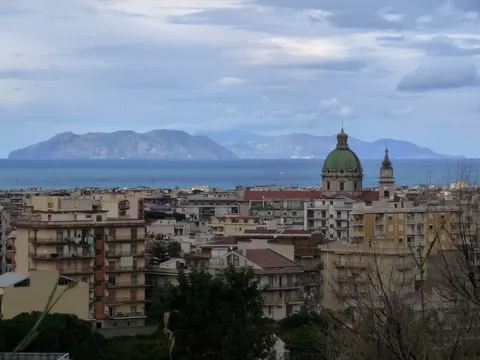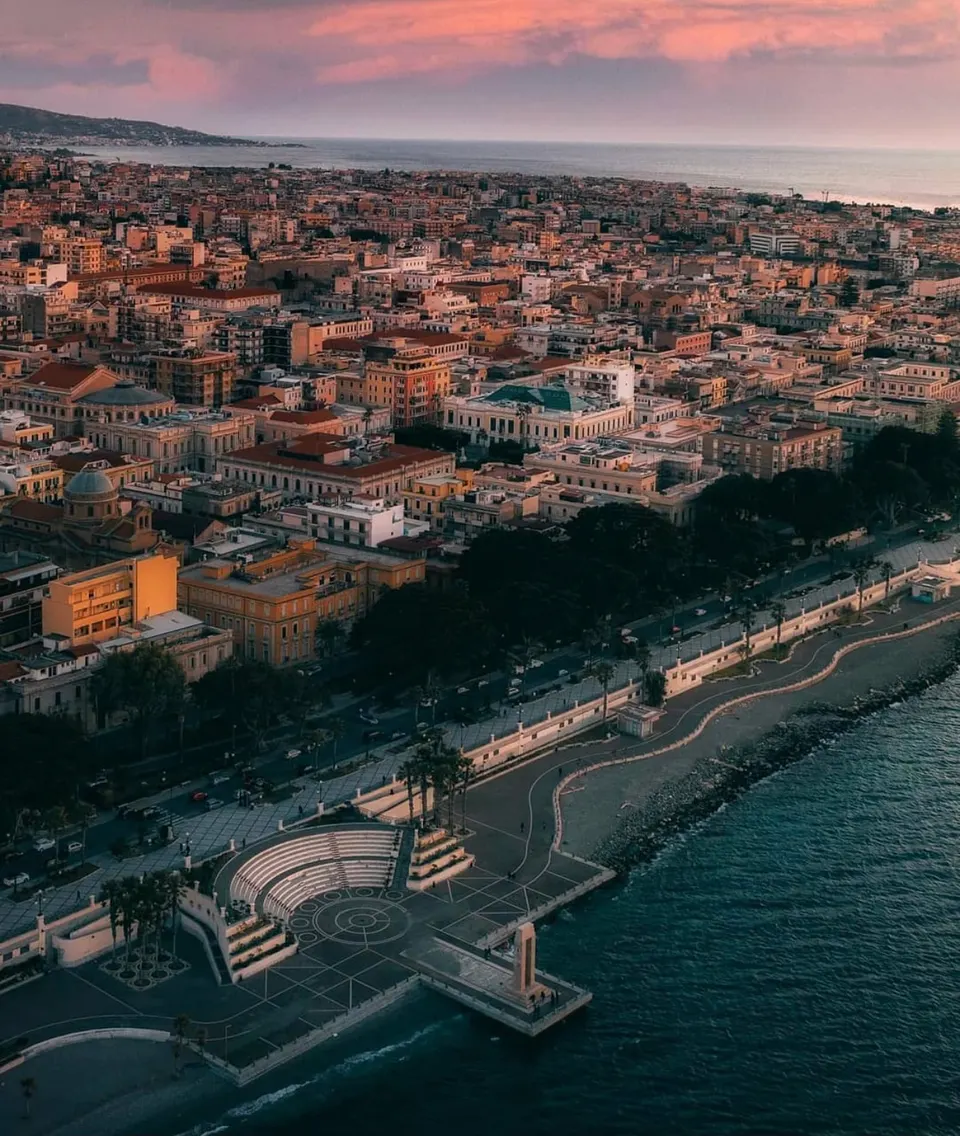

Reggio Calabria is the largest city in Calabria and the seat of its metropolitan city, at the toe of the Italian peninsula. It sits on the slopes of the Aspromonte range and faces Sicily across the Strait of Messina. Reggio is the oldest city in the region and was once a flourishing colony of Magna Graecia. The city is known for its climate and its cultural diversity.
Reggio Calabria, in Calabria, Italy, is home to about 182,000 people and works as a rail hub.
Why go to Reggio Calabria?
Reggio's main draw is its archaeology. The National Archaeological Museum of Magna Graecia houses the Bronzes of Riace, rare examples of Greek bronze sculpture that became the city's best-known symbols. The city centre is made up largely of Liberty buildings, and the seafront promenade is lined with magnolias and exotic palms. The Pinacoteca Comunale holds works by Antonello da Messina, Mattia Preti and Luca Giordano. Above the city, the Aspromonte National Park offers forests and green space, in welcome contrast to the dense urban area. Reggio was destroyed by earthquakes several times, most devastatingly in 1908.
When is the best time to visit Reggio Calabria?
In July and August the average high reaches 29 °C; in January and February it is closer to 13 °C. Beach holidays work best in June, July and September. Any month suits city breaks.
How do I get to Reggio Calabria without flying?
Reggio Calabria has direct bus, ferry or train links to 7 destinations. Within 14 hours, travellers from 539 destinations can get here without flying. The train from Naples with Trenitalia takes 4h 30m; that is about 6 kg of CO₂ per person, 92% less than the 75 kg of a flight. Messina is 30 min away by ferry with Bluferries, with about 5 kg of CO₂ per person. Travelling from Gioia Tauro, allow 30 min by train with Trenitalia; that is about 0.5 kg of CO₂ per person.
What to do in Reggio Calabria
National Archaeological Museum of Magna Graecia
Home to the Bronzes of Riace and to collections on Ancient Greece, the city's best-known symbols.
Find tours and tickets: National Archaeological Museum of Magna Graecia
Pinacoteca Comunale
The town art gallery, with works by Antonello da Messina and Mattia Preti.
Villa Genoese-Zerbi
A neo-Gothic villa that serves as the southern Italian venue for Venice Biennale exhibitions.
Palazzo Nesci
A Neoclassical mansion, one of the few 19th-century buildings to survive the 1908 earthquake.
Aspromonte National Park
A national park in the mountains above the city, with forests and extensive green space.