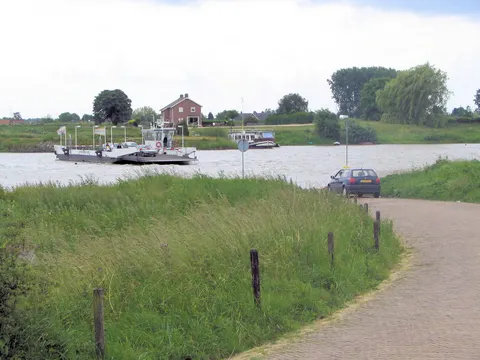
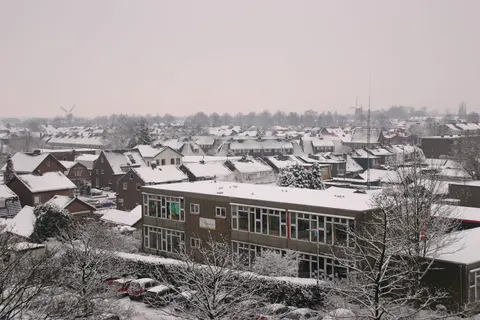
Rhenen is a municipality and city in the central Netherlands, on the southernmost part of the Utrecht Hill Ridge where it meets the river Rhine. The municipality also includes the villages of Achterberg, Remmerden and Elst. Because of the hills, the town has notable elevation changes across its built-up area, and the Grebbeberg rises directly east of it. It sits at the point where that ridge ends.
Rhenen, in Utrecht, Netherlands, is home to about 18,000 people and works as a rail hub.
Why go to Rhenen?
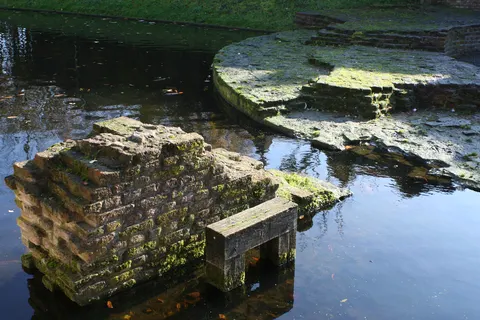
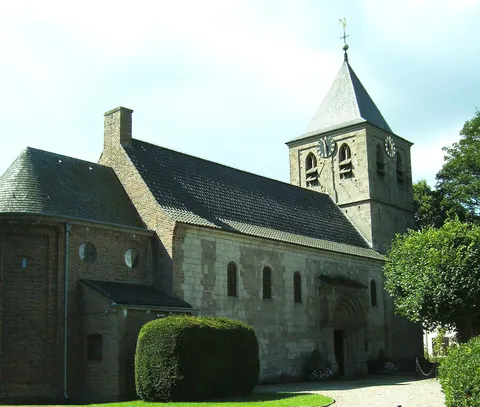
Rhenen's most visible draw is Ouwehands Dierenpark, a zoo founded in 1932 that sits within the town. The Cunera Church is a late-Gothic hall church built over several decades around 1500, and it stands among the town's main sights. Ruins of the medieval defensive wall still remain, and a Roman Catholic church from the late 1950s offers a modern contrast to the old buildings. The Grebbeberg, the hill just east of town, carries a military war cemetery, a more sombre part of the town's history. The town's setting, with the river on one side and the ridge on the other, gives it two landscapes close together.
When is the best time to visit Rhenen?
In July the average high reaches 22 °C; in January and December it is closer to 5 °C.
How do I get to Rhenen without flying?
Rhenen has one direct link, by train. Within 14 hours, travellers from 2,029 destinations can get here without flying. The train from Veenendaal with NS takes 6 min; that is about 0.1 kg of CO₂ per person.
What to do in Rhenen
Ouwehands Dierenpark
A zoo founded in 1932, listed among the main sights of the town.
Cunerakerk (Cunera Church)
A late-Gothic hall church that was built over several decades around 1500.
Military War Cemetery Grebbeberg
A military cemetery on the Grebbeberg, the hill east of the built-up area.
Medieval defensive wall
The ruins of the town's old defensive wall, a reminder of the medieval fortifications that once surrounded it.