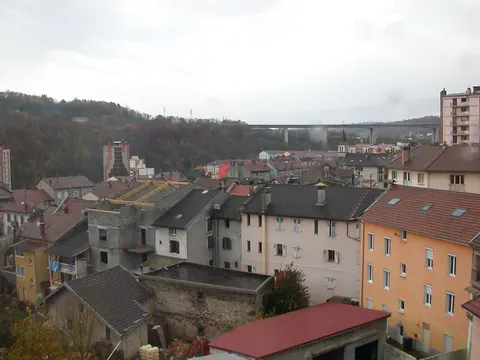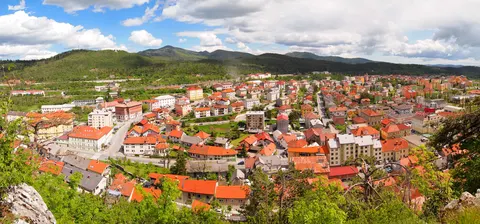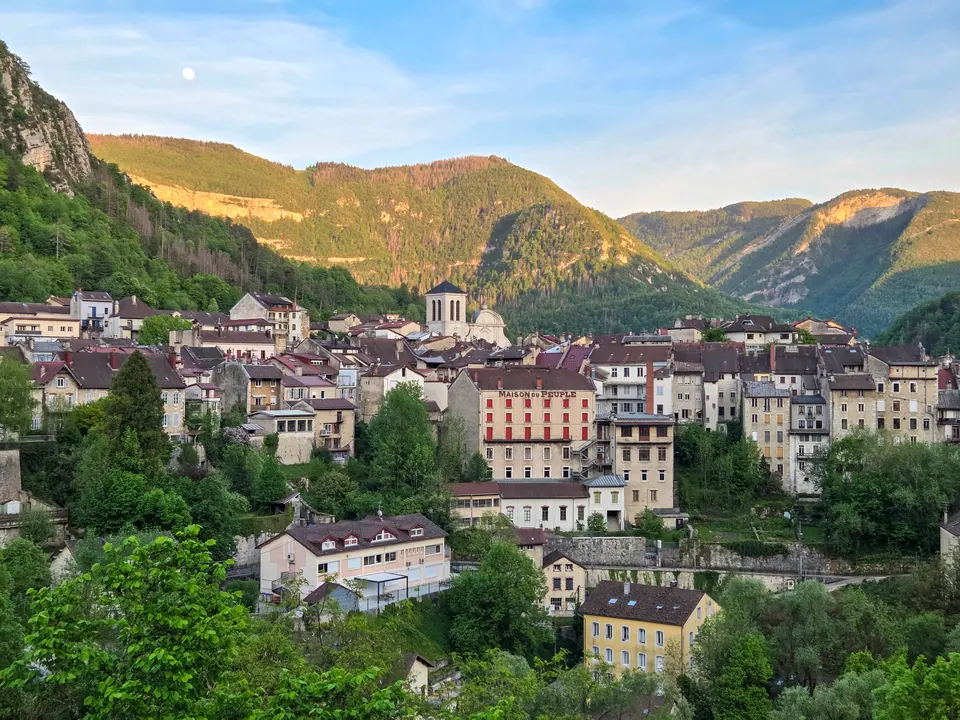

Saint-Claude is a commune and sous-préfecture in the Jura department, in the Bourgogne-Franche-Comté region of eastern France. It lies on the River Bienne. The town was named after Saint Claudius, whose grave drew so many pilgrims that his name replaced the older one. From the mid-nineteenth to the mid-twentieth century it was the world capital of hand-made wooden smoking pipes.
Saint-Claude, in Bourgogne-Franche-Comté, France, is home to about 12,000 people and works as a rail hub.
Why go to Saint-Claude?
The pipe-making past is part of the town's identity. A giant model pipe, more than seven metres long, stands as a landmark of its claim to be the world capital of pipe manufacture. The cathedral was once the seat of the bishops of Saint-Claude. During the Second World War the town was under German occupation, yet it remained a haven for Jews escaping to Switzerland, about 8 km away. As punishment for helping them, the Nazis executed the town's men of service age in the town centre, and a memorial plaque in the square commemorates the event. The surrounding farms produce Comté cheese, Charolaise beef and Bresse Gauloise poultry.
When is the best time to visit Saint-Claude?
In July and August the average high reaches 24 °C; in January and December it is closer to 5 °C. Nature and hiking trips work best in May, June and September.
How do I get to Saint-Claude without flying?
Saint-Claude has direct bus or train links to 2 destinations. Within 14 hours, travellers from 1,822 destinations can get here without flying. The train from Morez with Société Nationale des Chemins de fer Français takes 32 min; that is about 0.1 kg of CO₂ per person. Longchaumois is 30 min away by bus, with about 0.3 kg of CO₂ per person.
What to do in Saint-Claude
Saint-Claude Cathedral
A cathedral in Saint-Claude.
Nature and hiking trips in Saint-Claude
May is the ideal month for nature and hiking trips, with average highs of 18 °C.
Find tours and tickets: Nature and hiking trips in Saint-Claude
Travel on from Saint-Claude
Direct links run to Morez and Longchaumois.