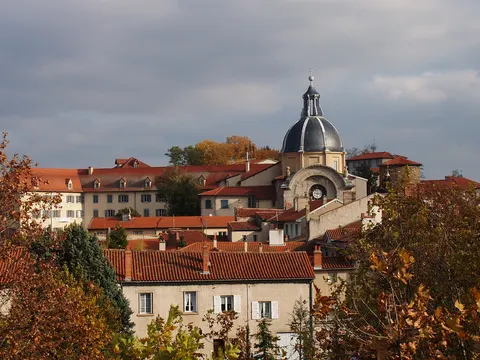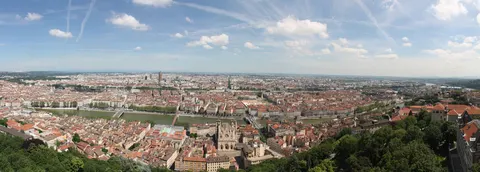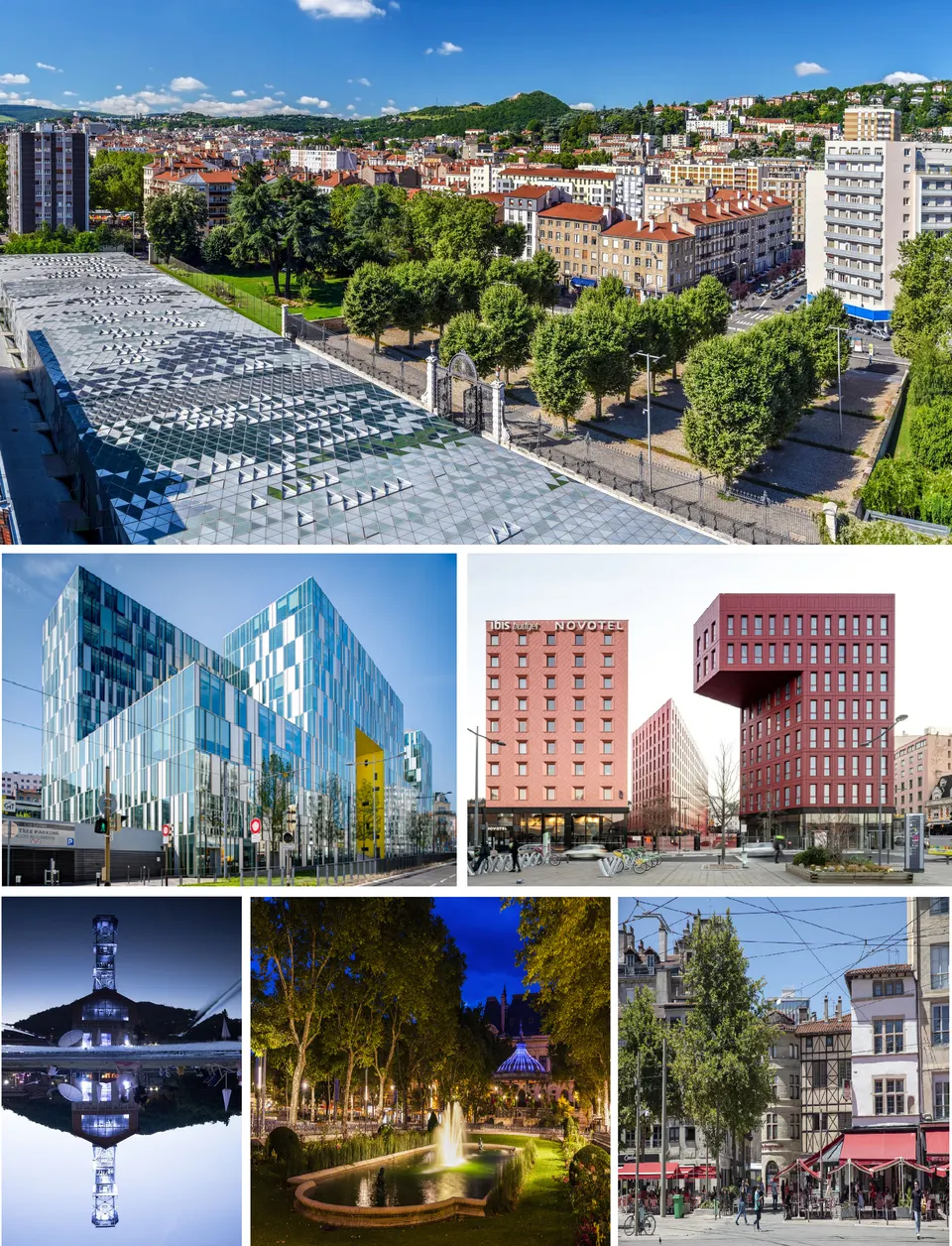

Saint-Étienne is the prefecture of the Loire département in east-central France, in the Massif Central, about 60 kilometres south-west of Lyon. It is the second most populated commune in the Auvergne-Rhône-Alpes region, after Lyon. The city is known as the French city of the weapon, cycle and ribbon, and it was once a major coal mining centre.
Saint-Étienne is in Auvergne-Rhône-Alpes, France, and has a population of about 176,000; it is also a rail hub.
Why go to Saint-Étienne?
Saint-Étienne is a city moving from its industrial past towards design. It was named a UNESCO City of Design in 2010, and its design biennale is the largest of its kind in France. La Cité du design opened on the site of a former arms factory, and the city's Massenet Festivals are devoted to the operas of the composer Jules Massenet, who hailed from the area. The Musée d'Art Moderne holds one of the largest collections of modern and contemporary art in France, and the city has 38 monuments historiques.
When is the best time to visit Saint-Étienne?
July and August are the warmest, with highs of about 24 °C, and January is the coolest, at about 5 °C. Any month suits city breaks.
How do I get to Saint-Étienne without flying?
From 12 destinations you can travel to Saint-Étienne directly by bus or train. Counting connections, 2,111 destinations can reach it within 14 hours without flying. Travelling from Geneva, allow 4h 02m by bus with FlixBus-eu; that is about 4.3 kg of CO₂ per person, 80% less than the 21 kg of a flight. From Lyon, it takes 42 min by train with SNCF VOYAGEURS, with about 0.1 kg of CO₂ per person. The bus from Clermont-Ferrand with FlixBus-eu takes 1h 45m; that is about 2.9 kg of CO₂ per person.
What to do in Saint-Étienne
Musée d'Art Moderne
A museum with one of the largest collections of modern and contemporary art in France.
Musée de la Mine
A mining museum that recalls the city's past as a major coal mining centre.
La Cité du design
A design centre opened on the site of the former arms factory.