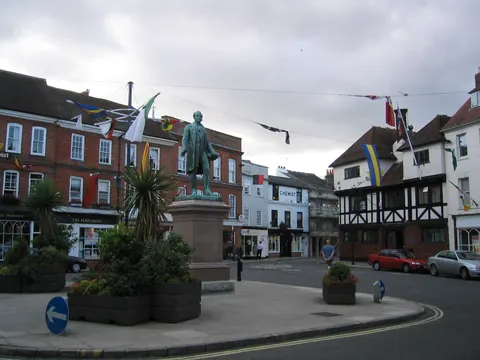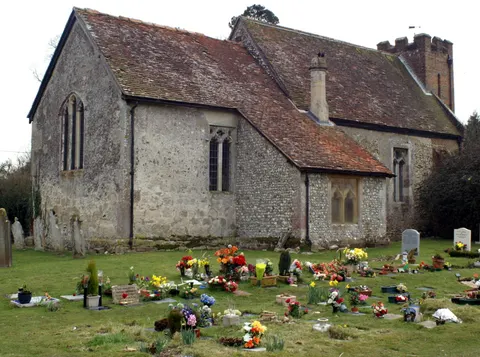

Salisbury is a cathedral city in Wiltshire, in the south-east of England, on the edge of Salisbury Plain. The city sits where the rivers Avon, Nadder and Bourne meet. An ancient cathedral once stood at Old Sarum to the north, before a new one was built near the rivers and a settlement grew up around it. For centuries it was known as New Sarum, a name it kept until the 21st century.
Salisbury, in England, United Kingdom, is home to about 45,000 people.
Why go to Salisbury?
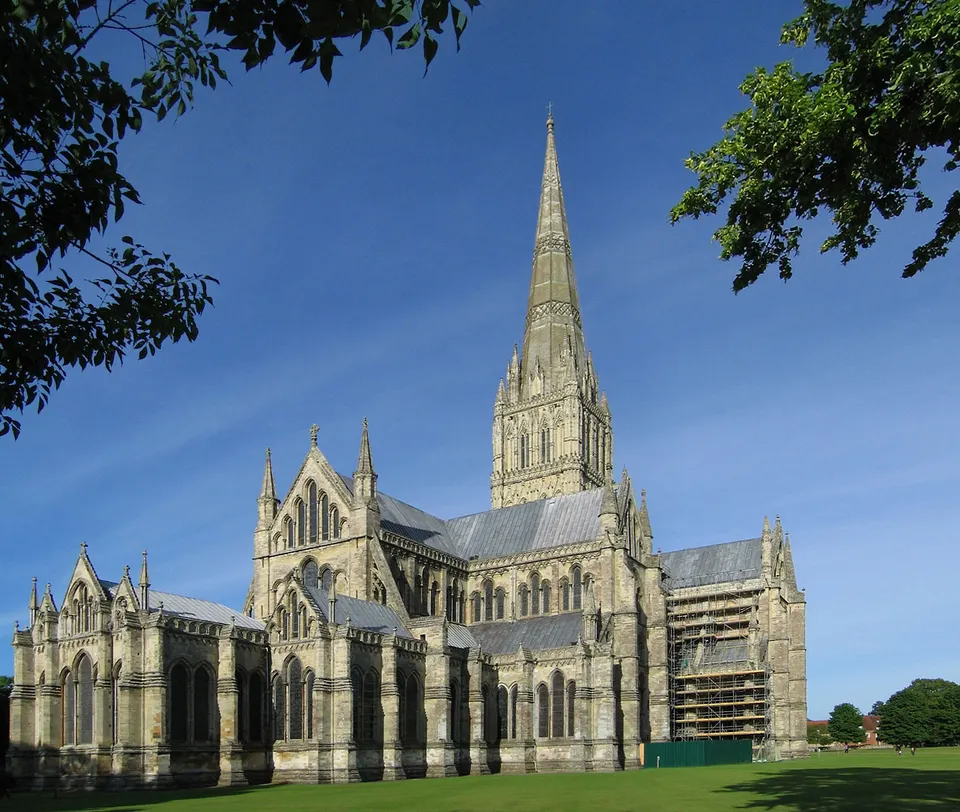
Salisbury Cathedral is the centre of the city, and its spire was painted by John Constable in several celebrated landscapes. Music once thrived here, with the grammarian James Harris directing concerts at the Assembly Rooms for decades. The city's International Arts Festival, held in late May and early June, offers theatre, music, dance and street performance. The Salisbury Playhouse produces its own plays and welcomes touring shows. In summer, the public gardens fed by the rivers are a favourite spot for locals, and Stonehenge, a UNESCO World Heritage Site, lies to the north-west. The St George's Day pageant is said to date back to the 13th century.
When is the best time to visit Salisbury?
In July and August the average high reaches 21 °C; in January it is closer to 7 °C. Any month suits city breaks.
How do I get to Salisbury without flying?
There are no direct train, bus or ferry links to Salisbury yet. You can still search the trip planner for a route with changes.
What to do in Salisbury
Salisbury Cathedral
The cathedral the city grew up around, with a spire that John Constable painted in several landscapes.
Old Sarum
The site of the ancient cathedral that stood north of the present city before the new one was built near the rivers.
Queen Elizabeth Gardens
Public gardens fed by redirected river branches, popular in summer when the water is shallow and slow-flowing.
Salisbury Playhouse
A producing theatre that stages its own productions as well as hosting touring shows.