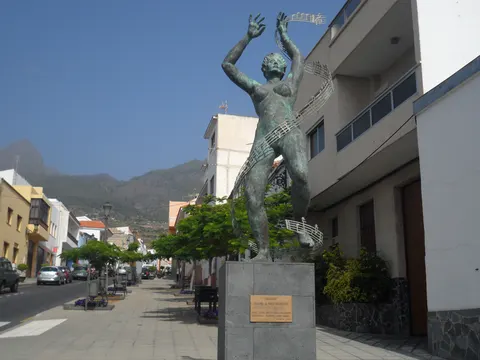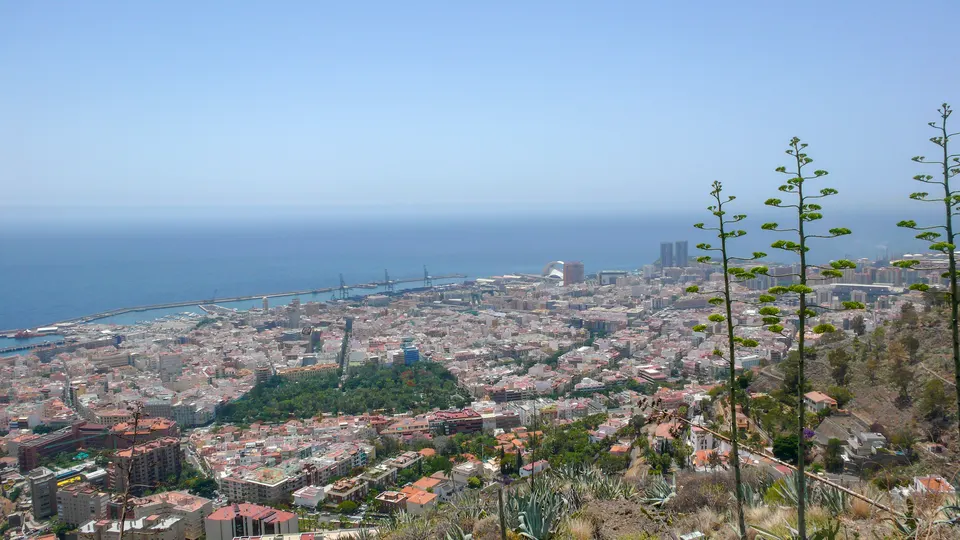

Santa Cruz de Tenerife is the sort of place where a sun and beach week can also be a city week. It is the capital of Tenerife and the main city on the island, and nearly half of the island's population lives in or around it. The streets keep the rhythm of daily business rather than that of a resort. You can spend one stretch among the churches and museums and the next on the sand, and the two sit easily together.
With about 211,000 inhabitants, Santa Cruz de Tenerife lies in Canary Islands, Spain.
Why go to Santa Cruz de Tenerife?
Visitors who like a mix will find plenty here. The Iglesia de la Concepción and the Iglesia de San Francisco de Asís are the churches to start with, while the Museo de la Naturaleza y la Arqueología covers the natural history and archaeology of the island. For art, head to the Museo Municipal de Bellas Artes de Santa Cruz de Tenerife or the Tenerife Espacio de las Artes. For a green break, the Parque García Sanabria and the Palmetum of Santa Cruz de Tenerife give you planted walks. The Castillo de San Juan Bautista and the Castillo de San Cristóbal add a military side to the city. The UNESCO site San Cristóbal de La Laguna is a short distance away, an easy addition to a city visit.
When is the best time to visit Santa Cruz de Tenerife?
Average highs range from 17 °C in February to 22 °C in August, September and October. For beach holidays, any month of the year works. For city breaks, any month of the year works.
How do I get to Santa Cruz de Tenerife without flying?
Direct bus services link Santa Cruz de Tenerife with 8 destinations. Allowing for changes, 8 destinations are no more than 14 hours away without flying. La Laguna is 24 min away by bus with TITSA, with about 0.2 kg of CO₂ per person. The bus from Güimar with TITSA takes 36 min; that is about 0.6 kg of CO₂ per person. From La Matanza de Acentejo, it takes 42 min by bus with TITSA, with about 0.5 kg of CO₂ per person.
What to do in Santa Cruz de Tenerife
Iglesia de la Concepción
Begin at the Iglesia de la Concepción, one of the churches that anchor the older streets of the centre. Step inside, then carry on through the blocks around it, where the civic buildings and shop fronts show the working side of the capital.
Natural history and archaeology
The Museo de la Naturaleza y la Arqueología covers the natural history and archaeology of the island, a good way to read the land before you head out to explore it.
Castillo de San Cristóbal
The Castillo de San Cristóbal is one of two castles in the city. Visit it alongside the Castillo de San Juan Bautista, the other one, and compare how the two were built.
Palmetum of Santa Cruz de Tenerife
The Palmetum is a planted garden of palms and other trees in the city, a green break from the streets and a change of pace from the beach.
Tenerife Espacio de las Artes
Tenerife Espacio de las Artes is the place for art and exhibitions, a good stop if you want the city side of a sun and beach trip.