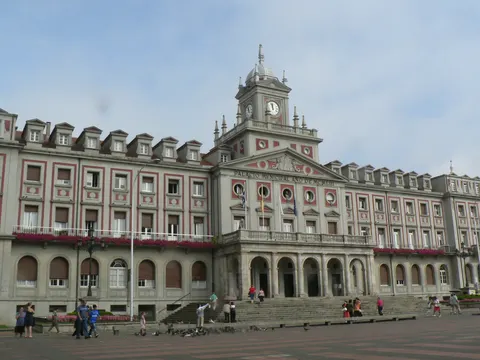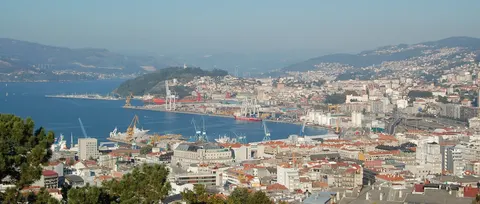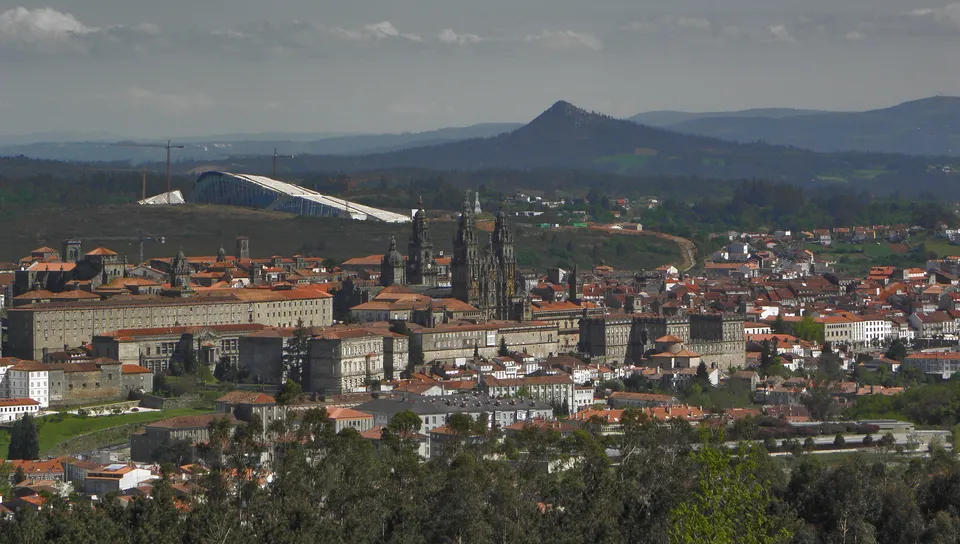

Santiago de Compostela grew up around a shrine, and the pilgrims who walked the Way of Saint James gave the town its reason for being. Its streets still run toward the Cathedral of Santiago de Compostela, and the square in front of it has the air of a journey's end. Galicia's capital keeps that role today, with regional government sitting alongside the old churches and the Convent of San Domingos de Bonaval.
Santiago de Compostela, in Galicia, Spain, is home to about 100,000 people and works as a rail hub.
Why go to Santiago de Compostela?
Go to Santiago de Compostela for the City & Culture side of Galicia, with a pilgrimage story that still shapes almost everything. The Cathedral of Santiago de Compostela is the sight that sets the tone, and the Hospital de los Reyes Católicos adds another old building to the centre. The Church of Santa María la Real del Sar and the Convent of San Domingos de Bonaval bring more religious architecture into the walk. For modern work, the Galicia Contemporary Art Center is the museum to find, and the Palacio de Rajoy adds a palace to the route. The Castle da Rocha Forte and the hills of Monte do Gozo and Monte Pedroso give the walk a wider green edge, and the Way of Saint James runs through all of it. Santiago suits a trip built on old stone and long routes.
When is the best time to visit Santiago de Compostela?
In August the average high reaches 24 °C; in January it is closer to 11 °C. Any month suits city breaks.
How do I get to Santiago de Compostela without flying?
Santiago de Compostela has direct bus or train links to 6 destinations. Within 14 hours, travellers from 376 destinations can get here without flying. The train from Madrid with Renfe takes 3h 12m; that is about 4 kg of CO₂ per person, 96% less than the 112 kg of a flight. Vigo is 1h 00m away by train with Renfe, with about 1 kg of CO₂ per person. Travelling from Pontevedra, allow 38 min by train with RENFE OPERADORA; that is about 0.5 kg of CO₂ per person.
What to do in Santiago de Compostela
Cathedral of Santiago de Compostela
The cathedral sits at the heart of the old town and is the reason most visitors come up the hill. Go in, then walk out to the surrounding squares to take in the stonework from the side.
Way of Saint James
The route that brought pilgrims here still reads in the streets, and walking even a short stretch of it puts the town's history into context. Follow the signs toward the cathedral and let the older buildings set the pace.
Galicia Contemporary Art Center
The art center is the modern counterpoint to the older churches, and it gives the trip a museum that looks forward. Give it a visit between the cathedral and the convent for a change of style.
Monte do Gozo
The hill of Monte do Gozo rises above the city, and it is the mountain to walk toward for a wider look at the town. Pair the walk with a visit to Monte Pedroso on the other side.