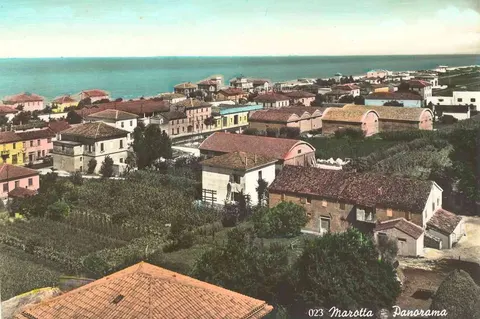
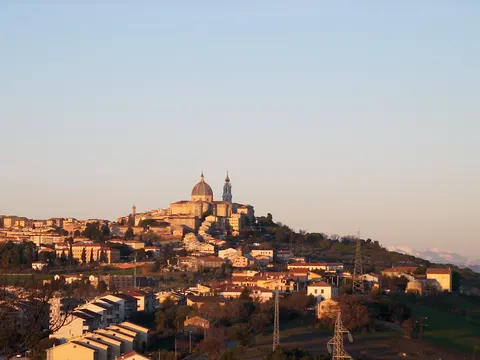
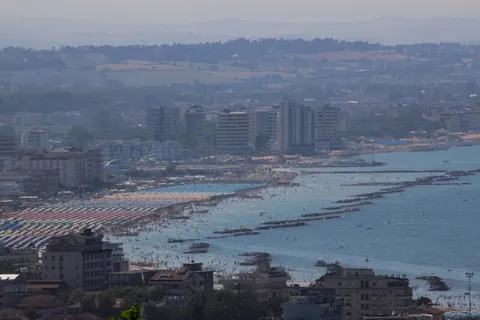
Senigallia is a resort town on Italy's Adriatic coast, in the province of Ancona in the Marche region. Its small port sits at the mouth of the River Misa, and the town is one of the endpoints of the Massa–Senigallia Line, a major dividing line in the classification of the Romance languages. Much of the town is modern, though traces of its long history are still visible.
With about 31,000 inhabitants, Senigallia lies in The Marches, Italy, and is a rail hub.
Why go to Senigallia?
The Romans founded their colony Sena Gallica here, and in the Second Punic War it marked the southernmost point of a Carthaginian invasion of Italy. Later, a medieval fair, the Magdalena Fair, drew merchants from Europe and the Levant. The Rocca Roveresca is a castle of Gothic origins, restored in 1492 by Baccio Pontelli, and the Santa Maria delle Grazie church is one of the only two churches attributed to him. On the seafront, the Rotonda a mare is an art nouveau pier.
When is the best time to visit Senigallia?
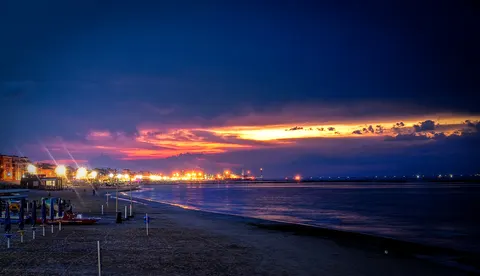
Average highs range from 10 °C in January and February to 29 °C in July. June, August and September are the time for beach holidays.
How do I get to Senigallia without flying?
Direct train services link Senigallia with 2 destinations. Allowing for changes, 1,533 destinations are no more than 14 hours away without flying. Ancona is 15 min away by train with DB Fernverkehr AG, with about 0.3 kg of CO₂ per person. The train from Pesaro with DB Fernverkehr AG takes 15 min; that is about 0.4 kg of CO₂ per person.
What to do in Senigallia
Rocca Roveresca
A castle of Gothic origins with a square plan and four large round towers, restored by the architect Baccio Pontelli.
Santa Maria delle Grazie
A church attributed to Baccio Pontelli, with a museum of the area's farming life and, once, Piero della Francesca's Madonna di Senigallia.
Rotonda a mare
An art nouveau pier on the seafront, one of the town's best-known landmarks.
Palazzo Comunale
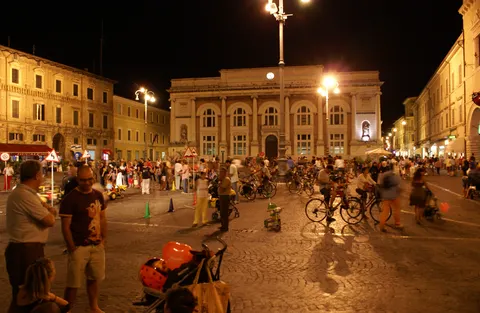
A seventeenth-century town hall in the historic centre.