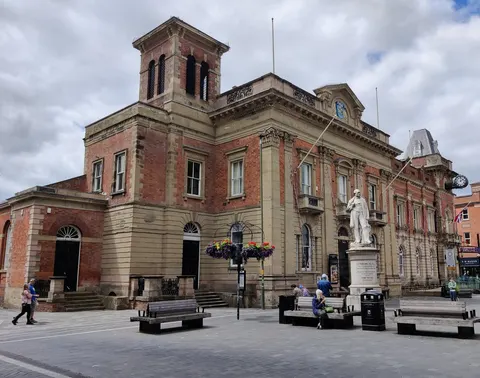
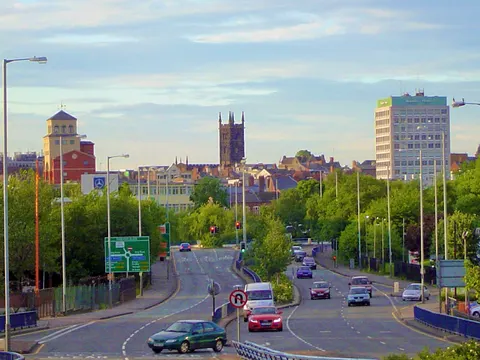
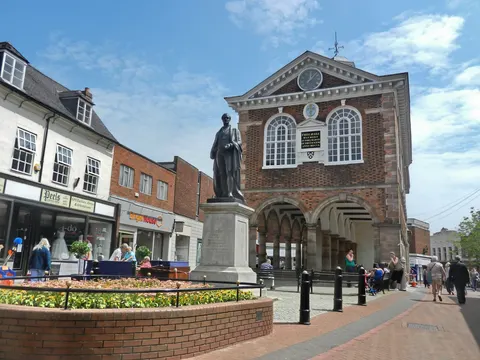
Stourbridge is a market town in the Metropolitan Borough of Dudley in the West Midlands, on the River Stour. It lies about 11 miles west of Birmingham, at the south-western edge of the West Midlands conurbation. Historically part of Worcestershire, the town was the centre of British glass making during the Industrial Revolution, and countryside such as the Clent Hills lies close by.
Stourbridge is in England, United Kingdom, and has a population of about 57,000; it is also a rail hub.
Why go to Stourbridge?
Stourbridge's identity rests on glass. It was the centre of British glass making during the Industrial Revolution, and the Stourbridge Glass Museum keeps that story. The town also sits close to open country: the Clent Hills lie to the south, and Kinver Edge with its rock houses lies to the west. Mary Stevens Park, opened in 1931, has a lake, a bandstand and open spaces, and it is one of several parks given to local people by the Stevens family. Its places of interest also include Hagley Hall and Stambermill Viaduct. Stourbridge keeps a market tradition too, with its farmers and craft market held in Clock Square.
When is the best time to visit Stourbridge?
July and August are the warmest, with highs of about 20 °C, and January, February and December are the coolest, at about 7 °C.
How do I get to Stourbridge without flying?
Stourbridge has one direct link, by train. Counting connections, 1,543 destinations can reach it within 14 hours without flying. Travelling from Wolverhampton, allow 24 min by train with West Midlands Railway; that is about 0.2 kg of CO₂ per person.
What to do in Stourbridge
St Thomas' Church
A church in Stourbridge.
Travel on from Stourbridge
Direct links run to Wolverhampton.
Compare the trip with flying
The trip planner compares train, bus and ferry options to Stourbridge with a flight, including CO₂.