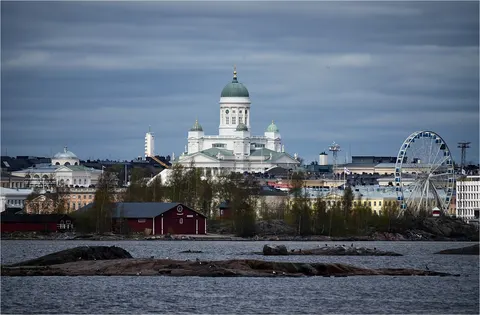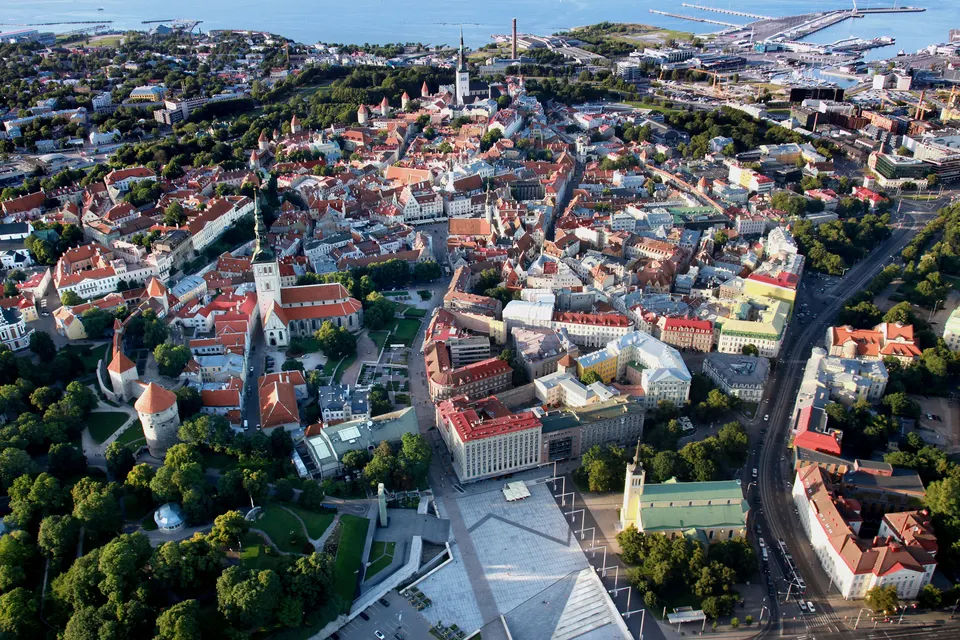

Tallinn is the capital and largest city of Estonia, set on a bay on the southern shore of the Gulf of Finland. Only about 80 kilometres separate it from Helsinki across the water, so the two capitals face each other over the sea. The city's Old Town is one of the best-preserved medieval towns in Europe and a UNESCO World Heritage Site. Its history as the Hanseatic port of Reval still shows in the streets.
Tallinn is in Harjumaa, Estonia, and has a population of about 394,000; it is also a rail hub.
Why go to Tallinn?
Most visitors come for the Old Town, which still sits inside a long stretch of medieval walls. The walls were defended by 66 towers, and they are often described as an outstanding example of German medieval fortification. Up on the spire of the Town Hall, a weathervane figure called Old Thomas has been a city symbol since it was put up there in 1530. The museums are another draw, with the Estonian History Museum housed in the Great Guild Hall and the Maritime Museum in Fat Margaret's Tower. The city also has a modern side: Bolt and Skype were both born here, and the EU's IT agency has its headquarters in Tallinn.
When is the best time to visit Tallinn?
July is the warmest, with highs of about 21 °C, and February is the coolest, at about -3 °C. City breaks work best in June, July and August.
How do I get to Tallinn without flying?
From 11 destinations you can travel to Tallinn directly by bus, ferry or train. Counting connections, 143 destinations can reach it within 14 hours without flying. Travelling from Stockholm, allow 16h 00m by ferry with Tallink; that is about 18 kg of CO₂ per person, 63% less than the 48 kg of a flight. From Helsinki, it takes 2h 00m by bus with FlixBus-eu, with about 2.2 kg of CO₂ per person. The bus from Riga with FlixBus-eu takes 4h 16m; that is about 7.5 kg of CO₂ per person, 79% less than the 36 kg of a flight.
What to do in Tallinn
Tallinn Town Hall
Its spire carries Old Thomas, a weathervane figure that has been a symbol of the city since 1530.
Estonian History Museum
Covers Estonia's past from prehistoric times to the end of the 20th century, with film and hands-on displays, in the Great Guild Hall.
Kumu Art Museum
Holds the country's largest collection of contemporary and modern art, along with Estonian art from the early 18th century.
Niguliste Museum
Occupies a former church, St Nicholas', and shows church art from the Middle Ages to after the Reformation.