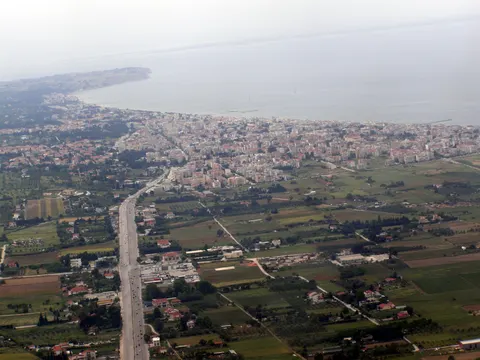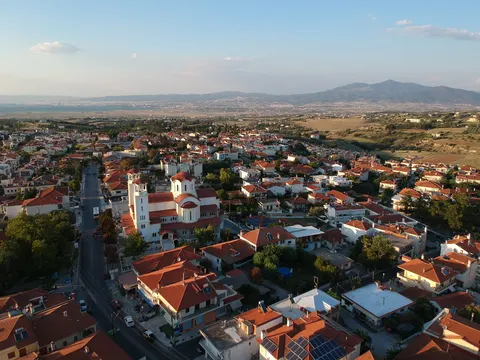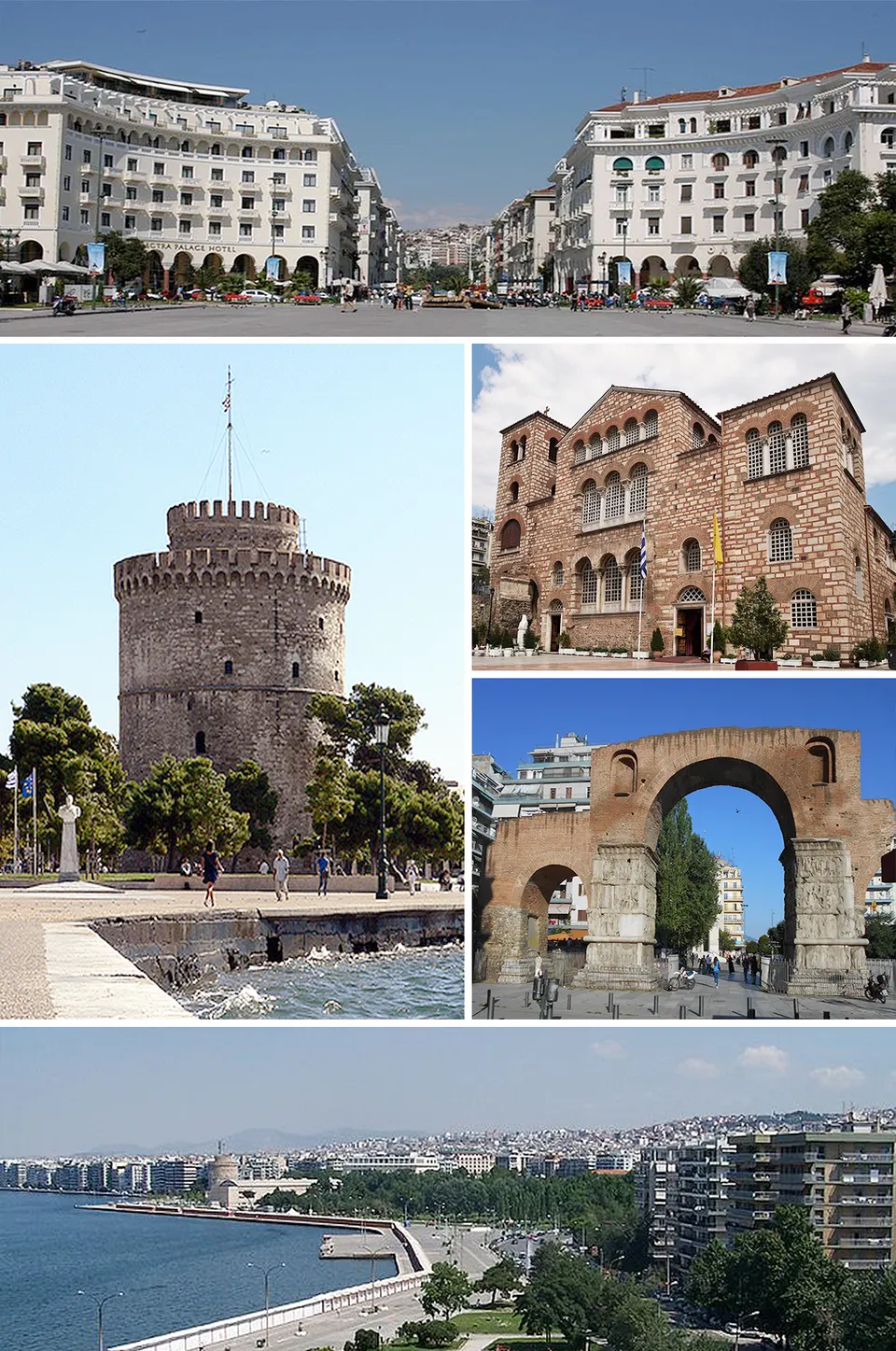

Thessaloniki is the capital of Central Macedonia and Greece's second-largest city, on the Thermaic Gulf at the northwest corner of the Aegean Sea. Founded in 315 BC, it was the second-largest and wealthiest city of the Byzantine Empire and kept the title of co-capital from that era. Byzantine churches, Ottoman mosques and Sephardic synagogues stood side by side in its historic centre, and the city remains a major port and commercial hub.
Thessaloniki is in Central Macedonia, Greece, and has a population of about 318,000; it is also a rail hub.
Why go to Thessaloniki?
Thessaloniki's Byzantine heritage is its strongest draw. Its churches include the Hagia Sophia of Thessaloniki, the Church of the Acheiropoietos and the Church of Saint Catherine, and many of them are part of the city's UNESCO-listed monuments. The complex of the Roman emperor Galerius and the first church of Hagios Demetrios reach back further still. Beyond the monuments, the city holds an archaeological museum with golden treasures from the royal palaces of Aigai and Pella, the Museum of Byzantine Culture and the White Tower, whose galleries tell the story of the city. Festivals such as the Thessaloniki International Film Festival fill the year with events.
When is the best time to visit Thessaloniki?
July and August are the warmest, with highs of about 30 °C, and January is the coolest, at about 9 °C. Any month suits city breaks.
How do I get to Thessaloniki without flying?
From 5 destinations you can travel to Thessaloniki directly by bus or train. Counting connections, 221 destinations can reach it within 14 hours without flying. Travelling from Athens, allow 4h 30m by train with Hellenic Train; that is about 6 kg of CO₂ per person, 91% less than the 69 kg of a flight. From Sofia, it takes 4h 40m by bus with FlixBus-eu, with about 6.2 kg of CO₂ per person against 30 kg for the flight, 79% less. The bus from Skopje takes 3h 30m; that is about 5 kg of CO₂ per person, 80% less than the 25 kg of a flight.
What to do in Thessaloniki
White Tower
The main landmark of the city, which survived the demolition of the seaside walls and now holds galleries on its past.
Hagia Sophia of Thessaloniki
A Byzantine church created in the era of the city's great churches, and one of its UNESCO-listed monuments.
Church of the Acheiropoietos
A Byzantine church from the same period, part of the group of Paleochristian and Byzantine monuments.
Galerius complex
An early complex built for the Roman emperor Galerius, from the period when the city flourished under the empire.
Museum of Byzantine Culture
Celebrates the city's Byzantine past and won the Council of Europe's museum prize in 2005.