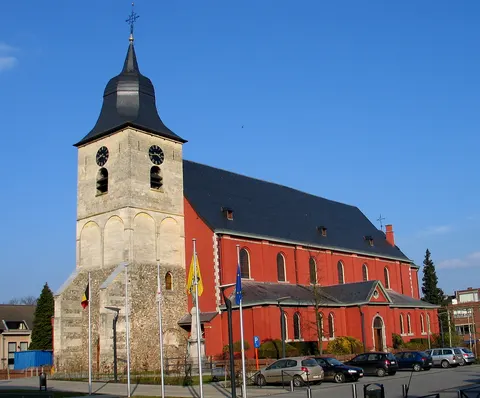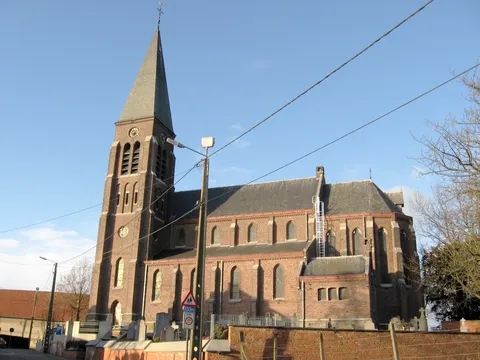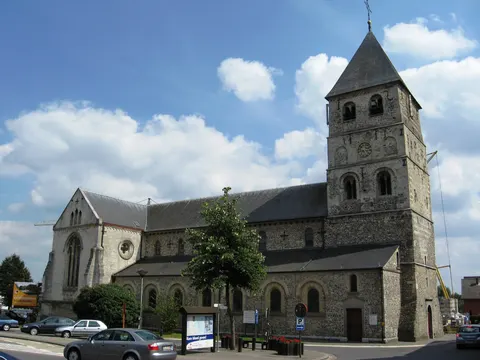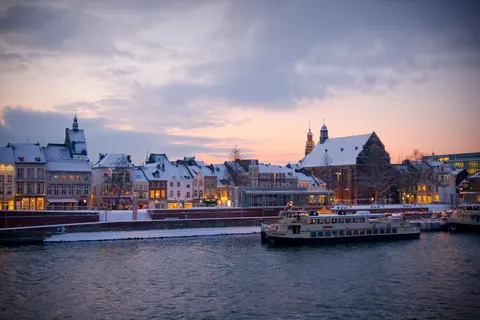

Tongeren is a city and former municipality in the Belgian province of Limburg, in the southeastern corner of the Flemish region. It is the oldest town in Belgium, and the only Roman administrative capital within the country's borders. In Roman times it was known as Atuatuca Tungrorum. Since 2025 it has been part of the new municipality Tongeren-Borgloon.
Tongeren, in Flanders, Belgium, is home to about 30,000 people and works as a rail hub.
Why go to Tongeren?
The Béguinage, founded in 1257 and listed as a UNESCO World Heritage Site since 1998, once separated its small community of beguines from the rest of the city. Its enclosure wall was destroyed in the 19th century, but the beguinage survived the fire that destroyed most of the city. The Basilica of Our Lady is a Gothic church whose treasury holds one of the richest collections of religious art in Belgium. The Gallo-Roman Museum shows Celtic gold, Roman glassware and a Roman dodecahedron. The original Roman wall, from the second century, is still visible for a long stretch, and the Church of St. Catherine keeps works of art from several centuries.
When is the best time to visit Tongeren?
In July and August the average high reaches 22 °C; in January it is closer to 5 °C. Any month suits city breaks.
How do I get to Tongeren without flying?
Tongeren has direct train links to 2 destinations. Within 14 hours, travellers from 2,214 destinations can get here without flying. The train from Liege with NMBS/SNCB takes 28 min; that is about 0.2 kg of CO₂ per person. Bilzen is 8 min away by train with NMBS/SNCB, with about 0.1 kg of CO₂ per person.
What to do in Tongeren
The Béguinage
A walled community of beguines, founded in 1257 and listed as a UNESCO World Heritage Site since 1998.
Basilica of Our Lady
A Gothic basilica built in the 13th century, with a treasury that holds one of the richest collections of religious art in Belgium.
Gallo-Roman Museum
A museum with Celtic gold, Roman glassware, Merovingian filigree work and a Roman dodecahedron among its finds.
Church of St. Catherine
A Gothic church from 1294, with a pulpit from 1711 by Robrecht Verburgh and a main altarpiece by Gaspar de Crayer.