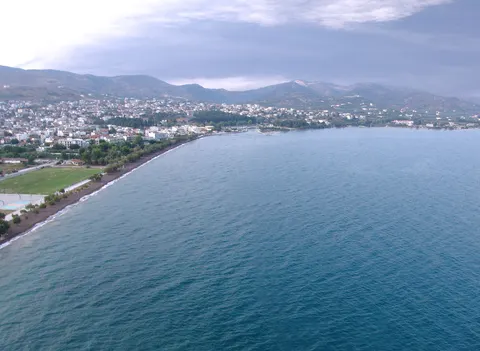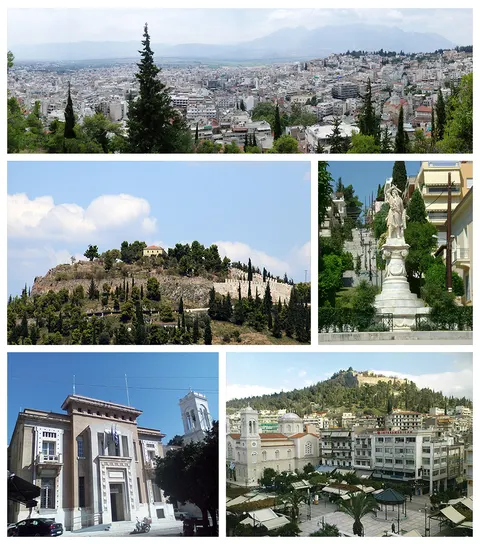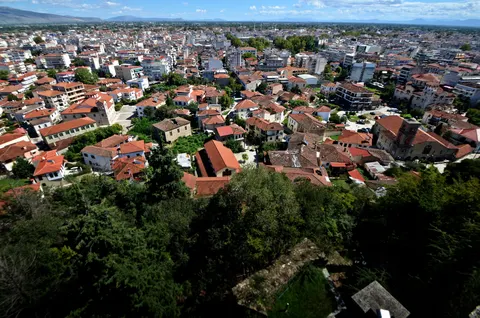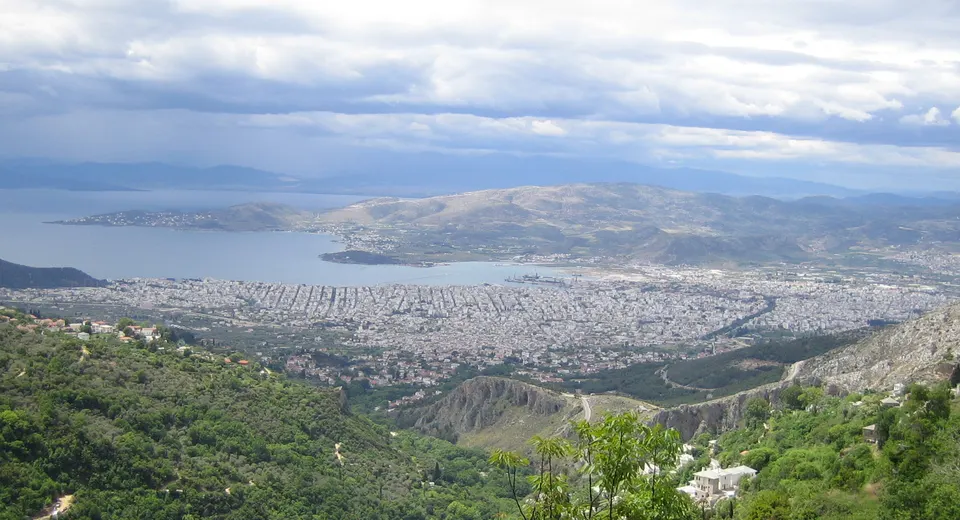

Volos is a coastal port city in Thessaly on the Greek mainland, and the capital of the Magnesia regional unit. It is the only outlet to the sea from Thessaly, the country's largest agricultural region. The city is an important industrial centre, and its port provides a bridge between Europe and Asia. A large share of its buildings were erected after the earthquakes of 1955.
About 86,000 people live in Volos, in Thessaly, Greece, and its station is a rail hub.
Why go to Volos?
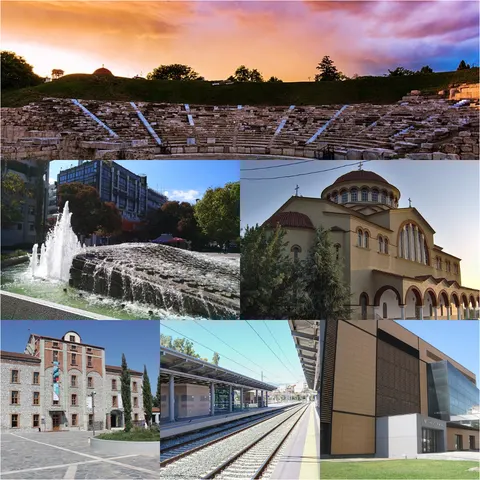
Volos is one of the most tourist-friendly cities in Greece, set between the Pagasetic Gulf and Mount Pelion. Its streets hold neoclassical buildings from the years when merchants prospered, including the Hotel de France with its murals and the Railway Station designed by Evaristo De Chirico. Near Volos, the Neolithic villages of Sesklo and Dimini mark some of the first traces of Neolithic culture in Europe, and the ancient theatre of Dimitrias remains preserved. The city has museums and galleries, and the old station houses a railway museum for Thessaly.
When is the best time to visit Volos?
Expect daytime highs of about 28 °C in July and August, falling to 10 °C in January. If you are after beach holidays, aim for June, July and September.
How do I get to Volos without flying?
You can get to Volos without changing from 8 destinations, by bus or train. With changes, Volos is within 14 hours of 177 destinations without flying. From Leptokaryá, it takes 1h 48m by bus, with about 2.3 kg of CO₂ per person. Travelling from Lamía, allow 1h 30m by bus with KTEL Magnesia; that is about 1.8 kg of CO₂ per person. Elassóna is 1h 30m away by bus, with about 2.4 kg of CO₂ per person.
What to do in Volos
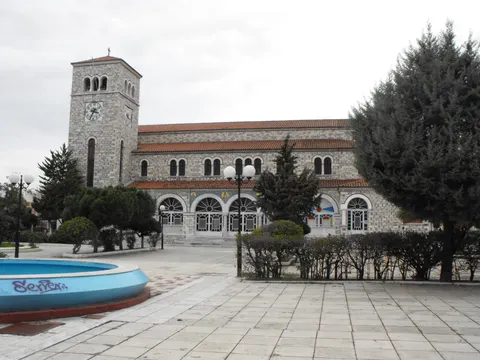
Metropolitan cathedral of Saint Nicholas
A cathedral in Volos.
Find tours and tickets: Metropolitan cathedral of Saint Nicholas
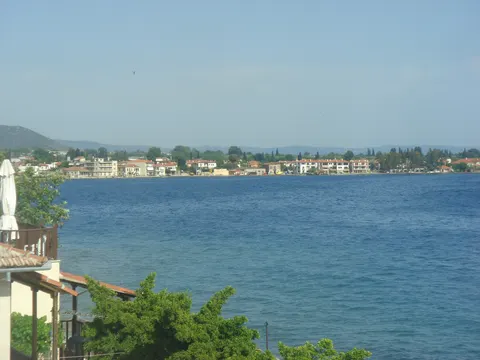
Beach holidays in Volos
June is the ideal month for beach holidays, with average highs of 26 °C.
Travel on from Volos
Direct links run to Leptokaryá, Lamía and Elassóna.