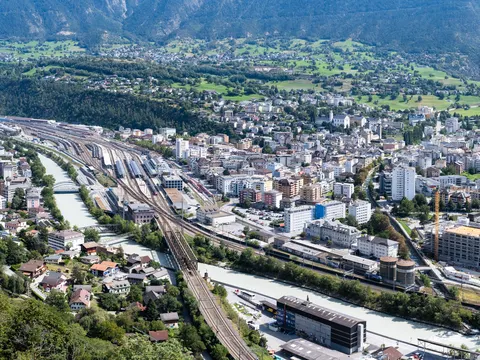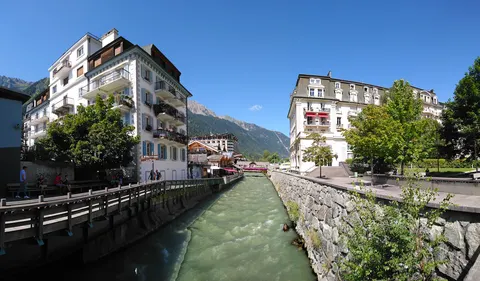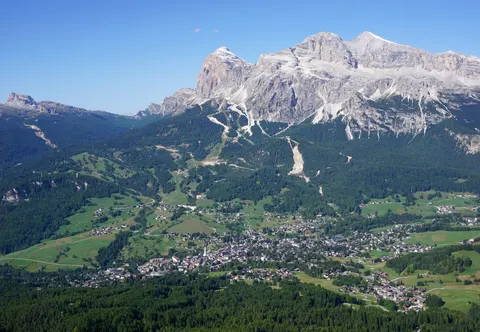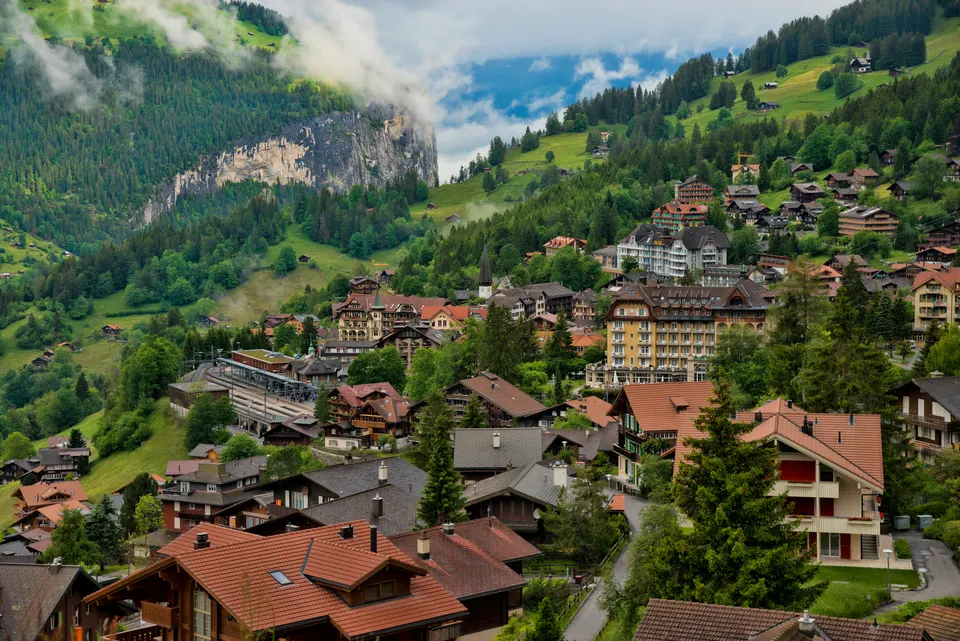

Wengen is a mountain village in the Bernese Oberland, in the canton of Bern in central Switzerland, at an elevation of 1,274 metres above sea level. It is part of the Jungfrau Region and has a small population of year-round residents, which grows many times over in the summer and winter seasons. Visitors have come here since the early nineteenth century, when writers described the scenery of the area.
Wengen is in Switzerland.
Why go to Wengen?
Wengen is known for its ski racing. The classic Lauberhorn ski races of the FIS Alpine Ski World Cup take place here each January. British skiers established the village as a ski destination in the early twentieth century, and an Anglican church was built for them. The Wengernalpbahn railway, opened in the 1890s, made the village reachable for tourists who had once had to walk the steep slopes up to it. Felix Mendelssohn, who visited in the early nineteenth century, has a memorial above the village. The village also keeps a local legend, the Pfeifende Lurch, a whistling amphibian from tales that exist only in Wengen. Skiing and walking across the Jungfrau Region are the main draws for those who stay here.
When is the best time to visit Wengen?
July and August are the warmest, with highs of about 19 °C, and January is the coolest, at about -1 °C. January, February and December are the time for skiing.
How do I get to Wengen without flying?
From 2 destinations you can travel to Wengen directly by bus or train. Counting connections, 2,160 destinations can reach it within 14 hours without flying. Travelling from Interlaken, allow 8 min by bus with Busbetrieb BOB; that is about 0.3 kg of CO₂ per person. From Lauterbrunnen, it takes 3 min by bus with PostAuto AG, with about 0 kg of CO₂ per person.
What to do in Wengen
Lauberhorn ski races
The classic ski races of the FIS Alpine Ski World Cup, held in Wengen each January.
Anglican church
A church built for the British skiing community that settled in the village in the early twentieth century.
Felix Mendelssohn memorial
A memorial above the village to the composer, who visited the area in the early nineteenth century.