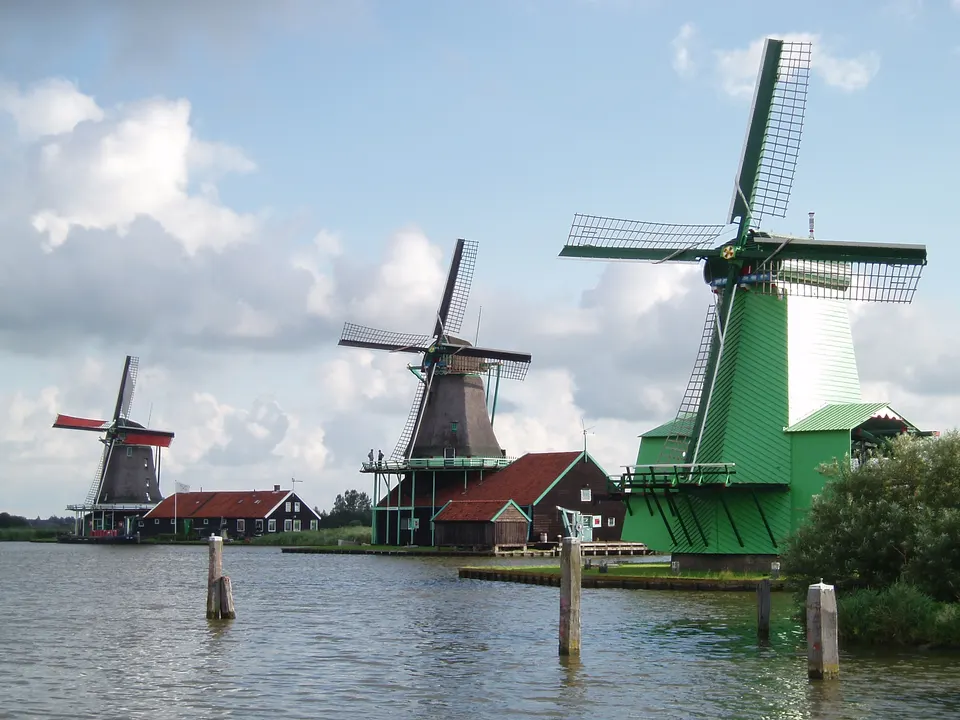

Zaandam is a city in North Holland, on the river Zaan just north of Amsterdam. It is the main city of the municipality of Zaanstad and received city rights in 1811. It was formerly called Saenredam. In the Dutch Golden Age the city grew into a large milling centre, where thousands of windmills powered saws that processed Scandinavian timber for the shipbuilding and paper industries.
Zaandam, in the Netherlands, is home to about 72,000 people.
Why go to Zaandam?
Zaandam's story is one of industry on the water. Its windmills once sawed timber for the shipbuilding and paper trades, and a statue called De houtwerker (The Woodworker), by the sculptor Slavomir Miletić, commemorates that work. Zaandam also has a historic link to the whaling industry. In 1697 Tsar Peter I of Russia stayed in the town to study shipbuilding, living in a small wooden house that was later preserved and turned into a museum. The impressionist painter Claude Monet lived in Zaandam for about half a year in 1871, and in that time he painted 25 pictures of the area, including its houses and windmills.
When is the best time to visit Zaandam?
In July and August the average high reaches 20 °C; in January it is closer to 5 °C. Nature and hiking trips work best in June, July and August.
How do I get to Zaandam without flying?
Zaandam has direct bus or train links to 6 destinations. Within 14 hours, travellers from 2,144 destinations can get here without flying. The bus from Amsterdam with MeerPlus takes 9 min; that is about 0.3 kg of CO₂ per person. Purmerend is 6 min away by train with NS, with about 0.2 kg of CO₂ per person. Travelling from Velsen-Zuid, allow 8 min by bus with MeerPlus; that is about 0.3 kg of CO₂ per person.
What to do in Zaandam
Czar Peter House
The small wooden house where Tsar Peter I stayed while studying shipbuilding, now preserved as a museum.
De houtwerker (The Woodworker)
A statue by the sculptor Slavomir Miletić that commemorates the town's milling and timber industry.