
By train and bus
82% less CO₂Brussels
By train from Hamburg
11kg CO₂
Per person, one way
6h52m
One way, by train
The route
train with DB Fernverkehr AG2h 28m
Münster, North Rhine-westphalia
bus with FlixBus-eu4h 05m
Route
Germany → Belgium
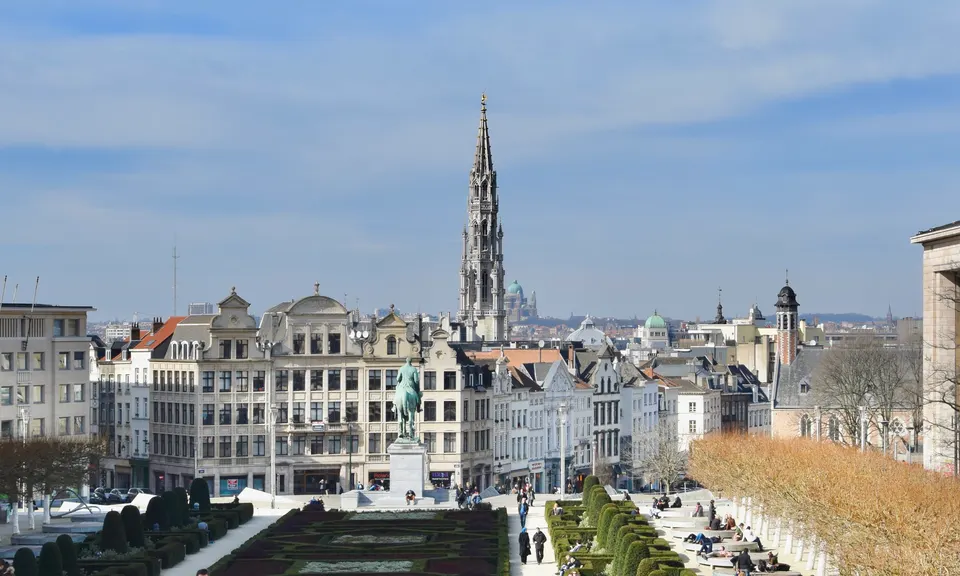
Plan this tripPhoto: Ank Kumar, CC BY-SA 4.0, Wikimedia Commons
By train and bus in 6h 52m with one change, 11 kg CO₂ per person — 82% less than the flight’s 62 kg CO₂e (door to door 5h 10m).
By train from Hamburg
11kg CO₂
Per person, one way
6h52m
One way, by train
train with DB Fernverkehr AG2h 28m
Münster, North Rhine-westphalia
bus with FlixBus-eu4h 05m
By plane from Hamburg
62kg CO₂e
Per person, one way
5h10m
One way, door to door
It would take about 3 trees a full year to absorb the flight’s 62 kg CO₂e.
Only 1h10m of the 5h 10m is spent in the air.
Travel to the airport
Door to terminal
Check-in, security, boarding
Arrive early, queue, wait
Flight to Brussels
62 kg CO₂e per trip
Travel into the city
Terminal to city centre
Arrive in Brussels
5h10mFlight figures are CO₂e: they include the warming effect of emissions at altitude (radiative forcing). Train, bus and ferry figures are CO₂. How we calculate
12h45m · 14 kg CO₂
The best way from Hamburg to Brussels without flying takes 6h 52m by train and bus, with one change in Münster, North Rhine-Westphalia. The trip is run by DB Fernverkehr AG and FlixBus-eu. Per person, the trip produces about 11 kg of CO₂ against 62 kg CO₂e by air, a saving of 82%. Allow 1h 42m more than the flight, door to door.
Cheapest train or bus fare Omio lists for this trip. The price varies with the date and changes daily.
Yes. Overnight, the trip from Hamburg to Brussels takes 12h 45m with OEBB Personenverkehr AG Kundenservice and DB. Per person, that is about 14 kg of CO₂. Compared with the day option it is 5h 53m longer, but much of it passes overnight.
The Speicherstadt and Kontorhaus District with Chilehaus, a UNESCO site in Hamburg, shows how far the city's trade once reached. The Hamburger Kunsthalle and the Miniatur Wunderland add a gentler side. Brussels, the capital of Belgium, is the administrative centre of the European Union, and its European Quarter hosts many of the principal EU institutions. The Grand-Place, a UNESCO site, and the Royal Palace of Brussels sit at the heart of the city, while the House of European History and Mini-Europe add a lighter note. The route links a German port with a Belgian capital of institutions, so it suits a city and culture trip with a clear sense of purpose at the far end.
Brussels suits city breaks in any month.
Going the other way? The figures here are for Hamburg to Brussels; the trip planner searches Brussels to Hamburg just as well, for your own dates.