
By bus and train
80% less CO₂Vantaa
By bus from Riga
Route
Latvia → Finland
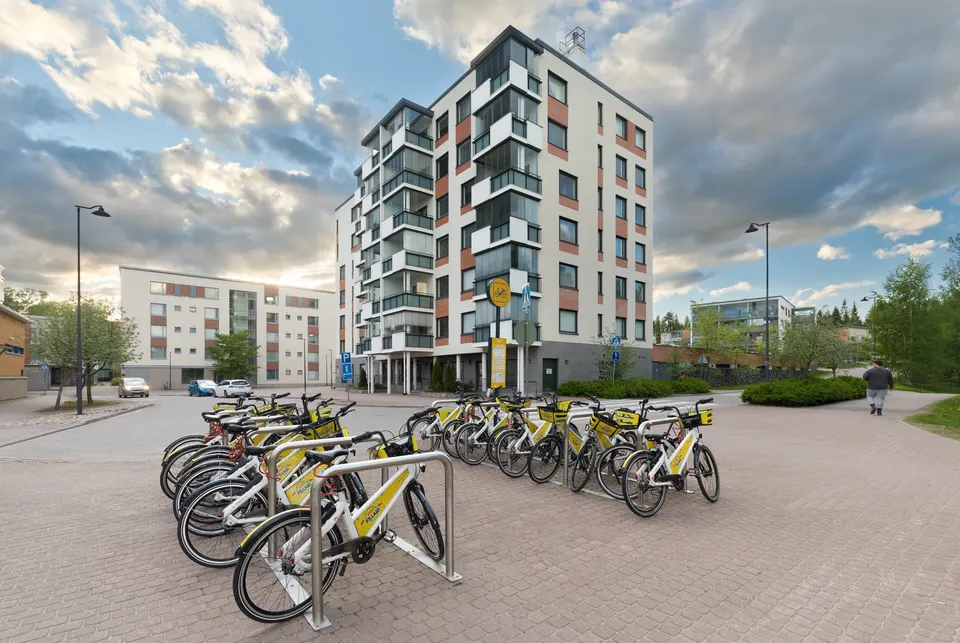
Plan this tripPhoto: Ximonic (Simo Räsänen), CC BY 3.0, Wikimedia Commons
By bus and train in 6h 54m with 2 changes, 9.8 kg CO₂ per person — 80% less than the flight’s 48 kg CO₂e (door to door 5h 01m).
By bus from Riga
By plane from Riga
48kg CO₂e
Per person, one way
5h01m
One way, door to door
It would take about 2 trees a full year to absorb the flight’s 48 kg CO₂e.
Only 1h01m of the 5h 01m is spent in the air.
Travel to the airport
Door to terminal
Check-in, security, boarding
Arrive early, queue, wait
Flight to Vantaa
48 kg CO₂e per trip
Travel into the city
Terminal to city centre
Arrive in Vantaa
5h01mFlight figures are CO₂e: they include the warming effect of emissions at altitude (radiative forcing). Train, bus and ferry figures are CO₂. How we calculate
Going from Riga to Vantaa by bus and train takes 6h 54m, with 2 changes, in Tallinn and Helsinki. Services are operated by FlixBus-eu and VR. Your share of the emissions is about 9.8 kg of CO₂, 80% below the 48 kg CO₂e of flying. Door to door it takes 1h 53m longer than flying, airport time included.
Vecrīga, the old town of Riga, is listed by UNESCO, and the Riga Cathedral and the Freedom Monument stand within its reach. Riga sits where the Daugava reaches the Gulf, and the Riga Castle and the Museum of the Occupation of Latvia add two strands of its history. Vantaa sits north of Helsinki in southern Uusimaa, and its Finnish Aviation Museum and the Heureka science centre give it a different feel from the Latvian capital. Coming from Riga, you travel west to a Finnish city of museums and churches, and the trip swaps a Baltic harbour for a northern suburb.
If you are going for city breaks, May, June and August suit Vantaa best, with June at about 19 °C.
Going the other way? The figures here are for Riga to Vantaa; the trip planner searches Vantaa to Riga just as well, for your own dates.