By Thomas AxelssonPublished Updated 4 min read
The train from Berlin to Warsaw has no change in it, which leaves the planning to the day itself and to what you do in Warsaw. For times, changes and CO₂ against the flight, see the Berlin to Warsaw route guide.
Is there a change on the Berlin to Warsaw train?
There is no change. The route data lists two direct trains, one under PKP/DB and one under DB/PKP, and both take 6h 00m. You board in Berlin and get off in Warsaw without a connection to protect.
That makes the trip easy to plan: the only decision is which departure to take. The 6h 00m is a running time, not a timetable, so check the departures for your date before you build the rest of the day around it.
Why plan around a six-hour ride?
The flight takes 5h 12m door to door once airport time is added, so the train is 48 minutes behind. It is a small gap for a trip that crosses a border. What the train gives back is the time on board: six hours in one seat, with no airport process at either end.
If you pick a morning departure, you reach Warsaw in the afternoon and still have part of the day for a first walk. A late departure turns the ride into a full evening. Either works, because there is no second leg that could shift your arrival.
What do two listed services mean for your plans?
The route data holds two direct entries for the pair. One is listed as DB/PKP and the other as PKP/DB, and both are 6h 00m. The first carries a figure of 8 kg of CO₂ and the second 7 kg, which is why the route guide quotes 7 kg for the best option.
For planning, this means you have more than one train to choose from on the same pair, and neither adds time. You do not need to pick on speed, since the running times match. Pick on the departure that fits your day, then check the details for that train before you travel.
When is the best time to visit Warsaw?
May comes first for a City & Culture trip, with an average daily high of 19 °C, followed by September, June, July and August. The summer months are the warmest, at 23 °C in July and August. The coldest month is January, at 0 °C, and February reaches only 2 °C.
Spring and autumn sit in the middle: April is 13 °C, October 12 °C and September 18 °C. Berlin follows a similar pattern, with 18 °C in May and 23 °C in July and August, so you will not meet a sharp change in weather when you step off the train. If you want to build the trip around the month, see the ideas page for a city break in May.
What is there to see in Warsaw?
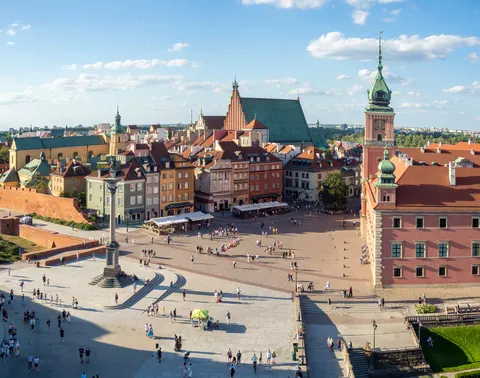
The list of sights is long enough to fill a weekend. The Royal Castle in Warsaw, the Palace of Culture and Science and St. John's Archcathedral are the main landmarks in the data. The National Museum in Warsaw, the Museum of the History of Polish Jews and the Grand Theatre are listed too.
The Warsaw Old Town is a UNESCO site, 2.2 km from the centre. You could arrange a first day around the Royal Castle and the Old Town and keep the museums for a second morning, since both the castle and the cathedral are on the list for the same city.
How cold does Warsaw get for a winter trip?
If you travel outside the best months, expect cold. The average high is 0 °C in January, 2 °C in February and 2 °C in December, and November reaches 6 °C. Warsaw's listed sights are mostly indoors, with the National Museum in Warsaw, the Museum of the History of Polish Jews and the Grand Theatre among them, so a winter stay still has plenty to fill the day.
In March the average high rises to 7 °C, and by April it is 13 °C. If the trip is flexible, shifting from January to May moves the high from 0 °C to 19 °C, which is the main reason to look at the calendar before you book.
What can you see in Berlin before you leave?
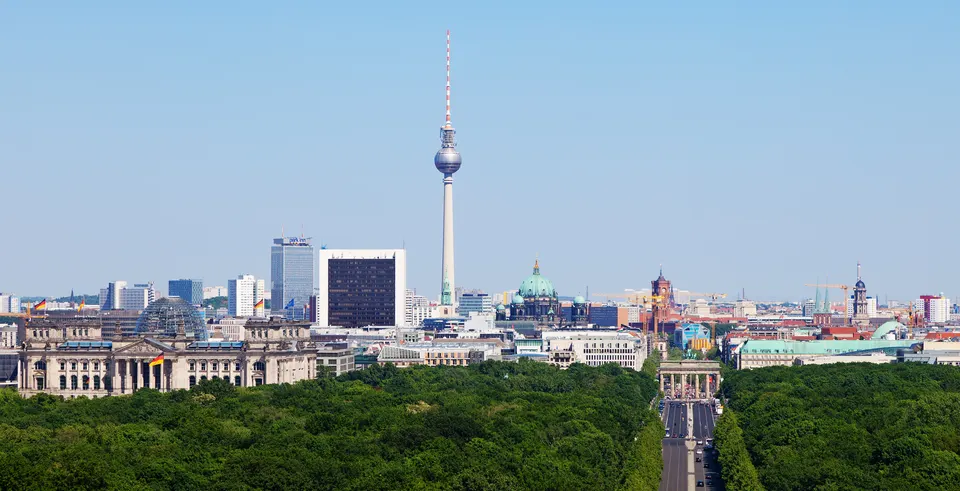
If your train departs later in the day, Berlin's listed sights give you a morning. The Brandenburg Gate, the Pergamon Museum and the Fernsehturm Berlin are the landmarks, and two UNESCO sites sit within 0.7 km of the centre: the Altes Museum at 0.4 km and Museum Island at 0.7 km. Potsdam is 27 km away if you would rather leave the city.
Where can you go on from Warsaw?
Warsaw is a rail hub with 33 direct links by bus and train. It reaches 356 destinations within eight hours and 1,314 within fourteen. Berlin reaches further, with 1,010 within eight hours and 2,398 within fourteen, and it has 28 direct links.
From Warsaw, these onward trains are in the data:
- Gdansk takes 2h 25m, run by PKP Intercity.
- Krakow takes 2h 46m, run by PKP Intercity.
- Torun takes 2h 30m, run by PKP.
- Wroclaw takes 3h 30m, run by PKP.
- Prague takes 8h 00m, run by PKP/CD.
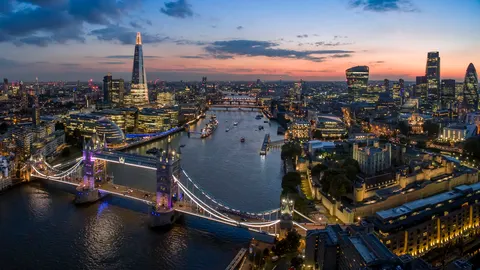
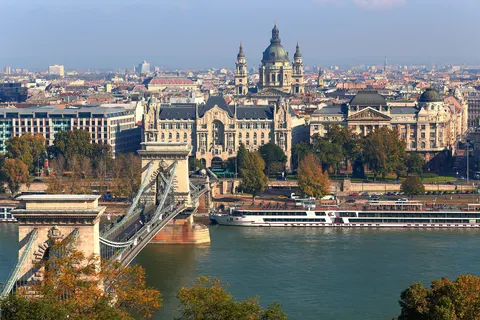
Going back the other way, Berlin has its own short hops. Hamburg is 1h 49m by train, Prague 4h 30m and Vienna 8h 00m. Longer trips that end in Warsaw are covered in the route guides for Hamburg to Warsaw, Paris to Warsaw, Budapest to Warsaw and London to Warsaw.